


BBQ pods represent a revolutionary approach to outdoor cooking, combining shelter, functionality and culinary performance in purpose-built structures designed for year-round entertaining. These innovative spaces have transformed traditional outdoor cooking from seasonal activity into a refined, all-weather culinary destination. As homeowners increasingly seek to extend their living spaces beyond interior walls, bbq pods offer an elegant solution that marries architectural sophistication with practical cooking performance, creating intimate environments where weather never interrupts the pleasure of outdoor dining.
BBQ pods are self-contained outdoor cooking structures that integrate grilling equipment, shelter and entertaining space within a cohesive architectural unit. Unlike conventional outdoor kitchens that exist as open-air installations, these pods provide overhead protection whilst maintaining the alfresco ambience that defines outdoor living.
The fundamental principle behind bbq pods centres on creating a microclimate for cooking and entertaining. These structures typically incorporate solid roofing systems, partial or full wall enclosures, and purpose-designed ventilation that manages smoke whilst retaining heat and blocking wind. This environmental control extends the practical cooking season from mere summer months to year-round functionality.
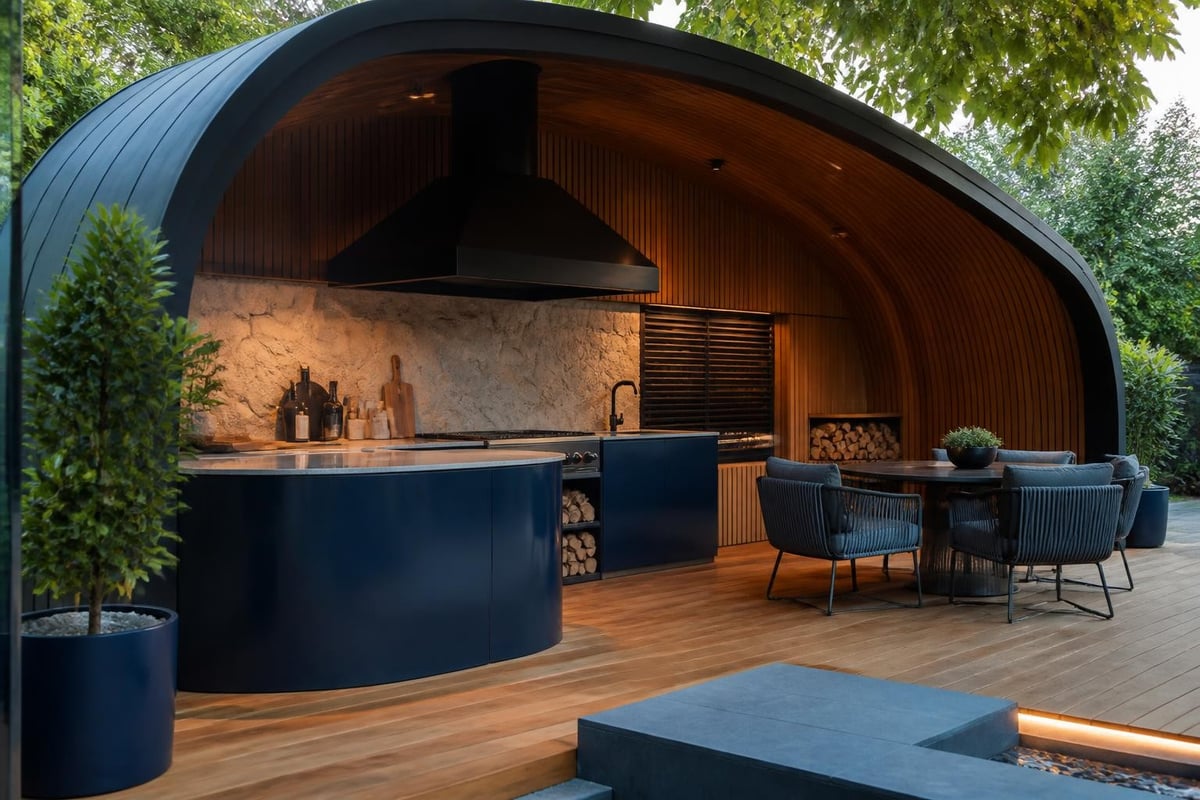
Every effective bbq pod combines several essential components:
The architectural approach varies significantly across designs. Some bbq pods adopt traditional aesthetics reminiscent of Scandinavian grilling huts, whilst others embrace contemporary minimalism with clean lines and industrial materials. This stylistic flexibility allows integration with existing garden architecture and broader landscape design schemes.
BBQ pods manifest in diverse architectural forms, each offering distinct advantages for different settings and user preferences. Understanding these variations helps homeowners select designs aligned with their culinary ambitions and property aesthetics.
Traditional Nordic grilling huts represent one established format, featuring hexagonal or octagonal floor plans with central grills surrounded by bench seating. These enclosed structures, often clad in timber, create intimate gathering spaces that protect diners from elements whilst centralising the cooking experience. The circular arrangement fosters social interaction, positioning the grill as the focal point around which conversation naturally flows.
Contemporary pavilion-style bbq pods take alternative approaches, favouring open-sided structures with overhead shelter but minimal wall enclosure. These designs prioritise connection with surrounding gardens whilst providing essential weather protection for cooking equipment and diners. The architectural language typically incorporates modern materials such as powder-coated aluminium, toughened glass and engineered composite decking.
| Design Style | Enclosure Level | Capacity | Season Suitability | Aesthetic |
|---|---|---|---|---|
| Nordic Hut | Fully enclosed | 6-12 people | Year-round | Traditional/Rustic |
| Open Pavilion | Roof only | 4-8 people | Spring-Autumn | Contemporary |
| Hybrid Pod | Partial walls | 6-10 people | Extended season | Transitional |
| Integrated Kitchen | Variable | 8-15 people | Year-round | Luxury/Bespoke |
Modular outdoor kitchen systems have emerged as a flexible alternative, allowing homeowners to construct bbq pods incrementally. These modular outdoor kitchen solutions enable customisation of layout, equipment specification and shelter integration according to budget and spatial constraints.
The longevity and performance of bbq pods depend substantially on material choices. Premium specifications typically incorporate:
Climate exposure in the UK demands materials capable of withstanding persistent moisture, temperature fluctuation and UV degradation. Coastal locations require additional corrosion resistance, whilst urban environments might prioritise low-maintenance finishes that resist atmospheric pollutants.
The equipment configuration within bbq pods determines their culinary versatility and entertaining capacity. Thoughtful specification balances cooking methods, fuel sources and operational convenience to create truly functional outdoor cooking environments.
Built-in gas grills form the foundation of most bbq pod installations, offering reliable heat control and multi-zone cooking capabilities. Premium specifications feature multiple burners, rotisserie systems and infrared searing stations that replicate professional kitchen performance. Outdoor grills from established manufacturers provide the reliability essential for year-round operation.
Charcoal grills and smokers appeal to enthusiasts pursuing authentic flavour development. Modern ceramic kamado grills combine traditional charcoal cooking with precise temperature management, functioning equally well for low-and-slow smoking and high-heat searing. Their compact footprints suit bbq pod installations where space efficiency matters.
For those seeking the ultimate cooking flexibility, hybrid installations combine multiple fuel sources and cooking methods within a single pod. A typical high-performance configuration might integrate:
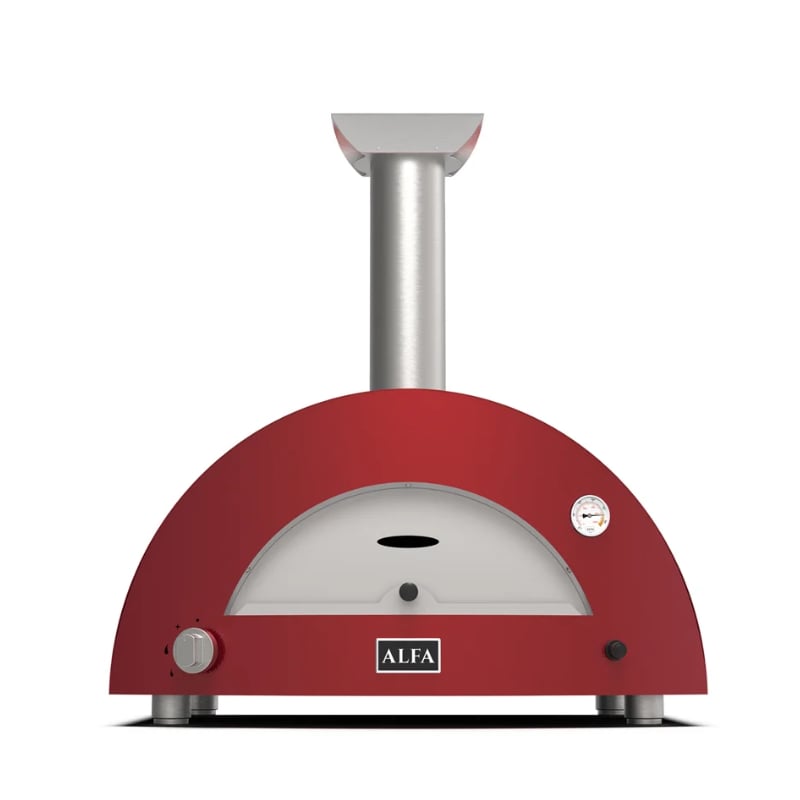
Pizza ovens have become particularly desirable additions to luxury bbq pods. The Alfa Forni Moderno 2 Pizze Hybrid Pizza Oven exemplifies this category, reaching 500°C and cooking authentic Neapolitan pizzas in approximately 90 seconds whilst offering flexibility between gas convenience and wood-fired flavour. Such versatility makes hybrid ovens ideal for bbq pods where diverse cooking techniques enhance entertaining possibilities.
Beyond primary cooking equipment, successful bbq pods incorporate essential supporting systems:
Weather-resistant storage cabinets protect utensils, seasonings and cooking accessories whilst keeping the pod organised and functional. Marine-grade stainless steel construction ensures longevity in exposed outdoor environments, particularly important for year-round installations.
Successful bbq pod projects begin with comprehensive planning that addresses spatial requirements, regulatory compliance and integration with existing property features. This preparatory phase determines whether your vision translates into a functional, legally compliant and aesthetically pleasing reality.
Identifying the optimal location for your bbq pod requires evaluation of multiple factors:
Proximity to house: Balance convenience for food transport against sufficient distance to prevent cooking odours and smoke entering interior spaces. Most installations perform best positioned 3-5 metres from main residence buildings.
Ground conditions: Level, well-drained sites simplify construction and reduce foundation costs. Sloping terrain necessitates terracing or raised platforms, increasing project complexity and budget.
Prevailing wind direction: Position the pod to channel smoke away from dining areas and neighbouring properties. Understanding seasonal wind patterns prevents design decisions that create smoke nuisance.
Access to utilities: Water, electricity and gas connections require reasonable proximity to existing services. Remote locations increase installation costs substantially through trenching and extended pipe runs.
Views and privacy: Orient the pod to capitalise on attractive vistas whilst screening unsightly aspects. Consider sightlines from neighbouring properties to maintain privacy for both parties.
UK planning regulations governing bbq pods vary according to structure size, permanence and proximity to boundaries. Whilst many installations qualify as permitted development, certain circumstances trigger planning permission requirements:
Building regulations typically apply to permanent structures with foundations, particularly those incorporating gas, electrical or plumbing services. Early consultation with local planning authorities clarifies specific requirements for your location and proposed design.
BBQ pod projects range from turnkey professional installations to ambitious DIY endeavours, each approach offering distinct advantages and challenges. Understanding these options helps align project execution with your skills, budget and timeline expectations.
Engaging specialist contractors delivers several valuable advantages:
Design expertise: Professionals translate aspirational concepts into buildable specifications, identifying potential issues before construction commences. Their experience navigating planning regulations, building codes and utility integration streamlines approval processes.
Quality assurance: Established installers maintain relationships with premium material suppliers and equipment manufacturers, accessing trade pricing whilst ensuring specification authenticity. Workmanship guarantees provide recourse should installation defects emerge.
Project management: Coordinating multiple trades-groundworkers, electricians, plumbers, carpenters-requires substantial organisational capacity. Professional project managers sequence works efficiently, minimising delays and preventing costly errors.
Time efficiency: Experienced teams complete installations substantially faster than DIY approaches, reducing disruption to your property and accelerating your enjoyment of the finished space.
Premium outdoor kitchen specialists like those featured in luxury design consultancies offer comprehensive services encompassing initial concept development through final commissioning, delivering fully integrated solutions.
DIY bbq pod construction appeals to homeowners with relevant skills seeking budget control and personalisation opportunities. However, realistic self-assessment of capabilities prevents projects stalling mid-construction or requiring costly professional intervention to rectify errors.
Successful DIY approaches typically involve:
The growth of modular outdoor kitchen systems has democratised bbq pod construction, providing pre-engineered components that simplify assembly whilst maintaining professional aesthetics.
Maximising your investment in bbq pods requires design decisions and operational strategies that extend comfortable usage beyond traditional summer months. British weather presents particular challenges, but thoughtful specification creates outdoor cooking environments functional throughout the year.
Effective weather management combines architectural solutions with operational adjustments:
Adjustable enclosures: Retractable screens, sliding glass panels or removable wall sections allow reconfiguration according to conditions. Open the pod completely during benign weather whilst securing protection when elements deteriorate.
Heating integration: Overhead radiant heaters, fire pits or enclosed stoves maintain comfortable temperatures during cooler months. Gas-powered infrared heaters provide instant warmth without depleting oxygen levels in semi-enclosed pods.
Windbreak positioning: Strategic placement of solid panels or planted screens deflects prevailing winds whilst preserving outlook and natural light. Computational fluid dynamics modelling can optimise windbreak configuration for challenging sites.
Drainage management: Proper roof pitch, guttering and surface water disposal prevent pooling and moisture ingress. French drains or permeable paving around the pod perimeter control runoff effectively.
| Season | Usage Considerations | Recommended Adaptations | Typical Comfort Level |
|---|---|---|---|
| Spring | Variable weather, occasional rain | Partial enclosure, moderate heating | Good with preparation |
| Summer | Extended daylight, warm temperatures | Maximum openness, shade provision | Excellent |
| Autumn | Shortening days, cooling temperatures | Increased lighting, supplementary heating | Good with heating |
| Winter | Cold, wet, reduced daylight | Full enclosure, robust heating, enhanced lighting | Moderate to good |
Those interested in maximising seasonal flexibility should explore covered outdoor kitchen concepts that prioritise weather protection without sacrificing connection to gardens.
Daylight limitation during autumn and winter necessitates comprehensive artificial lighting strategies. Effective schemes incorporate multiple lighting types:
LED technology offers energy efficiency, longevity and colour temperature flexibility. Warm white outputs (2700-3000K) create inviting atmospheres for evening entertaining, whilst cooler temperatures (4000K+) provide clarity for detailed cooking tasks.
BBQ pods represent substantial investments deserving proactive maintenance regimes that preserve performance, appearance and longevity. Establishing routine care schedules prevents minor issues escalating into costly repairs whilst maintaining the enjoyment your pod provides.
Different cooking appliances demand specific maintenance approaches:
Gas grills require annual professional servicing covering burner inspection, gas line pressure testing, ignition system verification and valve operation checks. Between services, clean cooking grates after each use, empty grease traps regularly and protect against moisture ingress during extended idle periods.
Pizza ovens need periodic cleaning to remove carbonised food residue and ash accumulation. Hybrid models with gas components require similar servicing to grills. Stone cooking surfaces benefit from occasional deep cleaning using specialist products that don't compromise food safety.
Refrigeration units demand annual refrigerant level checks, condenser coil cleaning and door seal inspection. Outdoor refrigerators face harsher conditions than indoor equivalents, accelerating wear on mechanical components.
The bbq pod structure itself requires attention to maintain weather resistance and aesthetic appeal:
Winter preparations merit particular attention in the UK climate. For pods used infrequently during cold months, winterisation prevents freeze damage to plumbing, protects equipment from moisture and maintains structural integrity. Comprehensive winterisation includes:
BBQ pod projects span enormous price ranges, from modest DIY installations costing several thousand pounds to luxury turnkey solutions exceeding six figures. Understanding cost drivers helps establish realistic budgets aligned with your aspirations and financial capacity.
Comprehensive budgeting accounts for multiple expenditure categories:
| Cost Category | Budget Range | Percentage of Total | Key Variables |
|---|---|---|---|
| Structure & Shelter | £3,000-£35,000 | 30-40% | Size, materials, complexity |
| Cooking Equipment | £2,000-£25,000 | 25-35% | Specification, brand, features |
| Utilities Installation | £1,500-£8,000 | 10-15% | Distance, complexity, services |
| Groundworks & Foundations | £1,000-£6,000 | 8-12% | Site conditions, preparation |
| Professional Fees | £1,000-£12,000 | 8-12% | Design, project management, certification |
| Furnishings & Accessories | £500-£5,000 | 5-8% | Seating, storage, décor |
Premium specifications incorporating high-end cooking equipment, architectural materials and comprehensive automation systems naturally gravitate towards upper cost ranges. Conversely, value-conscious approaches using modular components and standard finishes achieve functional results at substantially reduced investment.
Maximising return on bbq pod investment involves strategic decisions balancing initial outlay against long-term satisfaction:
Prioritise quality foundations: Proper groundworks and utilities infrastructure prove difficult to retrofit. Investing adequately in these fundamentals prevents future disruption and expense.
Select durable materials: Premium weather-resistant materials command higher initial costs but deliver superior longevity and reduced maintenance expenditure over decades.
Specify adaptable systems: Designs accommodating future equipment upgrades or layout modifications protect against obsolescence as your needs evolve.
Phased implementation: For budget-constrained projects, completing the structure first whilst installing basic equipment allows incremental enhancement as funds permit.
Research into complete outdoor kitchen solutions reveals how integrated approaches often deliver better value than piecemeal assemblies through improved design coherence and installation efficiencies.
BBQ pod design continues evolving, driven by technological advancement, changing lifestyle preferences and increasing environmental consciousness. Understanding emerging trends helps ensure your investment remains current and functional for years ahead.
Automation and connectivity increasingly feature in luxury outdoor cooking environments. Contemporary bbq pods incorporate:
These technologies enhance convenience whilst providing data insights that improve cooking outcomes and operational efficiency. However, outdoor environments demand robust specification of electronic components, ensuring weather resistance and reliable long-term performance.
Environmental responsibility shapes contemporary bbq pod design through multiple dimensions:
Energy efficiency: LED lighting, well-insulated structures and high-efficiency heating systems reduce operational energy consumption. Some installations incorporate solar panels offsetting electrical demands.
Material sourcing: Preference for sustainably harvested timber, recycled metal content and locally produced materials minimises embodied carbon whilst supporting responsible supply chains.
Water conservation: Rainwater harvesting systems supply non-potable water for cleaning tasks, reducing mains consumption. Low-flow taps and efficient appliances further economise usage.
Waste management: Integrated composting facilities for organic food waste and comprehensive recycling storage demonstrate environmental commitment beyond the structure itself.
Exploring year-round outdoor cooking lifestyles reveals how thoughtfully designed bbq pods reduce reliance on energy-intensive indoor kitchens during warmer months, delivering tangible sustainability benefits.
Integration with natural surroundings through biophilic design principles enhances the experiential quality of bbq pods whilst promoting wellbeing. Contemporary approaches incorporate:
These strategies create bbq pods that feel harmoniously embedded within landscapes rather than imposed upon them, elevating the sensory pleasure they deliver.
Beyond pure cooking functionality, successful bbq pods serve as entertainment venues accommodating diverse gathering types from intimate family dinners to larger social occasions. Design decisions supporting this flexibility multiply the value these structures provide.
Flexible furniture arrangements enable adaptation according to guest numbers and occasion formality:
Fixed perimeter benches maximise seating capacity within compact footprints, particularly effective in Nordic hut-style pods where circular arrangements promote conversation. Incorporate storage beneath seating for cushions and entertaining accessories.
Freestanding furniture offers reconfiguration flexibility, allowing adaptation between formal dining setups and casual lounge arrangements. Weather-resistant materials ensure year-round durability without constant storage cycles.
Bar-height counters with stool seating create casual perches for guests whilst the chef works, maintaining social engagement throughout cooking processes. These counter spaces double as serving stations during buffet-style entertaining.
Sensory elements beyond cooking equipment contribute substantially to entertaining success:
The most successful bbq pods balance practical cooking requirements with atmospheric qualities that make spending time within them genuinely pleasurable regardless of whether active cooking occurs.
BBQ pods represent sophisticated solutions for homeowners seeking to elevate outdoor cooking from occasional summer activity into year-round lifestyle centrepiece, combining architectural presence with culinary performance in thoughtfully designed structures. Whether pursuing Nordic hut intimacy, contemporary pavilion openness or bespoke luxury integration, successful implementations balance equipment specification, weather protection and entertaining flexibility. For those ready to transform their outdoor spaces into refined culinary destinations, Cotswold Cooking Company delivers the consultative expertise, curated product selection and comprehensive installation services that turn bbq pod aspirations into reality, blending Cotswold heritage with modern craftsmanship to create outdoor cooking environments worthy of the most discerning homeowners.

Leave a comment