


The outdoor kitchen revolution sweeping across British homes in 2026 has elevated the humble barbecue into something far more sophisticated. A built in bbq uk installation represents the pinnacle of outdoor culinary design, transforming gardens and terraces into year-round entertaining destinations that rival the finest indoor kitchens. For discerning homeowners seeking to create refined outdoor spaces, understanding the nuances of integrated barbecue systems is essential to achieving both functional excellence and architectural harmony.
Permanent barbecue installations offer advantages that portable alternatives simply cannot match. The integration of cooking equipment into bespoke masonry, stone, or stainless steel cabinetry creates a cohesive design language that elevates your entire outdoor space.
Architectural permanence transforms your garden into a legitimate extension of your home's living area. Rather than wheeling equipment in and out of storage, a built in bbq uk system becomes a focal point that anchors your outdoor design vision. This permanence also signals a commitment to outdoor entertaining that resonates with guests and adds measurable value to your property.
Weather resistance represents another compelling advantage. British weather demands robust solutions, and integrated systems can be specified with protective covers, overhead structures, and weather-resistant materials that standalone units cannot match. The surrounding infrastructure shields sensitive components whilst maintaining accessibility for year-round cooking.
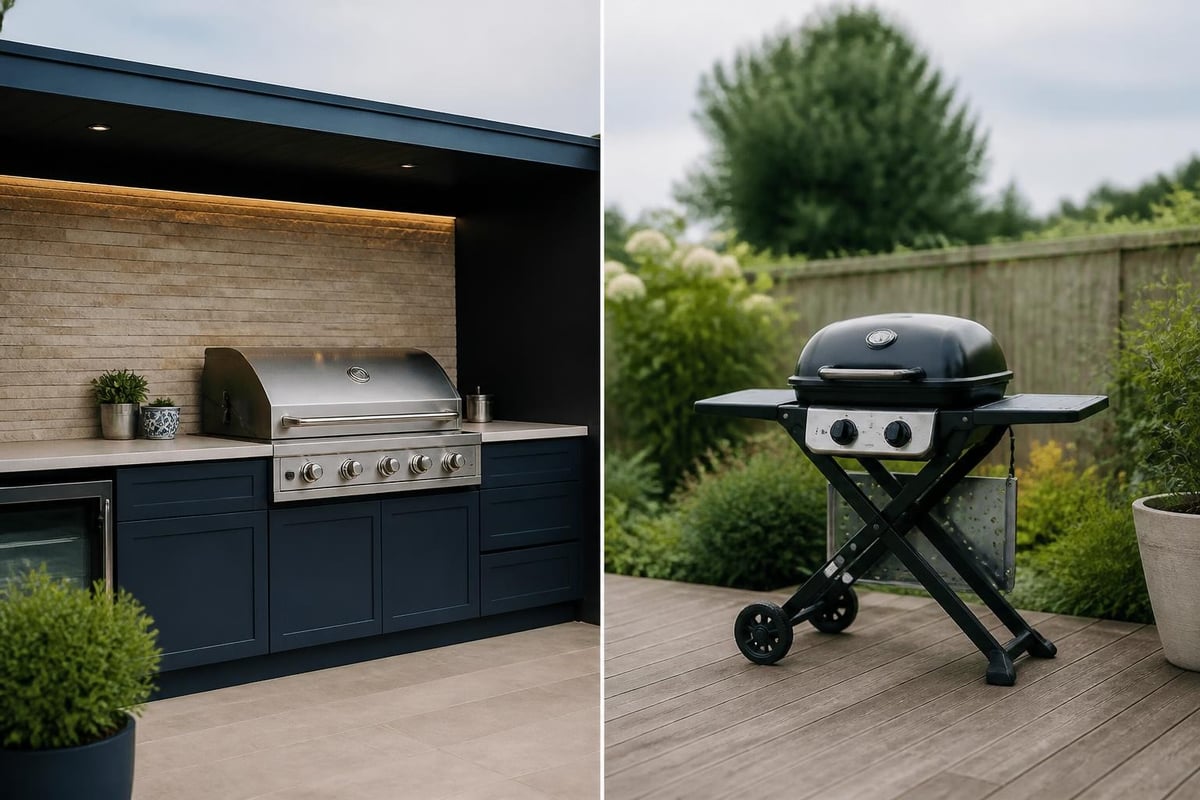
Built-in configurations enable precise specification of cooking zones tailored to your culinary preferences. Multiple burners, griddles, rotisseries, and warming drawers can be integrated into a single cooking station, creating professional-grade capability within arm's reach.
Gas supply becomes more reliable and convenient when professionally plumbed. Mains gas connections eliminate the need for bottle changes during extended gatherings, whilst ensuring consistent heat output. For those preferring charcoal or wood, integrated storage compartments keep fuel dry and accessible.
The workflow advantages are substantial:
Temperature control reaches new levels when equipment is shielded from wind and properly ventilated. Integrated hoods extract smoke efficiently, making the cooking experience pleasant even during extended sessions.
Material selection fundamentally impacts both aesthetics and longevity. The choice between stainless steel, natural stone, brick, or composite materials should reflect your overall garden design whilst addressing practical concerns about maintenance and weather exposure.
| Material | Weather Resistance | Maintenance | Aesthetic | Typical Lifespan |
|---|---|---|---|---|
| 316-Grade Stainless Steel | Excellent | Low | Contemporary | 20+ years |
| Natural Stone (Granite/Limestone) | Excellent | Medium | Traditional | 30+ years |
| Engineering Brick | Very Good | Low | Heritage | 25+ years |
| Porcelain Cladding | Excellent | Very Low | Versatile | 25+ years |
| Composite Panels | Good | Low | Modern | 15+ years |
Stainless steel dominates luxury outdoor kitchen specifications for compelling reasons. Marine-grade 316 stainless withstands British coastal conditions whilst requiring minimal upkeep. The material's clean lines complement contemporary architecture, and its non-porous surface meets the highest hygiene standards. When selecting a built in BBQ, consider how steel cabinetry integrates with your chosen cooking equipment.
Stone installations offer timeless appeal that harmonises with traditional properties. Cotswold limestone, Yorkshire sandstone, or Welsh slate create visual connections to regional architectural heritage. However, stone requires skilled masonry and careful sealing to prevent water ingress during freeze-thaw cycles.
Hybrid approaches combine materials strategically. A stone base provides visual weight and structural support, whilst stainless steel countertops deliver practical work surfaces. Porcelain tiling wraps vertical surfaces in weather-proof, easy-clean finishes that can mimic natural materials convincingly.
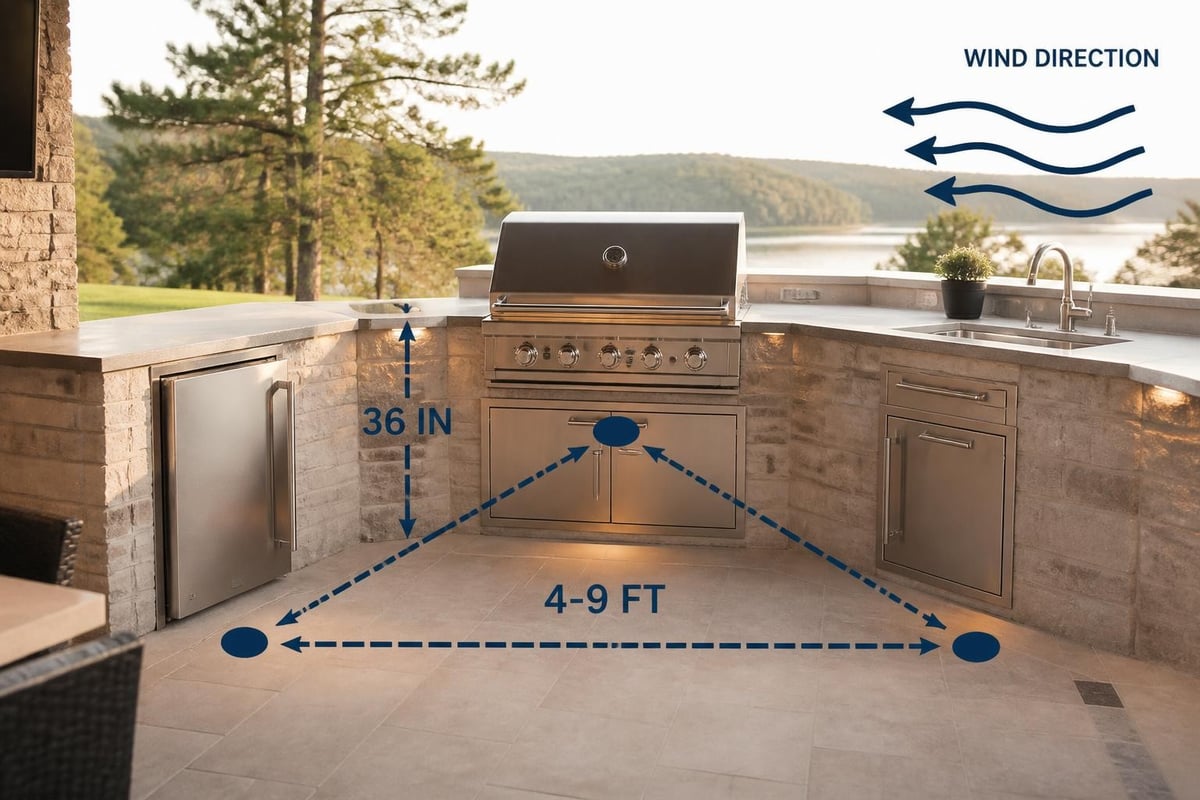
The working triangle principle applies equally to outdoor kitchens. Position your built in bbq uk installation to create efficient movement between cooking, preparation, and serving areas. Industry standards suggest 1200-2100mm between key work zones for optimal workflow.
Counter height typically sits at 900mm to match indoor kitchen standards, though some designers specify 950mm to accommodate outdoor seating arrangements. Depth should extend to at least 600mm for integrated units, with 750mm providing comfortable space for larger equipment.
Clearance zones matter enormously for safety and functionality:
Consider prevailing wind direction when positioning grills. Locating your barbecue to minimise smoke drift towards seating areas enhances guest comfort without compromising ventilation.
The cooking appliance itself represents the heart of your outdoor kitchen investment. British homeowners in 2026 have access to exceptional equipment from specialist manufacturers who understand our climate challenges and entertaining preferences.
Gas grills dominate luxury installations for their convenience and control. Four to six burner configurations provide versatility for different cooking techniques, whilst infrared zones deliver searing temperatures exceeding 300°C for steakhouse-quality results. Look for models with cast stainless burners rated for marine environments, as these withstand moisture far better than standard residential specifications.
Charcoal systems appeal to purists seeking authentic flavour. Contemporary designs incorporate adjustable charcoal trays, efficient air flow systems, and removable ash pans that make charcoal cooking far less laborious than traditional methods. Some high-end installations integrate both gas and charcoal options within a single island configuration.
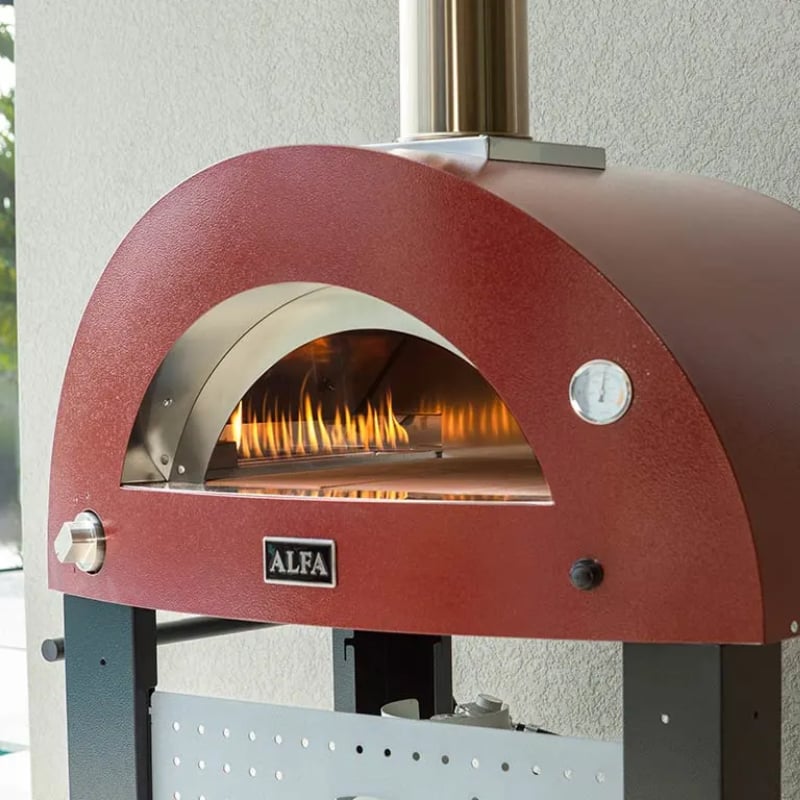
Hybrid capabilities deserve serious consideration. Units accepting both gas and wood offer maximum flexibility, letting you choose convenience or flavour based on the occasion. The Alfa Forni Moderno Hybrid Pizza Oven exemplifies this versatility in pizza cooking, reaching 500°C in around thirty minutes using either LPG or wood to deliver authentic Neapolitan results in approximately ninety seconds.
Professional-grade options from brands featured in The Independent's built-in barbecue reviews showcase the quality available to UK homeowners. When evaluating equipment, prioritise warranty coverage, parts availability, and local service support.
A truly functional outdoor kitchen extends beyond the primary cooking surface. Integrated refrigeration, sinks with hot water, and additional cooking appliances transform outdoor cooking from occasional novelty to genuine lifestyle enhancement.
Side burners accommodate sauces, vegetables, and simultaneous cooking tasks. Specify models with sealed burners to prevent debris accumulation. Power ratings between 3.5-5kW provide adequate heat without overwhelming smaller pots.
Warming drawers maintain finished dishes at serving temperature, essential for multi-course entertaining. Outdoor-rated units feature enhanced insulation and sealed controls to withstand temperature fluctuations and moisture exposure.
Storage solutions should include:
Successful built in bbq uk projects depend on thorough groundwork. The foundation, utilities, and protective elements must be specified and installed to exacting standards.
Load-bearing capacity matters more than many homeowners realise. A typical outdoor kitchen island weighs 200-400kg before equipment installation, with finished units potentially exceeding 800kg. Concrete bases should be 100-150mm thick, reinforced with steel mesh, and extend 150mm beyond the island footprint on all sides.
Sub-base preparation varies by soil type. Clay soils require 150-200mm of compacted hardcore to prevent differential settlement. Sandy soils may need only 100mm, but ensure adequate compaction using a vibrating plate. Consider professional installation services to guarantee structural integrity.
Level tolerance should not exceed 2mm over 1 metre. Use a laser level to verify the surface before construction begins. Even slight slopes create ongoing frustration when cooking and preparing food.
Gas installations demand qualified engineers certified for outdoor work. Underground supply pipes require burial depths of 375mm minimum (450mm in cultivated areas), with appropriate sleeving through walls. Isolation valves should be accessible but discreet, typically located within base cabinetry.
Electrical requirements often exceed initial estimates:
All electrical work must comply with BS 7671 wiring regulations. External sockets require RCD protection rated for outdoor use (typically IP65 or higher). Many designers specify armoured cable buried 450mm deep to eliminate surface conduit runs.
Water supply enables integrated sinks, ice makers, and easy cleanup. External taps should include back-flow prevention devices. Waste water requires proper drainage to soak-aways or mains sewers, depending on local regulations and site conditions.
| Utility | Specification | Regulatory Requirement |
|---|---|---|
| Gas | Buried copper or PE pipe, 22-28mm | Gas Safe registered installer |
| Electrical | SWA cable, RCD protection, IP65 | Part P Building Regulations |
| Water | 15mm MDPE supply, back-flow valve | Water Supply Regulations |
| Drainage | 40mm waste, proper fall to drain | Building Regulations Approved Doc H |
British weather presents unique challenges that Mediterranean outdoor kitchen designs simply do not address. Transforming your built in bbq uk installation into a year-round asset requires thoughtful environmental control.
Architectural pergolas represent the most sophisticated approach to weather protection. Contemporary bioclimatic systems feature rotating louvers that adjust to sun angle, rain intensity, and desired ventilation. Integrated LED lighting, heating, and even audio systems create genuine outdoor rooms rather than merely covered spaces.
Fixed canopies offer simpler alternatives. Specify materials that complement your home's architecture whilst providing adequate weather protection. Polycarbonate sheeting transmits light whilst shedding rain. Powder-coated aluminium frames resist corrosion indefinitely. Glass canopies create unobstructed views of sky whilst maintaining shelter.
Retractable awnings provide flexible coverage, extending during rain or intense sun, retracting to open the space fully. Quality mechanisms withstand wind loads up to 40mph when properly installed and maintained. Consider motorised options with wind sensors that automatically retract before damage occurs.
Extending the outdoor cooking season into shoulder months and winter requires supplemental heating. Overhead infrared heaters deliver focused warmth without wasting energy heating the entire garden. Ceiling-mounted units keep floor space clear whilst providing even heat distribution.
Gas patio heaters offer portable warmth, though they consume considerable fuel and lack the refinement of integrated solutions. Bioethanol burners built into islands or perimeter walls create ambience without requiring gas connections, though heat output remains modest.
Wind barriers make surprising differences to perceived temperature. Frameless glass panels maintain views whilst blocking chilling breezes. Planted screens using evergreen hedging provide natural wind reduction with seasonal interest. Modular panel systems offer flexibility to reconfigure based on weather conditions.
Premium outdoor kitchens represent substantial investments that deserve proper care. Establishing maintenance routines from commissioning ensures decades of reliable service.
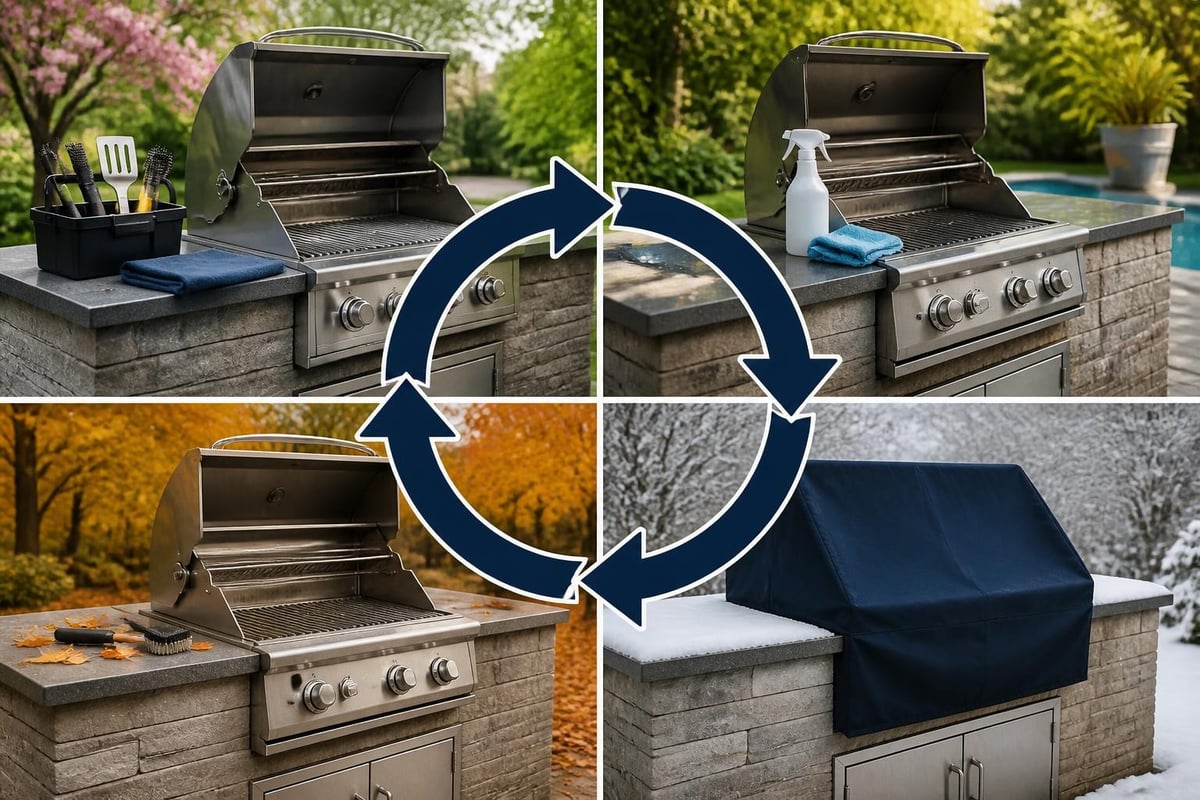
Spring preparation should include deep cleaning of all surfaces, inspection of gas connections, and verification that drainage remains clear. Remove any debris accumulation from winter months. Test all equipment before entertaining season begins.
Summer maintenance focuses on routine cleaning after use. Stainless steel benefits from weekly wiping with manufacturer-approved cleaners. Stone surfaces require periodic sealing, typically annually or bi-annually depending on product specifications.
Autumn winterisation becomes critical in regions experiencing frost. Drain water lines completely if not protected by heating trace cables. Apply protective covers to sensitive equipment. Remove any seasonal accessories to indoor storage.
Winter checks every 4-6 weeks prevent unnoticed damage. Verify covers remain secure. Clear any snow accumulation that might stress structures. Confirm drainage points haven't frozen.
Different materials demand tailored maintenance approaches:
Equipment servicing schedules vary by manufacturer, but annual professional inspections represent prudent practice. Gas systems require safety checks. Mechanical components need lubrication. Electrical connections should be tested for deterioration.
Understanding the financial commitment helps establish realistic expectations and guides specification decisions. Built in bbq uk installations span enormous price ranges based on complexity, materials, and equipment selection.
Entry-level integrated barbecues begin around £3,000-£5,000 for basic gas grills with minimal surrounding infrastructure. These typically include the cooking unit, simple cabinetry, and essential installation work.
Mid-range installations between £10,000-£25,000 incorporate quality equipment, attractive materials, and complementary elements like refrigeration or side burners. This bracket delivers genuine functionality whilst maintaining reasonable budget discipline.
Premium outdoor kitchens exceed £40,000, with luxury specifications reaching £80,000-£120,000 for comprehensive installations featuring top-tier equipment, architectural pergolas, integrated technology, and bespoke finishes. These represent complete outdoor living transformations rather than simple cooking spaces.
Budget allocation guidelines:
Research indicates well-executed outdoor kitchens return 60-80% of their cost upon property sale, with premium installations in high-value postcodes sometimes achieving complete cost recovery. The lifestyle benefits during ownership often justify expenditure regardless of resale considerations.
Properties featuring outdoor kitchens sell faster than comparable homes without these amenities. Estate agents report increased interest and higher offer values, particularly in areas where outdoor entertaining aligns with local lifestyle expectations.
Financing options include home improvement loans, remortgage advances, or savings allocation. Consider timing installations to capture several seasons of use before any potential property sale. The memories created and lifestyle enhancement delivered often exceed purely financial calculations.
Contemporary outdoor kitchen design reflects evolving preferences toward minimalism, sustainability, and technology integration. Understanding current directions helps specify installations that remain relevant for years.
Streamlined designs dominate luxury outdoor spaces. Concealed storage, flush-mounted equipment, and monochromatic colour schemes create visual calm. This approach suits British tastes for understated elegance rather than ostentatious display.
Handle-free cabinetry using push-to-open mechanisms maintains clean facades. Integrated plinths conceal equipment bases. Recessed lighting eliminates visible fixtures whilst providing excellent task illumination.
Material palettes restrict to two or three complementary finishes. Pairing natural stone with stainless steel and a single accent colour creates sophisticated restraint. This discipline prevents visual chaos common in over-specified spaces.
Eco-aware homeowners increasingly specify sustainable materials and energy-efficient equipment. Reclaimed timber, recycled composite decking, and locally-sourced stone reduce environmental impact whilst creating authentic character.
Equipment selection favours high-efficiency burners, LED lighting throughout, and appliances with strong energy ratings. Solar panels integrated into pergola structures offset electrical consumption. Rainwater harvesting systems supply outdoor taps, reducing mains water demand.
Native planting around outdoor kitchens supports biodiversity whilst reducing irrigation requirements. Permeable paving materials allow natural drainage rather than creating runoff. These choices align luxury outdoor living with environmental stewardship.
Smart controls enable remote equipment monitoring and adjustment. Pre-heating grills via smartphone apps means instant readiness upon arriving home. Temperature monitoring prevents overcooking expensive ingredients.
Integrated audio systems with weatherproof speakers create ambience without visible equipment. Streaming services access thousands of playlists and radio stations. Voice control integration allows hands-free operation whilst cooking.
Automated lighting responds to sunset times and occupancy. Pergola louvers adjust based on weather stations. These technologies transform outdoor kitchens into responsive environments that anticipate needs rather than merely responding to commands.
Exploring luxury outdoor cooking solutions reveals the breadth of contemporary options available to discerning UK homeowners.
The complexity of integrated outdoor kitchens demands experienced specialists rather than general contractors. The right design partner transforms aspirations into reality whilst navigating technical challenges and regulatory requirements.
Seek consultancies demonstrating outdoor kitchen portfolios rather than firms treating these as occasional diversions from indoor work. Experience with British weather conditions, planning considerations, and appropriate material specifications proves invaluable.
Qualified gas engineers, certified electricians, and skilled masons should form the installation team. Verify credentials and insurance coverage before committing to any provider. Request references from recent clients with similar project scopes.
Design capability matters enormously. Review portfolios critically, assessing whether previous work aligns with your aesthetic preferences. Some firms excel at contemporary minimalism, others at traditional designs. Match your vision to their demonstrated strengths.
Quality design partners invest time understanding your entertaining patterns, cooking preferences, and aesthetic aspirations before proposing solutions. This discovery phase prevents expensive missteps and ensures the final installation serves your actual needs.
Site surveys should assess existing conditions, utility locations, and environmental factors. Drainage patterns, sun exposure throughout seasons, and prevailing wind direction all influence optimal placement and configuration.
Detailed specifications prevent misunderstandings about materials, equipment, and finishes. Insist on written confirmation of all selections, with samples provided where possible. Amendments during construction multiply costs unnecessarily.
Project timelines vary from 4-12 weeks depending on complexity. Weather delays affect outdoor construction, so build contingency into planning. Discuss communication protocols and how changes or issues will be managed throughout the build.
Different regions present unique opportunities and constraints for built in bbq uk installations. Understanding local factors optimises design decisions and material selection.
Salt-laden air accelerates corrosion of inadequately specified materials. Marine-grade stainless steel (316 grade minimum) becomes essential rather than optional. Enhanced sealing of timber elements prevents moisture ingress and decay.
Wind exposure intensifies in coastal locations. Structural calculations for pergolas and canopies must account for higher wind loads. Glass barriers provide essential protection without obscuring sea views that attracted homeowners initially.
Regulatory requirements often increase in coastal zones. Planning consent may scrutinise proposed structures more carefully, particularly within Areas of Outstanding Natural Beauty or Heritage Coasts. Early dialogue with planning authorities prevents costly redesigns.
City gardens and rooftop terraces impose weight restrictions and access challenges. Structural engineers should verify load capacity before specifying heavy masonry constructions. Modular systems in lightweight materials often suit these environments better.
Privacy screening becomes priority in dense neighbourhoods. Strategic planting, decorative panels, or frosted glass barriers create intimacy without complete enclosure. Acoustic considerations matter where outdoor entertaining might disturb neighbours.
Gas connections prove more complex in multi-storey buildings. Bottled gas represents the practical solution, with secure storage designed into the overall scheme. Electrical supply typically presents fewer obstacles given existing infrastructure.
Expansive plots permit generous island configurations and comprehensive outdoor rooms. The challenge shifts from space constraints to creating appropriate scale that doesn't feel lost within large gardens.
Planning considerations may involve Green Belt policies, Listed Building consent, or Conservation Area restrictions. The Cotswolds, for example, demands materials and designs that respect vernacular architecture. Sympathetic specifications using local stone and traditional forms gain approval more readily.
Septic tank systems require careful waste water management. Grease traps prevent contamination whilst maintaining system efficiency. Professional guidance proves essential to navigate these environmental health requirements.
Creating a luxury built in bbq uk installation requires balancing aesthetic vision with practical functionality, material durability with design coherence. Whether you're planning a contemporary outdoor kitchen in a coastal setting or a heritage-inspired cooking space within a Cotswold garden, the right expertise transforms these aspirations into lasting reality. Cotswold Cooking Company brings together curated equipment from premium manufacturers, consultative design services, and comprehensive installation support to create refined outdoor culinary destinations that elevate British outdoor living to exceptional standards.

Leave a comment