


Transforming your outdoor space into a refined culinary destination requires thoughtful consideration of both function and form. Pergolas and gazebos represent two of the most sophisticated architectural elements available to discerning homeowners, each offering distinct advantages for creating sheltered, elegant outdoor rooms. Whether you're planning an alfresco kitchen, a protected dining area, or a year-round entertaining space, understanding the nuanced differences between these structures will help you make an informed decision that enhances both your property's aesthetic appeal and its practical value.
The distinction between pergolas and gazebos extends far beyond mere appearance. Gazebos are freestanding structures with a solid roof, typically octagonal or circular, providing complete overhead protection from the elements. They create a fully defined outdoor room with posts supporting a covered canopy, often featuring integrated flooring and railings.
Pergolas, by contrast, feature an open-lattice roof supported by vertical posts or columns. This design allows dappled sunlight to filter through whilst providing partial shade and architectural definition. The structural differences between these outdoor features significantly impact their suitability for various applications, particularly when integrating luxury outdoor kitchens.
Modern pergola design has evolved considerably, with manufacturers now offering louvered roof systems that provide adjustable coverage. These innovative solutions bridge the gap between traditional open pergolas and fully covered gazebos, allowing homeowners to control sunlight and weather protection with precision.
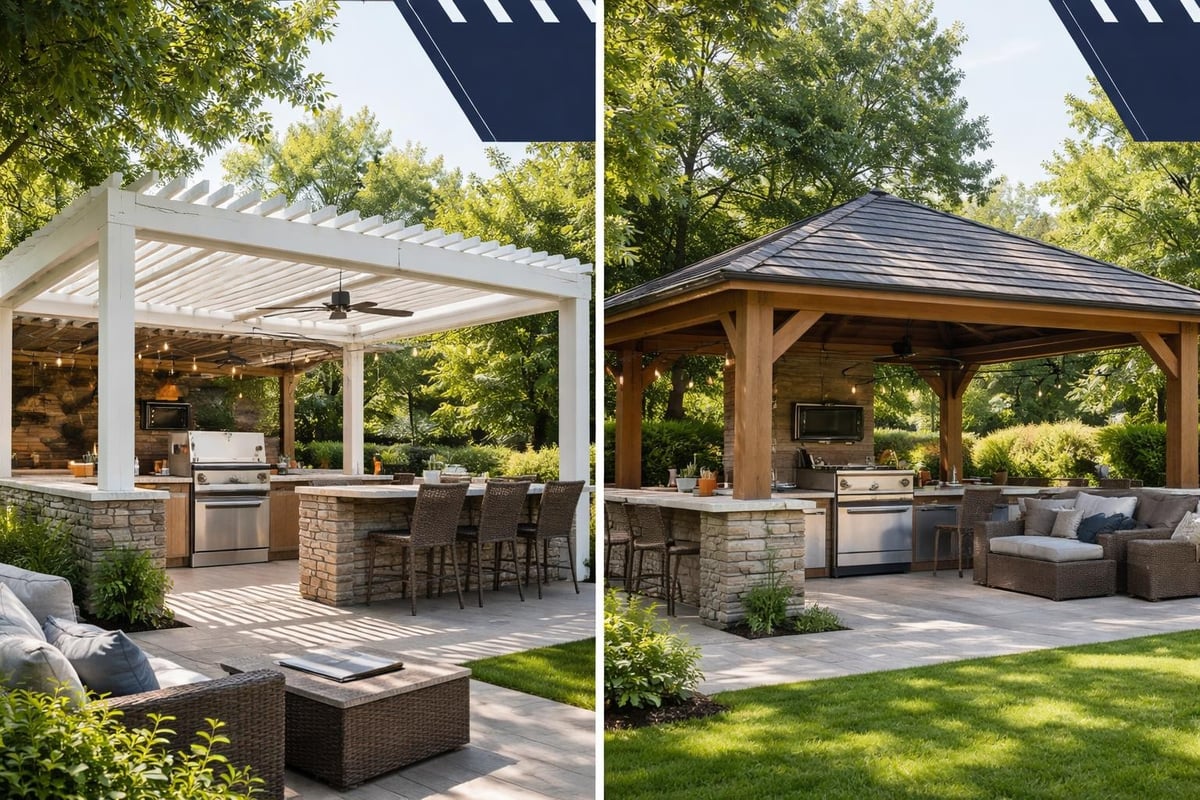
Key structural features include:
Gazebos traditionally offer more intimate, enclosed spaces, whilst pergolas excel at creating expansive outdoor rooms that flow seamlessly from house to garden. This distinction shapes how homeowners choose between pergolas and gazebos for their specific entertaining requirements.
The relationship between cooking infrastructure and overhead shelter deserves careful planning. Pergolas and gazebos each present unique opportunities when designing luxury outdoor kitchens, with considerations ranging from ventilation requirements to spatial configuration.
For serious outdoor cooking enthusiasts, pergolas offer superior ventilation for heat and smoke dispersal. The open-roof design naturally channels cooking emissions upwards and outwards, making them particularly suitable for integrated grilling stations and wood-fired ovens. When incorporating a pergola with grill configuration, the semi-open structure maintains comfortable cooking temperatures even during summer afternoons.
| Consideration | Pergola Solution | Gazebo Solution |
|---|---|---|
| Smoke dispersal | Natural upward flow through lattice | Requires integrated extraction system |
| Heat build-up | Minimal retention, excellent airflow | Can accumulate without proper venting |
| Cooking appliance placement | Unrestricted positioning | Best positioned at perimeter |
| Year-round usability | Enhanced with heating elements | Superior weather protection |
| Equipment integration | Side burners, pizza ovens, grills | Compact cooking stations preferred |
Gazebos require more sophisticated ventilation solutions when housing cooking equipment. Professional installation must incorporate proper extraction systems, particularly for high-heat appliances. However, their enclosed nature provides exceptional weather protection, enabling comfortable cooking during inclement conditions.
The materials you select for pergolas and gazebos directly impact both aesthetic appeal and long-term durability. Premium hardwoods, powder-coated aluminium, and composite materials each offer distinct advantages for British weather conditions.
Timber options:
Aluminium structures have gained considerable traction amongst luxury homeowners. Their powder-coated finishes withstand UV exposure without fading, whilst the material itself never warps, splits, or requires painting. When designing outdoor kitchens, aluminium pergolas integrate seamlessly with modern cooking appliances and cabinetry systems.
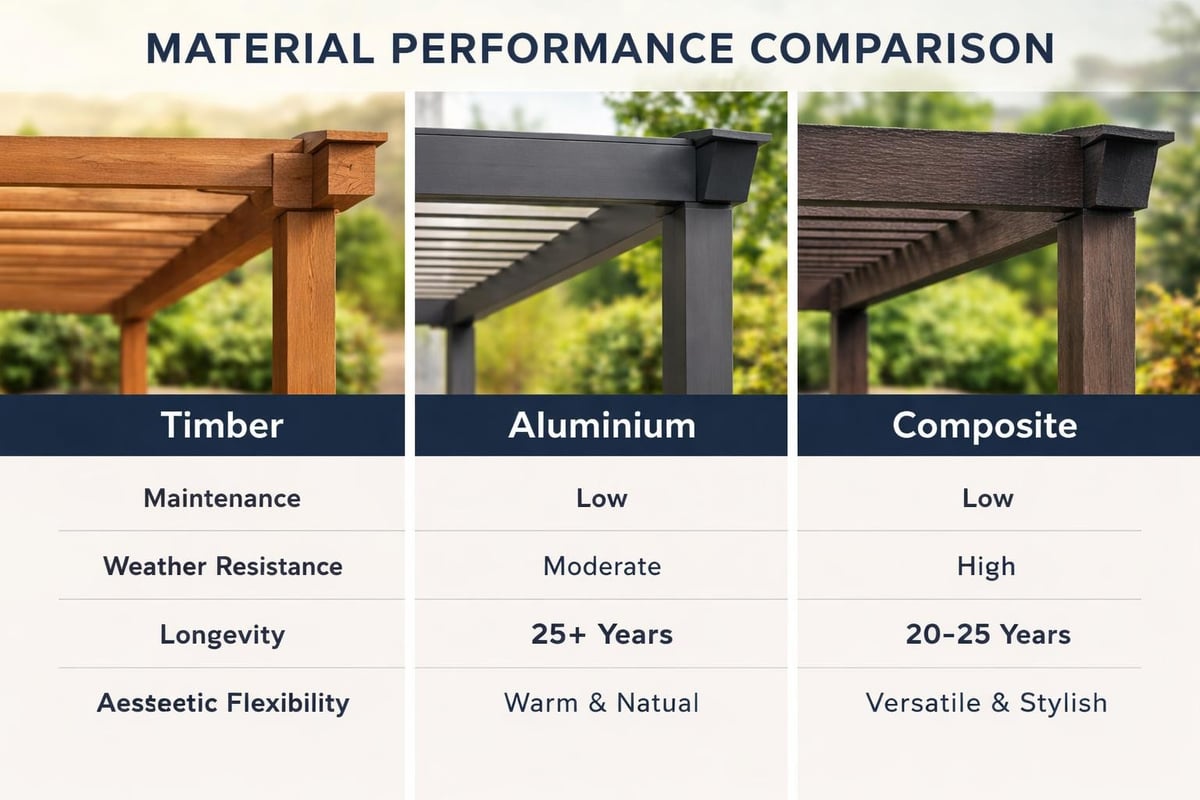
Contemporary homeowners increasingly prioritise low-maintenance solutions. Aluminium pergolas and gazebos require minimal upkeep beyond periodic cleaning, whilst timber structures demand regular inspection, treatment, and potential refinishing every 2-3 years depending on exposure.
Composite materials blend wood fibres with polymers, offering timber's visual warmth without its maintenance burden. These engineered products resist moisture, insects, and UV degradation whilst maintaining dimensional stability across temperature fluctuations common in British climates.
The growing preference for pergolas over traditional gazebos partly reflects the design flexibility and reduced maintenance associated with modern aluminium louvered systems. These structures deliver gazebo-like protection when closed whilst maintaining the open, airy character homeowners value in pergola design.
Extending the usability of outdoor areas beyond summer months requires strategic integration of heating, lighting, and weather protection. Pergolas and gazebos both support comprehensive environmental control systems that transform them into genuine four-season rooms.
Essential year-round features:
For outdoor kitchen applications, year-round functionality means protecting both cooking equipment and dining areas from winter weather. Pergolas fitted with retractable screens and louvered roofs provide flexibility, allowing you to open the space during mild weather whilst securing it against wind and rain when necessary.
Building a complete outdoor kitchen beneath a quality pergola or within a well-designed gazebo ensures your investment delivers value throughout the calendar. The protection overhead extends appliance lifespan by shielding grills, pizza ovens, and cabinetry from direct precipitation.
The architectural presence of pergolas and gazebos fundamentally alters your garden's character. These structures function as focal points, drawing the eye and organising outdoor space into purposeful zones for cooking, dining, and relaxation.
Scale represents perhaps the most critical design consideration. A pergola should feel substantial enough to anchor your outdoor kitchen without overwhelming the garden. Generally, structures spanning 4-6 metres suit most residential applications, though larger properties may accommodate more generous proportions.
| Design Element | Small Gardens (< 100m²) | Medium Gardens (100-300m²) | Large Gardens (> 300m²) |
|---|---|---|---|
| Optimal pergola span | 3.0m x 3.0m | 4.0m x 5.0m | 6.0m x 6.0m or larger |
| Recommended post height | 2.4m | 2.7m | 3.0m+ |
| Integration approach | Single-zone design | Kitchen + dining zones | Multiple entertaining areas |
| Lighting requirements | Focused task lighting | Layered ambient + task | Architectural feature lighting |
Gazebos typically occupy less linear space than pergolas but require adequate clearance around their perimeter. Their defined footprint makes them excellent choices for creating intimate outdoor rooms within larger garden schemes.
Professional designers recommend positioning cooking zones at one end of a pergola, allowing smoke and heat to disperse away from dining areas. This configuration also facilitates natural workflow from food preparation through cooking to plating and service.
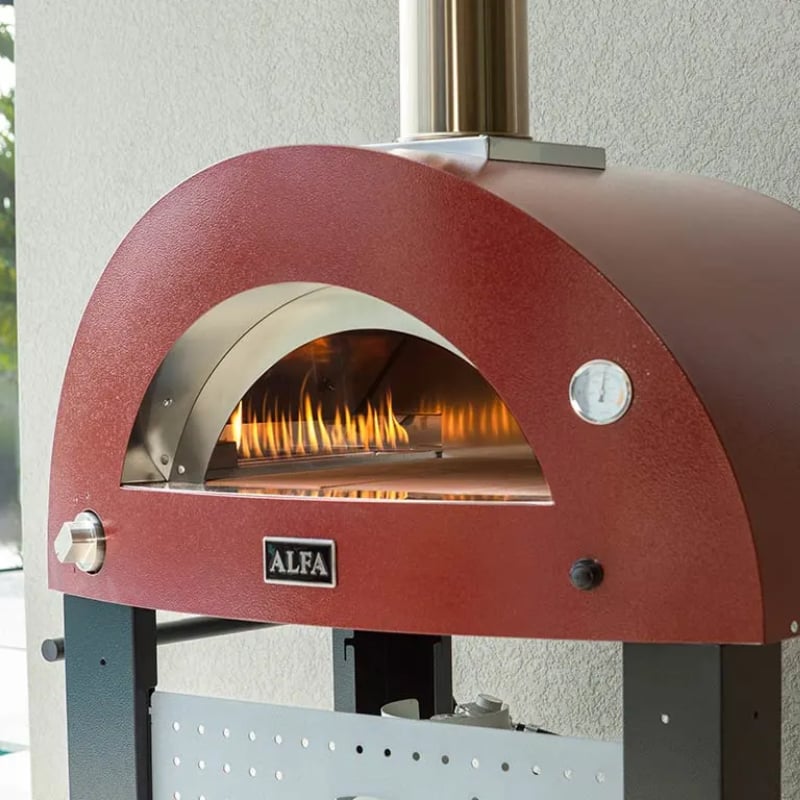
The experts at Cotswold Cooking Company frequently specify L-shaped or U-shaped kitchen layouts beneath extended pergolas, maximising counter space whilst maintaining comfortable circulation. When incorporating premium appliances like the Alfa Forni Modorno Hybrid Pizza Oven, proper overhead clearance and ventilation become paramount. This handcrafted Italian oven reaches temperatures of 500°C and benefits significantly from pergola coverage that protects it from the elements whilst allowing heat to dissipate naturally.
The outdoor living sector has witnessed remarkable innovation over recent years, with pergolas and gazebos incorporating technology and materials previously reserved for interior architecture. Smart systems now allow remote control of louvered roofs, integrated heating, and atmospheric lighting through smartphone applications.
Emerging design trends include:
Minimalist aesthetics continue gaining ground, with clean lines and monochromatic finishes complementing contemporary garden design. Dark anthracite and bronze powder-coated aluminium pergolas create striking contrasts against traditional brick or stone, whilst natural timber options suit period properties and cottage gardens.
High-end pergolas and gazebos increasingly blur boundaries between indoor and outdoor spaces, incorporating floor-to-ceiling glass panels that slide or fold away completely. These hybrid designs protect delicate outdoor kitchens and furnishings whilst maintaining visual connection to the surrounding landscape.
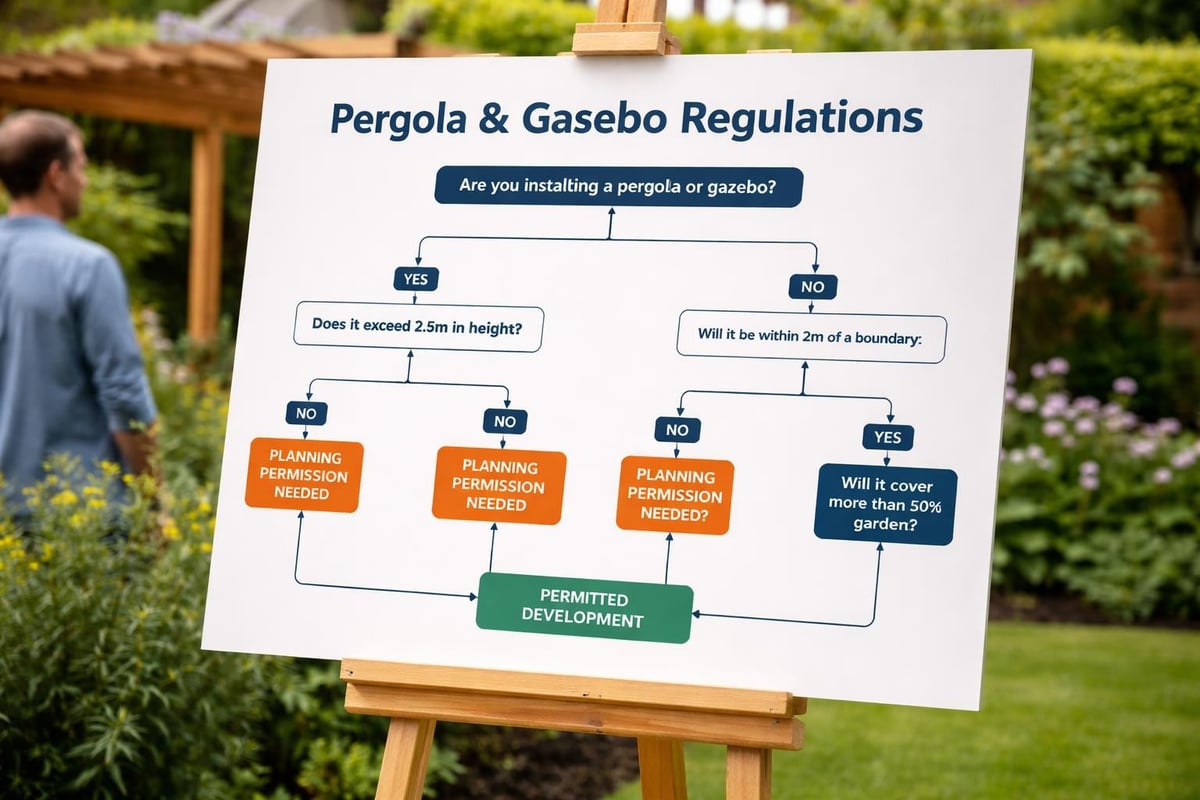
Understanding the regulatory framework governing pergolas and gazebos prevents costly mistakes and project delays. In England, most garden structures fall under permitted development rights, though specific restrictions apply based on size, height, and proximity to boundaries.
Standard permitted development allowances:
Pergolas typically navigate these regulations more easily than gazebos due to their open-roof design, which may not qualify as a "building" under certain interpretations. However, when integrating substantial outdoor kitchens with gas, water, and electrical services, building control notification becomes necessary regardless of the overhead structure type.
Local planning authorities in the Cotswolds and other Areas of Outstanding Natural Beauty may impose stricter requirements. Consulting with experienced specialists who understand regional variations ensures compliance whilst achieving your design objectives. The team at Cotswold Cooking Company regularly navigates these complexities when creating year-round outdoor cooking lifestyles.
The financial commitment for quality pergolas and gazebos varies considerably based on materials, size, and integrated systems. Entry-level timber pergolas may commence around £2,500-£4,000, whilst premium louvered aluminium systems with automation and lighting can exceed £25,000 for comprehensive installations.
Custom-designed structures incorporating outdoor kitchens represent significant investments, typically ranging from £15,000 to £60,000 depending on specification. This investment must account for foundations, structural installation, integrated services, and finishing details that ensure longevity and aesthetic cohesion.
| Structure Type | Budget Range | Lifespan | ROI Considerations |
|---|---|---|---|
| Timber pergola (standard) | £3,000-£8,000 | 10-15 years | Modest property value increase |
| Aluminium pergola (louvered) | £12,000-£30,000 | 25+ years | Significant lifestyle enhancement |
| Hardwood gazebo (bespoke) | £8,000-£20,000 | 20-25 years | Strong visual impact |
| Integrated kitchen pergola | £25,000-£80,000 | 25+ years | Substantial property differentiation |
Property value enhancement depends largely on installation quality and how well the structure integrates with existing architecture. Well-executed outdoor living spaces consistently appeal to prospective buyers, particularly in premium property segments where outdoor entertaining capability influences purchasing decisions.
Return on investment extends beyond monetary considerations. The lifestyle benefits of a properly designed outdoor kitchen beneath a quality pergola or within an elegant gazebo deliver daily value through extended living space and enhanced entertaining capability.
Whilst simple pergola kits suit competent DIY enthusiasts, integrating pergolas and gazebos with luxury outdoor kitchens demands professional expertise. Structural engineering, service integration, and weatherproofing all require specialist knowledge to achieve safe, durable, and aesthetically refined results.
Professional installation ensures proper foundation design accounting for local soil conditions and drainage requirements. Inadequate foundations lead to settling, structural stress, and premature failure regardless of superstructure quality. Experienced installers also navigate the complexities of running gas, water, and electrical services to outdoor cooking areas whilst maintaining compliance with building regulations.
Outdoor kitchen specialists provide comprehensive design consultation that addresses spatial planning, equipment specification, and material selection. This consultative approach prevents common mistakes such as inadequate counter space, poor workflow design, or incompatible material combinations.
The value of professional guidance becomes particularly evident when selecting and positioning outdoor cooking equipment beneath pergolas and gazebos. Proper clearances, ventilation paths, and service routing all influence long-term satisfaction and safety.
Modern pergolas and gazebos offer extensive customisation possibilities that allow homeowners to express individual style whilst meeting functional requirements. From decorative post caps through integrated planters to bespoke lighting schemes, these details transform standard structures into personalised outdoor sanctuaries.
Popular customisation elements:
Colour selection significantly impacts visual harmony. Dark finishes create dramatic contemporary statements, whilst natural timber tones suit traditional properties. Many manufacturers now offer extensive RAL colour ranges, enabling precise matching to existing architectural details or garden furniture.
The different approaches to pergola and veranda selection reflect diverse aesthetic preferences and functional priorities. Some homeowners prioritise maximum weather protection, whilst others value openness and light penetration above all else.
Pergolas and gazebos achieve their full potential when thoughtfully integrated with surrounding landscaping. Climbing plants soften architectural lines whilst providing additional shade and seasonal interest. Wisteria, climbing roses, and clematis all thrive when supported by pergola structures, creating living canopies that evolve throughout the year.
Hard landscaping elements surrounding these structures warrant equal attention. Natural stone paving, gravel paths, and planted borders create transitions between built structures and garden proper. Professional landscape designers often specify cohesive material palettes that unify outdoor kitchens, pergolas, and garden features into harmonious compositions.
Lighting design extends usability into evening hours whilst creating atmospheric ambience. Uplighting from planted borders highlights pergola posts and beams, whilst downlighting from overhead structures illuminates dining and cooking areas. Contemporary LED systems offer colour temperature adjustment, allowing warm tones for intimate dinners or cooler light for food preparation.
Strategic planting also addresses practical concerns such as privacy screening and wind buffering. Evergreen hedging or architectural grasses planted around gazebo perimeters create sheltered microclimates that extend comfortable outdoor living into spring and autumn months.
The British climate demands flexible outdoor spaces capable of responding to changing conditions. Pergolas and gazebos excel when designed with seasonal adaptation in mind, incorporating removable screens, retractable canopies, and modular heating solutions.
Summer configuration might emphasise maximum airflow and dappled shade, with pergola louvers fully opened and side screens retracted. As temperatures moderate, adjustable roofs can close to retain warmth whilst maintaining views. Winter operation benefits from full weather enclosure, transforming open pergolas into protected rooms suitable for year-round dining.
Seasonal adaptation strategies:
Gazebos inherently offer superior winter protection, though adequate heating and weatherproofing of cooking equipment remain essential. Metal outdoor kitchen cabinets withstand moisture exposure better than timber alternatives, making them preferable choices for structures used year-round.
Pergolas and gazebos represent significant architectural investments that fundamentally transform how you experience outdoor space, particularly when integrated with luxury cooking facilities. By carefully considering structural differences, material selections, and design details discussed throughout this guide, you'll create an outdoor environment that delivers lasting pleasure and practical value. Whether you envision intimate garden dining beneath a classic gazebo or expansive entertaining under a contemporary louvered pergola, Cotswold Cooking Company offers comprehensive design consultation and installation services that bring your vision to life with uncompromising quality and attention to detail.

Leave a comment