


The kamado BBQ represents a remarkable convergence of ancient Japanese pottery techniques and contemporary outdoor culinary innovation. Originally designed as a rice cooker over two millennia ago, this distinctive ceramic vessel has evolved into one of the most versatile and sought-after cooking instruments for luxury outdoor kitchens. Its thick-walled construction, precise temperature control, and exceptional heat retention make it an indispensable addition to any sophisticated outdoor living space, particularly for discerning homeowners who appreciate both performance and timeless design. Whether you're planning a weekend gathering or designing a comprehensive outdoor kitchen and grill setup, understanding the capabilities of a kamado BBQ opens up extraordinary culinary possibilities.
The distinctive egg-shaped silhouette of a kamado BBQ isn't merely aesthetic-it represents centuries of refined engineering. The ceramic construction, typically ranging from 2.5cm to 5cm thick, provides unparalleled insulation that maintains consistent temperatures whilst using minimal fuel. This thermal efficiency distinguishes kamado grills from conventional metal barbecues, which lose heat rapidly and require constant fuel adjustment.
The circular airflow pattern within the dome creates a convection current that envelops food from all angles, ensuring even cooking without hot spots. What makes kamado grills unique is their ability to function as a smoker, grill, roaster, and even a pizza oven-all within a single, beautifully crafted unit.
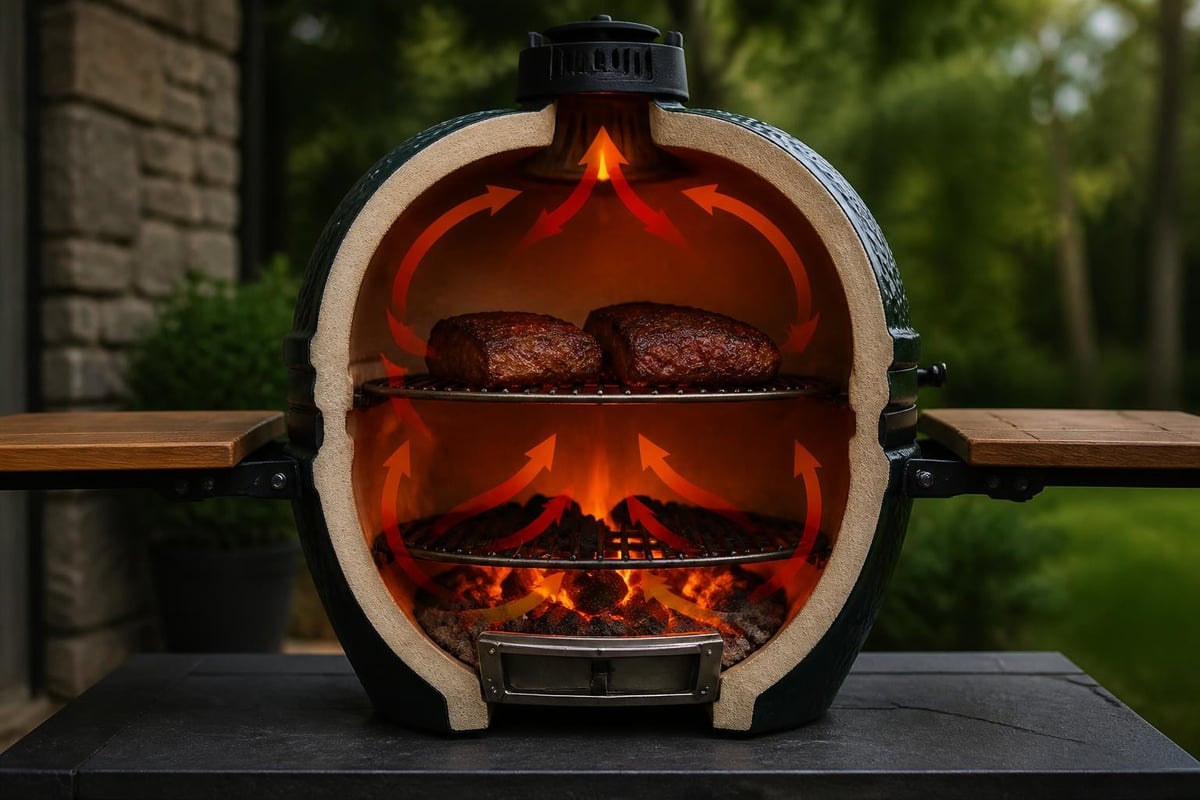
Premium kamado BBQ units utilise high-grade ceramics that withstand extreme temperature fluctuations without cracking. The molecular structure of these ceramics absorbs heat gradually, then radiates it consistently over extended periods. This characteristic enables you to maintain 120°C for 12-hour brisket smoking sessions or achieve searing temperatures exceeding 400°C for perfect steaks.
Key material advantages include:
The gasket seals between the dome and base create an almost airtight cooking chamber, allowing precise oxygen control through adjustable vents. This feature enables the low-oxygen environment essential for authentic wood-fired smoking whilst preventing ash from contaminating food.
Temperature management separates exceptional kamado BBQ results from mediocre ones. Unlike gas grills with instant heat adjustment, ceramic cookers require patience and understanding of airflow dynamics. The bottom vent controls oxygen intake-the fuel source for combustion-whilst the top vent regulates exhaust and fine-tunes temperature.
| Temperature Range | Vent Configuration | Cooking Application | Approximate Fuel Duration |
|---|---|---|---|
| 120-150°C | Bottom: 1cm open, Top: 1cm open | Low-and-slow smoking (brisket, ribs) | 12-16 hours |
| 175-200°C | Bottom: 2cm open, Top: 2cm open | Indirect roasting (whole chicken, joints) | 8-10 hours |
| 230-260°C | Bottom: 3cm open, Top: Half open | Direct grilling (burgers, vegetables) | 4-6 hours |
| 350-400°C | Bottom: Fully open, Top: Fully open | High-heat searing (steaks, pizza) | 2-3 hours |
For those establishing a comprehensive outdoor entertaining space, integrating a kamado BBQ alongside other cooking equipment creates versatility that rivals professional kitchens. Many clients who explore outdoor kitchen accessories discover that combining ceramic grilling with gas or wood-fired pizza ovens provides complete culinary flexibility.
Proper ignition technique influences the entire cooking session. Begin by filling the firebox with high-quality lumpwood charcoal, creating a small well in the centre. Place two or three natural firelighters in this well and ignite them, leaving the dome open for 8-10 minutes to establish initial combustion.
Once flames appear consistently, close the dome and set both vents to your target configuration. Temperature will climb steadily over 15-20 minutes. Critical point: approaching your target temperature, close vents to approximately 25% of your desired setting to prevent overshooting. The ceramic mass continues absorbing heat even after restricting airflow, causing temperature to rise for several minutes after adjustment.
Patience during this stabilisation phase rewards you with hours of consistent cooking conditions. Rushing this process typically results in temperature spikes requiring complete cool-down and restart-a frustrating experience that consumes valuable preparation time.
The kamado BBQ excels across cooking disciplines that would typically require separate equipment. This versatility makes it particularly valuable for luxury outdoor kitchens where space optimisation meets performance expectations.
Converting your kamado BBQ into a precision smoker requires heat deflector plates (often called pizza stones or convEGGtors) positioned above the charcoal. This barrier creates indirect heat zones, allowing smoke to circulate around large cuts without direct flame exposure.
Smoking workflow for optimal results:
The ceramic walls absorb smoke compounds, seasoning the interior over time and contributing subtle flavour complexity to subsequent cooks. This patina development represents the kamado BBQ equivalent of a well-seasoned cast iron pan-a badge of culinary commitment.
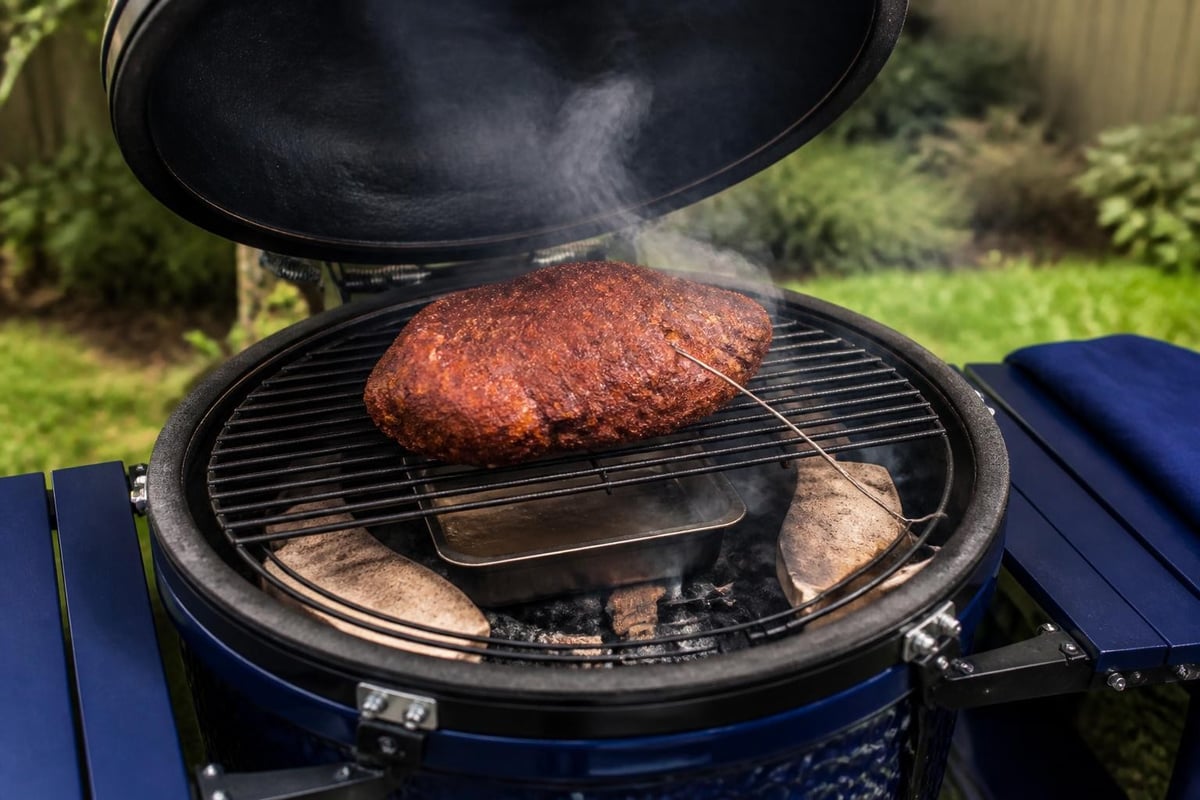
Removing heat deflectors and opening vents transforms the kamado BBQ into an extraordinarily powerful searing station. The ceramic dome reflects infrared radiation downward whilst the charcoal radiates upward, creating temperatures that rival professional steakhouse equipment.
For perfect ribeye steaks, stabilise at 230°C for initial sear, then create a two-zone fire by pushing coals to one side. Sear each surface for 90 seconds over direct heat, developing a caramelised crust, then move to the indirect zone to finish at 60°C internal for medium-rare. The temperature control available through vent adjustment provides precision impossible with traditional kettle grills.
Vegetables benefit enormously from kamado BBQ cooking. Asparagus spears, courgette slices, and peppers develop exceptional char whilst retaining internal moisture due to the humid cooking environment. Even delicate items like fish fillets succeed when cooked on cedar planks, protected from direct flame but infused with subtle smoke.
Perhaps the most surprising kamado BBQ capability is artisan baking. With heat deflectors positioned and temperature stabilised at 350°C, the ceramic dome replicates a traditional wood-fired oven environment. Pizza enthusiasts achieve results comparable to dedicated pizza ovens, with leopard-spotted crusts and perfectly melted toppings in approximately 90 seconds.
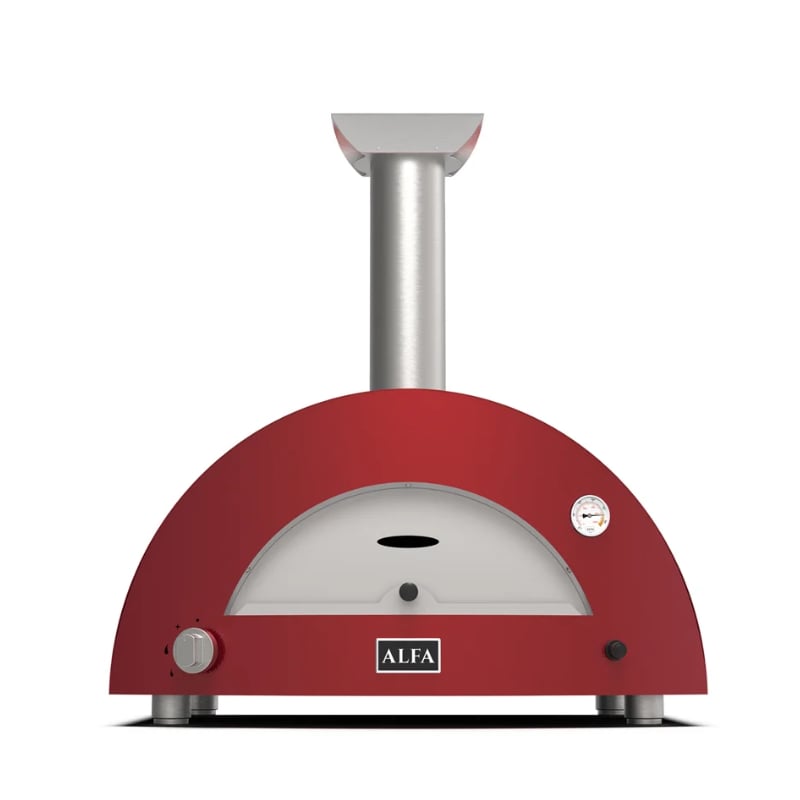
For those considering dedicated pizza equipment alongside kamado capabilities, the Alfa Forni Modorno Hybrid Pizza Oven offers similar versatility with Italian craftsmanship. This beautifully designed unit reaches 500°C in around 30 minutes and accommodates either LPG gas or wood, providing authentic Neapolitan results that complement kamado BBQ smoking sessions during extended outdoor entertaining.
Bread baking presents another dimension entirely. Sourdough loaves develop crispy crusts and open crumb structures when baked in cast iron Dutch ovens within the kamado BBQ. The stable temperature and steam-retaining environment rival professional deck ovens, producing bakery-quality results that astonish guests.
Strategic placement within your outdoor living space maximises both functionality and aesthetic appeal. Reviewing top kamado grill options helps identify models that align with your design vision whilst meeting performance requirements.
Kamado BBQ units require thoughtful positioning due to their substantial weight (often exceeding 100kg) and heat output. Dedicated bases constructed from reinforced concrete or structural steel provide stable foundations whilst elevating the cooking surface to ergonomic heights. Premium installations incorporate custom stonework or powder-coated steel frameworks that harmonise with surrounding architectural elements.
Clearance requirements mandate minimum distances from combustible materials:
Many discerning homeowners integrate kamado BBQ stations within comprehensive outdoor grill setups that include preparation zones, refrigeration, and beverage service. This holistic approach creates seamless entertaining experiences where multiple cooking techniques proceed simultaneously.
Professional outdoor kitchen design positions the kamado BBQ as one element within an integrated cooking ecosystem. Adjacent stations might include:
When planning luxury outdoor spaces, clients often explore options that extend usability beyond summer months. For those in the Cotswolds and surrounding regions where British weather presents challenges, architectural pergolas with retractable roof systems protect cooking areas whilst maintaining open-air ambience. Understanding how to approach building a pergola that accommodates heat-generating equipment requires careful consideration of materials, ventilation, and structural load.
Charcoal choice profoundly influences kamado BBQ performance and flavour profiles. Premium lumpwood charcoal, produced from specific hardwood species, burns cleaner and longer than briquettes whilst imparting subtle flavour nuances.
Comparative fuel characteristics:
| Fuel Type | Burn Duration | Peak Temperature | Flavour Contribution | Ash Production |
|---|---|---|---|---|
| Oak Lumpwood | 4-5 hours | 400°C+ | Subtle, balanced | Minimal |
| Hickory Lumpwood | 3-4 hours | 380°C | Strong, bacon-like | Moderate |
| Binchotan (Japanese White Charcoal) | 6-8 hours | 350°C | Nearly neutral | Very minimal |
| Restaurant-grade Briquettes | 5-6 hours | 320°C | Chemical undertones | Heavy |
European oak lumpwood represents an excellent balance for most applications, providing extended burn times without overwhelming food with smoke. For dedicated smoking sessions, blending base lumpwood with specific hardwood chunks creates layered complexity. Cherry wood contributes fruity sweetness ideal for pork, whilst maple offers mild flavour perfect for poultry.
Avoid softwoods (pine, cedar, spruce) as fuel sources-their resinous nature creates acrid smoke and potentially harmful compounds. Similarly, treated timber, painted wood, or construction debris pose serious health risks and void equipment warranties.
Clean, thin smoke-appearing almost blue in colour-indicates complete combustion and desirable flavour development. Thick white smoke signals incomplete burning, typically from insufficient oxygen or damp wood, creating bitter, unpleasant tastes that penetrate food.
Smoke management techniques:
After the initial 3-4 hours of smoking, most meats have absorbed maximum smoke flavour. Continuing to add wood beyond this point creates diminishing returns and risks over-smoking. The kamado BBQ maintains temperature beautifully on charcoal alone, allowing the established smoke ring and bark to develop without additional wood.
Once fundamental temperature control becomes intuitive, advanced techniques unlock extraordinary culinary possibilities. These methods distinguish competent outdoor cooks from true kamado BBQ masters.
This technique inverts the traditional searing process, beginning with gentle indirect cooking before finishing with high-heat crust development. Position thick-cut steaks (minimum 4cm) on heat deflectors at 120°C, monitoring internal temperature until reaching 10°C below target doneness. Remove steaks, eliminate heat deflectors, and open vents fully to spike temperature above 300°C. Sear each surface for 45-60 seconds, developing a mahogany crust whilst maintaining perfectly even interior pinkness.
The gradual initial cooking breaks down connective tissue and renders fat evenly, whilst the final sear locks in moisture and creates Maillard reaction complexity. Results surpass conventional grilling methods, producing steakhouse-quality outcomes consistently.
Creating distinct temperature zones within the kamado BBQ expands simultaneous cooking capabilities. Bank charcoal predominantly to one side, then position heat deflectors over the cooler zone only. This arrangement provides blazing direct heat on one side for searing whilst maintaining a gentle indirect zone for finishing or holding completed items.
During large gatherings, this configuration allows you to sear incoming burgers or steaks whilst keeping finished items warm without overcooking. The temperature differential can exceed 150°C between zones, providing genuine versatility within a single cooking session.
Premium kamado BBQ units represent significant investments that, with proper maintenance, function flawlessly for decades. The ceramic construction proves remarkably durable when handled correctly, though it requires specific care protocols.
Essential maintenance practices:
Avoid using chemical cleaners or oven-cleaning products inside the kamado BBQ. The porous ceramic absorbs these compounds, which later vaporise during cooking and contaminate food. The seasoned interior represents cumulative flavour development-embrace the patina rather than pursuing sterile cleanliness.
For clients establishing outdoor kitchens in regions experiencing harsh winters, expert guidance on kamado grills emphasises appropriate weather protection. Whilst the ceramic body withstands temperature extremes admirably, metal components including hinges, bands, and vents require shelter from persistent moisture.
Custom-fitted covers constructed from marine-grade materials provide excellent protection whilst allowing moisture evaporation. Some luxury installations incorporate the kamado BBQ within covered outdoor kitchens or beneath architectural pergola systems, ensuring year-round accessibility regardless of weather conditions.
Alternatively, storing removable components (grates, heat deflectors, ash pans) indoors during extended non-use periods prevents corrosion whilst the ceramic body remains protected under quality covers. This hybrid approach balances convenience with component longevity.
The aftermarket ecosystem surrounding kamado BBQ equipment rivals that of premium automobiles, offering countless accessories that expand capabilities and refine techniques. Strategic accessory selection transforms competent grilling into culinary artistry.
Priority accessories for serious enthusiasts:
When travelling by helicopter to your countryside retreat-perhaps via exclusive helicopter services for luxury experiences across Europe-knowing your outdoor kitchen awaits with properly accessorised kamado BBQ equipment enhances anticipation. The ability to produce restaurant-quality meals amidst Cotswold countryside represents the pinnacle of refined outdoor living.
For extended outdoor entertaining sessions requiring reliable power for lighting, sound systems, or refrigeration, portable power stations provide silent, dependable electricity without disturbing the tranquil atmosphere essential to sophisticated gatherings.
Contemporary kamado BBQ cooking increasingly incorporates technology that bridges traditional techniques with modern convenience. Wireless temperature monitoring systems transmit real-time data to smartphones, allowing you to monitor 12-hour smoking sessions without constant physical presence.
Smart kamado innovations include automated airflow controllers that adjust vents based on target temperatures, essentially creating "set and forget" operation. Whilst purists may resist this technological intrusion, busy professionals appreciate the reliability these systems provide during extended cooks.
Advanced systems log temperature data, creating historical records that improve technique refinement over time. Analysing past sessions reveals patterns-perhaps temperature spikes at specific times suggesting vent adjustment needs, or consistency improvements demonstrating skill development.
Market offerings range from entry-level ceramic grills to heirloom-quality units commanding premium prices. Comparing the best kamado grills reveals significant variation in construction quality, warranty terms, and included accessories.
Kamado BBQ dimensions typically range from 33cm to 61cm cooking diameter. Smaller models suit couples or small families, accommodating two whole chickens or four steaks comfortably. Mid-range 46cm units represent the sweet spot for most households, providing capacity for eight burgers or a full packer brisket whilst remaining manageable for frequent use.
Large 61cm models serve serious entertainers and hospitality applications, handling entire lamb shoulders or multiple smoking racks simultaneously. However, their substantial weight (often 180kg+) and fuel requirements make them less practical for casual weekend cooking.
Capacity planning guidelines:
| Cooking Diameter | Typical Weight | Ideal Household Size | Approximate Capacity |
|---|---|---|---|
| 33cm | 35kg | 1-2 people | 2 whole chickens, 4 steaks |
| 38cm | 50kg | 2-4 people | 3 whole chickens, 6 steaks |
| 46cm | 85kg | 4-6 people | 5 whole chickens, 10 steaks |
| 61cm | 180kg | 8+ people / commercial | 8 whole chickens, 20 steaks |
Premium kamado BBQ manufacturers offer comprehensive warranties reflecting confidence in construction quality. Lifetime ceramic warranties demonstrate superior materials and firing processes, whilst 5-10 year coverage on metal components indicates robust engineering.
Examine hinge mechanisms carefully-spring-assisted systems with damping prevent uncontrolled dome closing that might damage ceramics or injure users. Stainless steel bands prove more durable than painted steel in humid coastal environments, though they command price premiums.
Gasket quality significantly impacts cooking performance and longevity. High-temperature silicone gaskets maintain compression through hundreds of heating cycles, whilst budget felt gaskets deteriorate rapidly, requiring frequent replacement and compromising temperature control.
The integration of kamado BBQ equipment within thoughtfully designed outdoor spaces transforms gardens into year-round culinary destinations. This evolution reflects broader trends in luxury outdoor living, where boundaries between interior and exterior entertaining dissolve through considered design and premium equipment.
For homeowners throughout the Cotswolds, Oxfordshire, and surrounding regions, the combination of architectural heritage and contemporary outdoor innovation creates spaces that honour tradition whilst embracing modern performance. A kamado BBQ positioned within a bespoke outdoor kitchen beneath a climate-controlled pergola represents this synthesis perfectly-ancient ceramic cooking technology sheltered by cutting-edge architectural systems.
When planning comprehensive outdoor transformations, clients benefit from consultative partnerships with specialists who understand both equipment capabilities and design integration. Whether you're establishing an intimate courtyard cooking area or a sprawling entertainment terrace, the kamado BBQ serves as an anchor point around which other elements arrange themselves naturally.
The journey from initial concept to completed outdoor kitchen involves numerous decisions-equipment selection, spatial planning, material specification, and installation coordination. Working with experts who provide end-to-end service, from initial consultation through final commissioning, ensures cohesive results that exceed expectations whilst avoiding costly missteps.
The kamado BBQ stands as testament to the enduring appeal of refined cooking techniques and quality craftsmanship. Its versatility, efficiency, and exceptional results justify the investment for homeowners who value culinary excellence alongside timeless design. For those ready to transform their outdoor spaces into sophisticated entertaining destinations, Cotswold Cooking Company offers the expertise, curated equipment selection, and comprehensive support necessary to realise your vision. From initial design consultation through installation and beyond, their family-run team brings decades of experience helping discerning clients throughout the UK create outdoor kitchens that blend Cotswold heritage with modern performance.

Leave a comment