


The transformation of outdoor spaces into sophisticated culinary destinations has fundamentally changed how discerning homeowners approach garden design in 2026. Premium outdoor appliances now deliver restaurant-quality performance whilst withstanding British weather, enabling year-round entertaining that rivals indoor cooking experiences. From professional-grade grills to hybrid pizza ovens and integrated refrigeration systems, today's outdoor appliances blend cutting-edge technology with architectural aesthetics, creating seamless extensions of your home's living space.
Outdoor appliances have progressed dramatically from basic barbecues to comprehensive cooking systems that rival professional kitchens. Modern equipment incorporates advanced materials, precise temperature control, and weather-resistant engineering designed specifically for the UK climate.
Contemporary outdoor kitchens now feature fully integrated appliances that maintain consistent performance across all seasons. This shift reflects growing demand for year-round outdoor living solutions that extend usable garden space beyond summer months.
The outdoor appliance sector has adopted rigorous safety and performance standards. Manufacturers now comply with comprehensive regulations including ANSI Z21.97 safety standards for outdoor gas appliances, ensuring equipment meets exacting construction and performance criteria.
These standards govern everything from gas flow rates to ignition systems, providing homeowners with confidence in their equipment's reliability and longevity. Premium brands distinguish themselves through certifications that exceed minimum requirements.
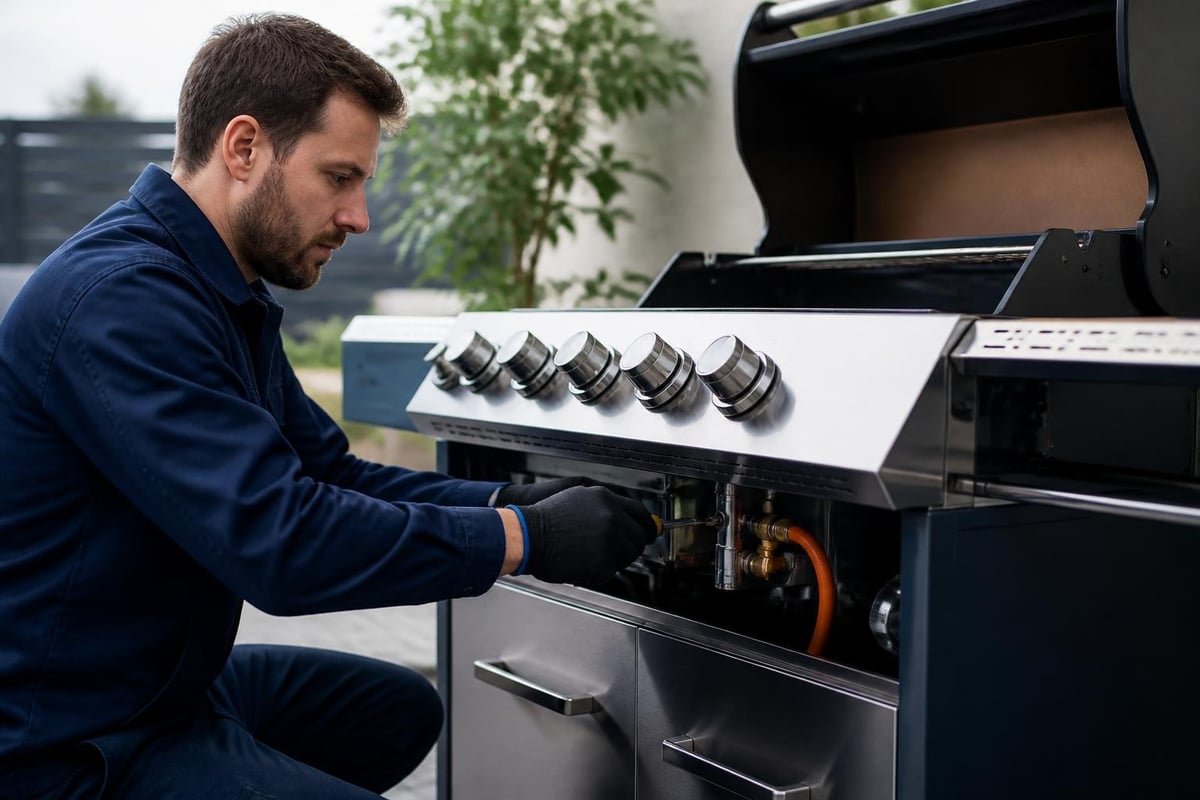
Creating a comprehensive outdoor cooking space requires careful selection of complementary appliances that work harmoniously together. Each component serves specific culinary functions whilst contributing to the overall design aesthetic.
High-performance grills form the centrepiece of most outdoor kitchens, offering versatile cooking capabilities from searing steaks to slow-roasting joints. Modern grills feature ceramic burners, infrared technology, and precision temperature zones that deliver consistent results.
Key features distinguishing premium outdoor grills:
Built-in configurations provide cleaner aesthetics than freestanding units, integrating seamlessly with cabinetry and worktops. These installations require professional planning to ensure proper ventilation and clearances.
Wood-fired and hybrid pizza ovens have become essential outdoor appliances for homeowners seeking authentic artisan cooking experiences. These versatile units reach temperatures exceeding 500°C, enabling genuine Neapolitan-style pizzas alongside roasted vegetables, breads, and slow-cooked casseroles.
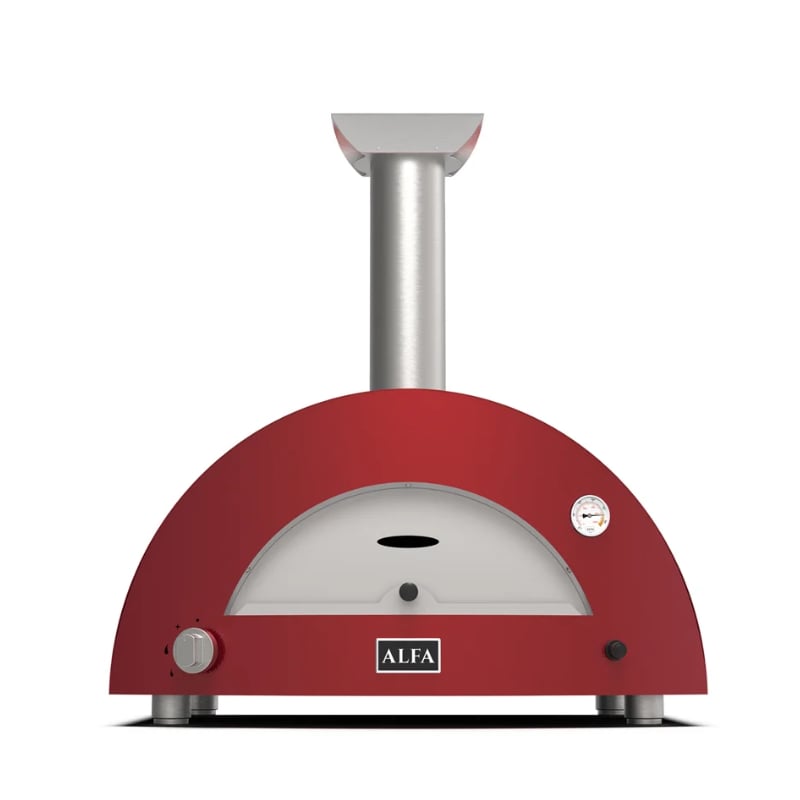
The Alfa Forni Moderno Hybrid Pizza Oven exemplifies this category perfectly. This beautifully designed oven combines the convenience of LPG gas ignition with the rich flavour of wood-fired cooking, reaching optimal temperatures in approximately 30 minutes and delivering authentic pizzas in just 90 seconds. Its handmade Italian craftsmanship and hybrid functionality make it an ideal centrepiece for luxury outdoor kitchens.
| Oven Type | Heat-Up Time | Max Temperature | Fuel Options | Typical Use Cases |
|---|---|---|---|---|
| Hybrid Pizza Oven | 25-30 minutes | 500°C | Gas & Wood | Pizzas, flatbreads, roasted vegetables |
| Wood-Fired Only | 45-60 minutes | 450-500°C | Wood | Traditional pizzas, artisan breads |
| Gas Pizza Oven | 15-20 minutes | 400-450°C | LPG/Natural Gas | Quick pizzas, family dinners |
| Multi-Function Oven | 20-30 minutes | 350-450°C | Gas/Electric | Pizzas, roasts, baked dishes |
Professional outdoor refrigeration maintains ingredients at optimal temperatures whilst eliminating constant trips indoors. Purpose-built outdoor appliances withstand temperature fluctuations and moisture exposure that would damage conventional domestic units.
Premium models feature stainless steel interiors, weatherproof seals, and insulation designed for exterior installation. Integrated units align flush with cabinetry, whilst undercounter models maximise worktop space.
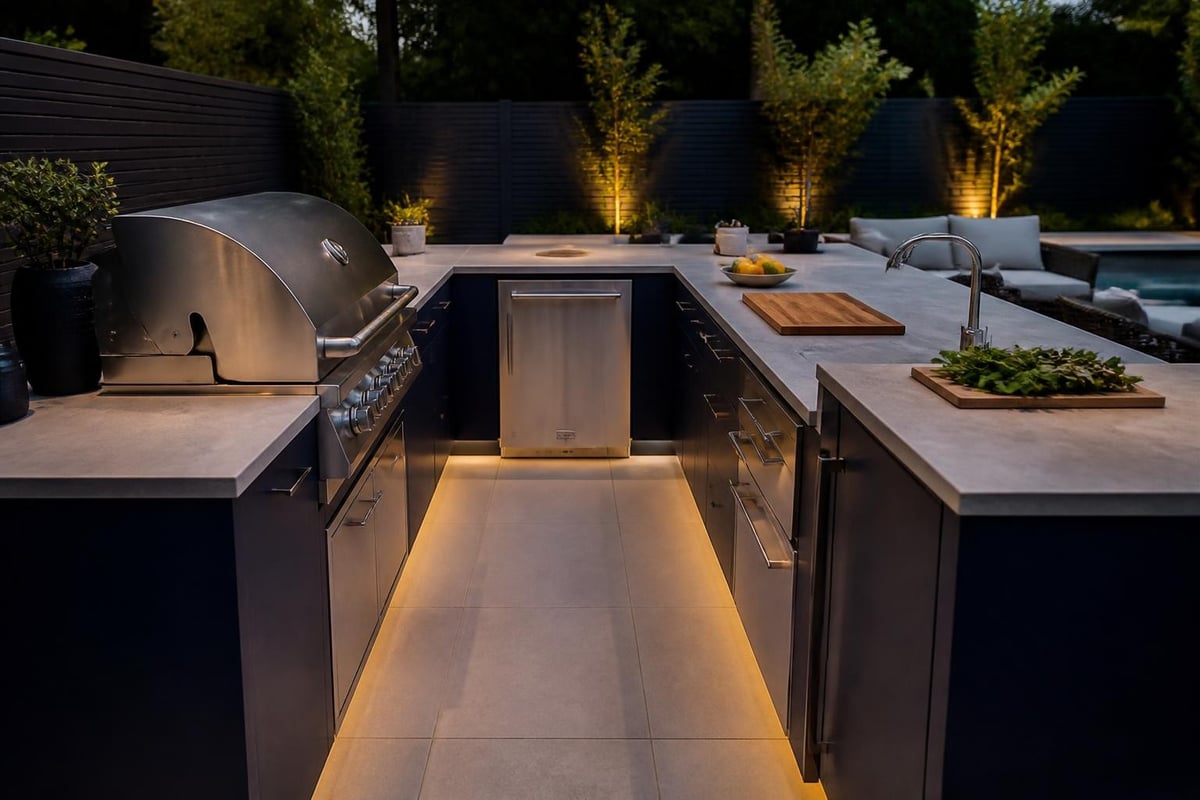
Successful outdoor kitchens require thoughtful integration of multiple appliances into cohesive, functional layouts. This planning phase determines workflow efficiency and long-term usability.
Professional kitchen design principles apply equally outdoors, with the classic work triangle optimising movement between preparation, cooking, and cleaning zones. Outdoor appliances should follow these ergonomic principles whilst accounting for weather protection and ventilation requirements.
Optimal placement considerations:
Prefabricated outdoor kitchens offer streamlined installation with factory-tested appliance integration. These systems arrive with pre-configured layouts, reducing on-site construction time and ensuring compatibility between components.
Modular configurations provide flexibility for expanding capabilities over time. Initial installations might include essential cooking appliances, with refrigeration, sinks, and storage added as requirements evolve.
Connected outdoor appliances now incorporate Internet of Things (IoT) technologies that enhance convenience and cooking precision. Smart grills monitor internal meat temperatures, adjust heat zones automatically, and send notifications when food reaches desired doneness.
Advanced outdoor appliances connect via WiFi or Bluetooth, enabling remote operation from smartphones or tablets. This connectivity allows preheating grills before leaving indoor spaces, monitoring cooking progress during entertaining, and receiving maintenance alerts.
Temperature probes transmit real-time data, eliminating guesswork and reducing overcooking risks. Some systems integrate with voice assistants, allowing hands-free operation whilst handling ingredients.
Smart outdoor appliances contribute to sustainable living through optimised energy consumption. Context-aware computing systems adjust power usage based on ambient conditions, reducing waste whilst maintaining performance.
Premium refrigeration units feature adaptive cooling cycles that respond to door opening patterns and external temperatures. Gas appliances incorporate precision burner control that minimises fuel consumption whilst delivering consistent heat output.
British weather demands outdoor appliances constructed from materials engineered for constant moisture exposure, temperature fluctuations, and UV radiation. Material choices directly impact longevity and maintenance requirements.
Marine-grade stainless steel (typically 304 or 316 grade) provides superior corrosion resistance essential for outdoor applications. These alloys contain chromium and nickel that form protective oxide layers, preventing rust formation even in coastal environments.
| Material Grade | Corrosion Resistance | Typical Applications | Cost Premium |
|---|---|---|---|
| 304 Stainless | Good | Outdoor appliances, cabinetry | Moderate |
| 316 Stainless | Excellent | Coastal installations, marine environments | High |
| 430 Stainless | Fair | Budget outdoor equipment | Low |
| Powder-Coated Steel | Variable | Structural components, frames | Low-Moderate |
Premium outdoor appliances utilise 304 stainless steel as minimum specification, with 316 grade recommended for properties within five miles of coastline. Welded seams provide superior weather protection compared to mechanical fastenings.
Surface treatments enhance durability beyond base material properties. Ceramic coatings on cooking surfaces resist thermal shock and simplify cleaning, whilst powder-coated finishes on structural components provide additional weather protection.
Regular maintenance preserves appearance and functionality. Stainless steel requires periodic cleaning with specialist products that remove water spots and prevent calcium buildup. Protective covers during extended non-use periods shield appliances from debris accumulation.
Outdoor appliances require specialised installation addressing gas connections, electrical supply, drainage, and structural support. Professional installation ensures safety compliance and optimal performance whilst protecting manufacturer warranties.
Natural gas or LPG connections must comply with current building regulations and gas safety standards. Licensed gas engineers assess pressure requirements, install appropriate regulators, and test systems for leak-free operation.
Electrical installations require weatherproof outlets, ground fault protection, and adequate circuit capacity for combined appliance loads. Outdoor lighting, refrigeration, and powered ventilation demand dedicated circuits protected by residual current devices.
Heavy outdoor appliances require substantial foundations preventing settlement or movement. Porcelain tiling bases provide level, weather-resistant platforms distributing weight evenly whilst facilitating drainage.
Adequate clearances around cooking appliances prevent heat damage to adjacent materials. Most manufacturers specify minimum distances from combustible surfaces, overhead structures, and boundary walls. These requirements must inform initial design layouts.
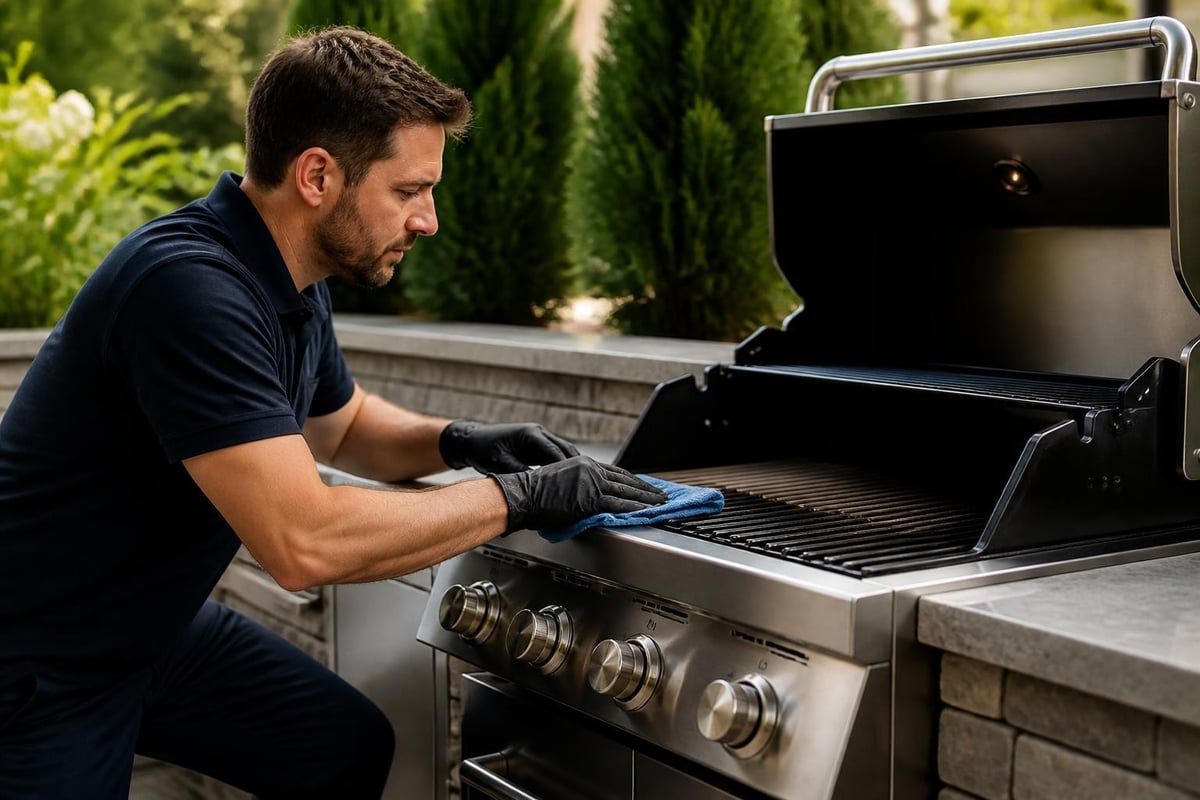
Proactive maintenance extends outdoor appliance lifespan whilst preserving performance standards. Regular cleaning, protective storage, and timely component replacement prevent deterioration and costly repairs.
Essential maintenance schedule:
Premium brands typically offer extended warranties covering components against manufacturing defects. Maintaining detailed service records ensures warranty validity and provides documentation for insurance purposes.
Outdoor appliances function optimally when supported by comprehensive infrastructure including shelter, lighting, and storage. These elements transform cooking zones into comfortable, usable spaces throughout the year.
Architectural pergolas extend outdoor kitchen usability by providing weather protection without fully enclosing spaces. Bioclimatic louvre systems adjust automatically, opening during pleasant weather whilst closing against rain or intense sun.
Integrated heating, lighting, and weatherproof curtains create comfortable microclimates enabling outdoor cooking and dining across all seasons. These shelter systems protect outdoor appliances from direct weather exposure, reducing maintenance requirements.
Layered lighting schemes combine task illumination over cooking zones with ambient lighting for entertaining areas. LED strips beneath overhead cabinetry illuminate worktops, whilst pendant fixtures define dining zones.
Dimmable systems adapt lighting intensity matching activities and time of day. Motion-activated lighting enhances safety whilst navigating outdoor kitchens after dark, automatically illuminating pathways and cooking areas.
Quality outdoor appliances represent significant investments that enhance property value and lifestyle quality. Understanding total ownership costs informs purchasing decisions and budget allocation.
Premium outdoor appliances command higher purchase prices but deliver superior longevity, performance, and aesthetic integration. Entry-level equipment may require replacement within five years, whilst professional-grade appliances often function flawlessly for 15-20 years with proper maintenance.
| Investment Level | Typical Lifespan | Warranty Coverage | Replacement Parts | Total Cost of Ownership |
|---|---|---|---|---|
| Premium | 15-20 years | 5-10 years comprehensive | Readily available | Moderate (longer lifespan) |
| Mid-Range | 8-12 years | 2-5 years limited | Generally available | Moderate |
| Entry-Level | 3-7 years | 1-2 years basic | Variable availability | High (frequent replacement) |
Property value increases typically range from 5-15% when outdoor kitchens integrate seamlessly with overall garden design and home architecture. This return depends on local market conditions, installation quality, and appliance specifications.
Modern outdoor appliances incorporate efficiency improvements reducing operational costs. High-efficiency burners minimise gas consumption, whilst superior insulation reduces energy waste from refrigeration units.
Smart controls optimise fuel usage by adjusting output matching cooking requirements. These features offset higher initial investments through reduced ongoing expenses and environmental impact.
Selecting appropriate outdoor appliances requires balancing cooking preferences, entertaining frequency, available space, and budget constraints. A consultative approach ensures equipment matches intended usage patterns.
Different households prioritise various cooking methods. Serious grill enthusiasts require substantial cooking capacity with multiple heat zones, whilst pizza oven devotees benefit from hybrid units offering fuel flexibility.
Consider typical guest numbers when sizing appliances. Compact units suffice for intimate family dining, whilst larger entertaining demands commercial-grade capacity preventing bottlenecks during preparation.
Established manufacturers bring decades of engineering expertise to outdoor appliance design. European brands particularly emphasise artisan craftsmanship, utilising traditional techniques alongside modern materials.
Hand-selected brands such as Grillandia, Whistler, and Sub-Zero & Wolf combine heritage craftsmanship with contemporary performance. These manufacturers maintain UK-based service networks ensuring responsive support throughout appliance lifespans. Exploring curated brand collections helps identify manufacturers aligning with specific aesthetic preferences and performance requirements.
Creating sophisticated outdoor kitchens benefits enormously from expert guidance addressing spatial planning, appliance selection, and installation coordination. Professional consultants navigate technical complexities whilst realising design visions.
Comprehensive design services encompass initial concept development, detailed specifications, appliance sourcing, and installation management. This integrated approach ensures cohesive results where outdoor appliances function harmoniously within broader garden architecture.
Booking consultations provides opportunities to experience outdoor appliances firsthand, understanding operation, build quality, and aesthetic appeal before committing to purchases. Hands-on demonstrations reveal nuances distinguishing premium equipment from standard alternatives.
Experienced consultants also navigate regulatory requirements, ensuring installations comply with building regulations, planning permissions, and safety standards. This expertise prevents costly modifications addressing non-compliant work.
Premium outdoor appliances transform gardens into sophisticated culinary destinations that enhance lifestyle quality and property value throughout the year. Selecting equipment that balances performance, durability, and aesthetic integration requires expert guidance and access to premium brands. Cotswold Cooking Company delivers comprehensive consultation services, hand-selected appliances from heritage manufacturers, and complete installation support, helping discerning homeowners create refined outdoor cooking spaces that embody Cotswold craftsmanship and modern performance. Begin your outdoor kitchen journey today through our expert design team.

Leave a comment