


An outdoor fridge has evolved from a luxury novelty to an essential component of sophisticated garden living. As UK homeowners increasingly embrace year-round outdoor entertaining, the demand for purpose-built refrigeration designed to withstand British weather conditions has grown substantially. Whether you're designing a comprehensive outdoor kitchen and grill space or enhancing an existing alfresco dining area, understanding the nuances of outdoor refrigeration ensures your investment delivers both performance and longevity.
The fundamental difference between an outdoor fridge and its indoor counterpart lies in engineering designed for challenging environments. Indoor refrigerators lack the robust protection necessary to endure temperature fluctuations, moisture exposure, and UV radiation that characterise outdoor settings.
Outdoor-rated refrigeration units feature:
Standard indoor appliances positioned outdoors face rapid deterioration. Condensation accumulates within electrical components, rust develops on exposed surfaces, and compressors struggle to maintain consistent temperatures when ambient conditions exceed design parameters. According to BetterPatio.com's comprehensive buying guide, outdoor certification through UL or ETL testing ensures units meet rigorous safety and performance standards specifically for external environments.
The investment in a properly rated outdoor fridge protects against premature failure whilst ensuring food safety during garden gatherings. Temperature consistency remains critical when storing perishables outdoors, particularly during British summer heatwaves when ambient temperatures can compromise inadequate refrigeration.
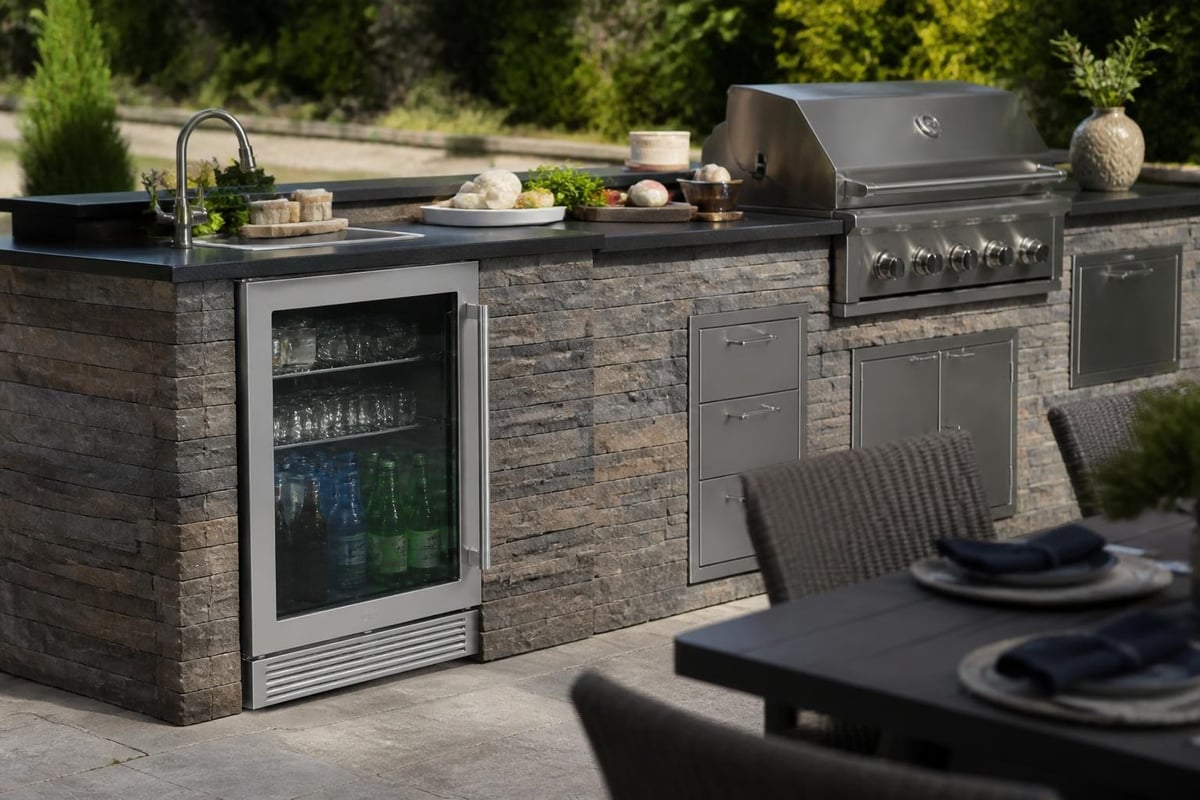
Material selection determines the longevity and aesthetic integration of your outdoor fridge within your garden design. The harsh realities of British weather-from coastal salt spray to industrial pollutants-demand materials engineered for resilience.
Not all stainless steel offers equal protection. The grade designation indicates composition and corrosion resistance:
| Grade | Composition | Corrosion Resistance | Recommended Use |
|---|---|---|---|
| 304 Stainless Steel | 18% chromium, 8% nickel | Excellent for most UK climates | Standard outdoor installations |
| 316 Stainless Steel | 18% chromium, 10% nickel, 2% molybdenum | Superior marine-grade protection | Coastal properties, harsh environments |
| 430 Stainless Steel | 16-18% chromium, no nickel | Moderate resistance | Not recommended for outdoor use |
The chromium content creates a passive oxide layer that self-heals when scratched, providing ongoing protection against rust. For properties within 10 miles of coastline or in industrial areas, investing in 316-grade stainless steel delivers measurable longevity benefits despite the higher initial cost.
Beyond the grade itself, finish quality matters significantly. Brushed finishes conceal fingerprints and minor scratches more effectively than polished surfaces, maintaining a refined appearance with minimal maintenance. Tailgater Magazine emphasises that stainless steel construction represents the gold standard for outdoor refrigeration, offering both aesthetic appeal and functional durability.
Premium outdoor fridge models incorporate reinforced magnetic door seals engineered to maintain their integrity across temperature extremes. Standard refrigerator gaskets harden and crack when exposed to UV radiation and temperature cycling, compromising the seal and forcing the compressor to work harder.
Look for units featuring UV-stabilised gasket materials with multiple magnetic strips ensuring consistent contact around the entire door perimeter. This seemingly minor detail significantly impacts energy efficiency and temperature maintenance.
Selecting appropriate capacity requires honest assessment of your entertaining patterns and available installation space. Outdoor fridges typically range from compact 60-litre undercounter models to substantial 400-litre freestanding units.
Consider these capacity guidelines:
Configuration options extend beyond simple capacity measurements. Built-in models integrate seamlessly with cabinetry, whilst freestanding units offer installation flexibility. Drawer-style refrigeration provides ergonomic access and works particularly well beneath countertops, whereas traditional door designs maximise vertical storage.
When planning your outdoor kitchen accessories, consider whether dual-zone refrigeration might serve your needs. These sophisticated units maintain different temperatures in separate compartments-ideal for storing wines at optimal serving temperature whilst keeping beverages properly chilled.
The physical footprint matters equally. Measure your installation location carefully, accounting for door swing clearance and minimum ventilation spacing. Most manufacturers specify clearance requirements; ignoring these parameters compromises performance and potentially voids warranties.
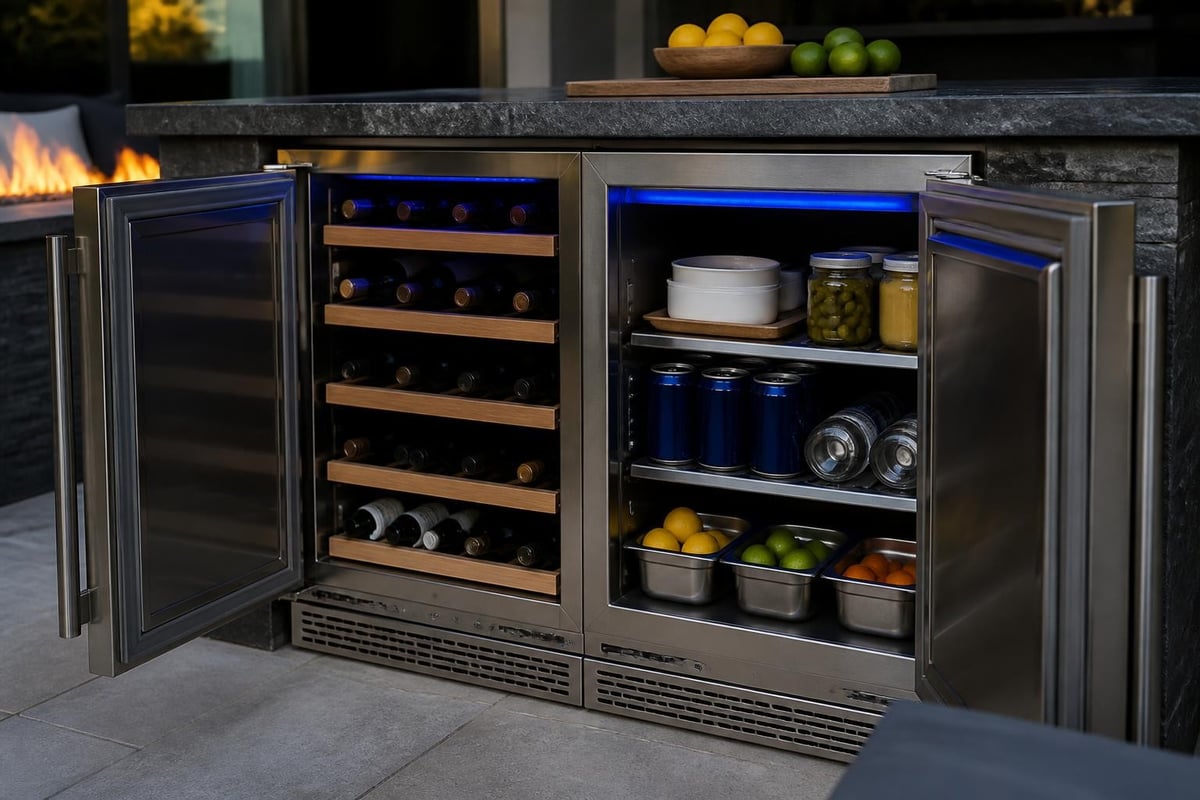
British weather presents unique challenges for outdoor refrigeration. Unlike Mediterranean climates with consistent warmth, UK gardens experience substantial temperature variation-from freezing winter nights to unexpectedly warm summer days.
Quality outdoor fridges specify both ambient operating ranges and internal temperature capabilities. Standard specifications might indicate:
ShopAppliances.com's outdoor refrigeration guide stresses the importance of verifying these specifications before purchase. Units designed for American climates may struggle with British dampness, whilst those engineered for northern European conditions excel in our maritime climate.
Compressor technology significantly influences performance. Variable-speed compressors adjust output based on ambient conditions, maintaining consistent internal temperatures whilst reducing energy consumption. This technology proves particularly valuable during transitional seasons when outdoor temperatures fluctuate dramatically between day and night.
Premium insulation separates exceptional outdoor fridges from mediocre alternatives. Expanded polyurethane foam insulation, injected between the inner liner and outer cabinet, provides superior thermal performance compared to cheaper polystyrene alternatives.
Thicker insulation-typically 50-75mm in quality units-reduces compressor cycling frequency, extending component lifespan whilst minimising energy consumption. During British summers, when your outdoor fridge operates in full sun, robust insulation prevents the compressor from running continuously.
Energy efficiency ratings, whilst mandatory for indoor appliances, aren't always clearly specified for outdoor models. Request annual energy consumption estimates and compare models based on kilowatt-hours per year rather than capacity alone.
Proper installation determines whether your outdoor fridge delivers years of reliable service or becomes a source of ongoing frustration. Unlike indoor appliances that simply plug into existing circuits, outdoor refrigeration demands careful electrical and spatial planning.
Outdoor fridges require dedicated electrical circuits with appropriate weatherproof protection:
Never use extension leads or share circuits with high-draw appliances. The compressor's startup current can trip inadequately rated circuits, particularly when multiple appliances operate simultaneously. Qualified electricians familiar with outdoor installations ensure compliance with current IET Wiring Regulations.
For properties with timber frame buildings or outdoor structures designed by specialists, coordinate electrical planning during the design phase rather than retrofitting afterwards. This integration creates cleaner installations and avoids compromising structural elements.
Adequate ventilation prevents compressor overheating and ensures optimal performance. Most manufacturers specify minimum clearances:
| Location | Minimum Clearance | Purpose |
|---|---|---|
| Top | 50-100mm | Heat dissipation |
| Sides | 25-50mm | Air circulation |
| Rear | 50-150mm | Compressor ventilation |
| Front | Door swing + 300mm | Access and airflow |
Built-in installations require particularly careful ventilation planning. Enclosed cabinetry must incorporate ventilation grilles allowing hot air to escape whilst preventing debris ingress. Homes & Gardens' outdoor kitchen design guide emphasises that proper ventilation planning during the design phase prevents costly modifications later.
Consider seasonal sun exposure when positioning your outdoor fridge. South-facing installations receive intense summer sun, forcing the compressor to work harder. Where possible, position refrigeration in shaded locations or beneath pergolas that provide protection whilst maintaining adequate ventilation.
Regular maintenance extends the operational life of your outdoor fridge whilst maintaining optimal performance. Unlike indoor appliances that benefit from controlled environments, outdoor units require more attentive care.
Essential maintenance tasks include:
The Outdoor Kitchen Outlet provides detailed maintenance guidance emphasising the importance of regular seal inspection. Damaged or worn gaskets compromise efficiency significantly, and replacement represents a straightforward preventative measure.
Door seal maintenance deserves particular attention. Clean gaskets monthly using warm soapy water, removing accumulated dirt and food residue. After cleaning, apply a thin layer of petroleum jelly to maintain flexibility and prevent cracking-a simple practice that extends gasket life considerably.
For outdoor fridges in unheated spaces, winterisation prevents freeze damage during harsh weather:
Some homeowners maintain year-round operation beneath heated pergolas or within temperature-controlled outdoor rooms. This approach eliminates winterisation requirements but increases energy consumption during colder months. Evaluate your usage patterns and climate exposure when deciding between seasonal shutdown and continuous operation.

An outdoor fridge becomes truly valuable when thoughtfully integrated within a comprehensive outdoor kitchen design. Positioning, adjacency to work zones, and aesthetic cohesion transform refrigeration from a standalone appliance into an essential element of culinary functionality.
Professional kitchen design principles apply equally to outdoor spaces. The classic work triangle-refrigeration, preparation, and cooking zones positioned for efficient movement-reduces unnecessary steps whilst preparing meals.
Position your outdoor fridge within easy reach of primary prep surfaces. Ideally, refrigeration sits between the prep zone and cooking area, allowing you to retrieve ingredients, prepare them nearby, then move directly to grills or ovens without backtracking.
For comprehensive outdoor kitchens incorporating multiple cooking methods, consider whether a single central refrigeration point serves efficiently or whether distributed refrigeration-perhaps a main outdoor fridge near prep areas and a smaller beverage cooler near seating-better supports your entertaining style.
When designing luxury outdoor spaces, the team at Cotswold Cooking Company frequently recommends integrated refrigeration solutions that complement architectural elements whilst maintaining accessibility. Their consultative approach ensures appliance selection aligns with both functional requirements and aesthetic vision.
Visual cohesion elevates outdoor kitchens from functional spaces to design destinations. Your outdoor fridge should complement surrounding materials rather than appearing as an afterthought.
Stainless steel appliances pair beautifully with contemporary materials-polished concrete worktops, engineered stone, powder-coated aluminium cabinetry. For more traditional settings, consider panel-ready models accepting custom door panels matching your cabinetry. This approach creates seamless integration whilst maintaining the performance benefits of purpose-built outdoor refrigeration.
Hardware finishes deserve consideration as well. Matching handles, hinges, and trim elements to other outdoor kitchen fixtures-tap fittings, lighting fixtures, cooking equipment-creates visual harmony. Brushed nickel, polished chrome, and black stainless steel each convey distinct design sensibilities.
Modern outdoor fridges offer sophisticated features beyond basic refrigeration. Evaluating which enhancements justify additional investment depends on your specific usage patterns and entertaining preferences.
Connected refrigeration brings indoor convenience outdoors. Features include:
Whilst undeniably convenient, smart features require reliable WiFi coverage in your garden. For properties with extensive grounds or thick stone walls, this connectivity may prove challenging. Evaluate your current outdoor WiFi performance before prioritising smart capabilities.
Quality LED interior lighting transforms usability, particularly during evening entertaining. Look for units with:
Some premium models incorporate theatre-style lighting that gradually illuminates as doors open, providing sophisticated ambience whilst ensuring visibility.
For hospitality applications or properties with service staff, lockable outdoor fridges prevent unauthorised access whilst protecting premium ingredients. Digital locks offer keyless convenience and audit trails, whilst traditional keyed locks provide straightforward security.
Distinguishing exceptional outdoor fridges from mediocre alternatives requires understanding key performance indicators. Specifications tell part of the story; real-world performance reveals the complete picture.
| Feature | Premium Standard | Budget Alternative | Impact on Performance |
|---|---|---|---|
| Compressor type | Variable-speed | Single-speed | 30-40% energy efficiency improvement |
| Insulation thickness | 65-75mm | 35-45mm | Temperature stability, energy consumption |
| Door seal design | Multi-magnetic with UV stabilisation | Single magnetic | Seal longevity, efficiency retention |
| Stainless steel grade | 304 or 316 | 430 or unknown | Corrosion resistance, lifespan |
| Warranty coverage | 5+ years parts and labour | 1-2 years limited | Manufacturer confidence, ownership cost |
Temperature recovery time-how quickly the unit returns to set temperature after door opening-indicates compressor capacity and insulation effectiveness. Quality outdoor fridges recover within 10-15 minutes; inferior models may require 30+ minutes, compromising food safety during frequent access.
Noise levels matter particularly in outdoor settings where ambient sound doesn't mask compressor operation. Specifications below 45 decibels ensure refrigeration doesn't intrude on conversation during garden entertaining.
Outdoor fridge pricing spans a considerable range, from £800 for basic undercounter models to £4,000+ for premium freestanding units with advanced features. Understanding what drives these cost differences helps you evaluate true value rather than simply comparing price tags.
Factors influencing outdoor fridge pricing:
The lowest-price options typically compromise on essential elements-thinner insulation, lower-grade stainless steel, less sophisticated temperature control. These savings prove illusory when premature failure necessitates replacement within 3-5 years.
Mid-range models (£1,500-£2,500) from established manufacturers generally deliver excellent value, incorporating quality materials and proven technology without premium brand positioning. This bracket typically represents the sweet spot for residential applications prioritising longevity and performance.
Premium offerings (£3,000+) justify their positioning through exceptional build quality, extended warranties, and sophisticated features. For luxury outdoor kitchens where the outdoor fridge serves as a centrepiece element, these investments align with overall design ambitions.
Consider total ownership costs rather than purchase price alone. Energy-efficient models cost more initially but deliver savings across their operational lifespan. Tom's Guide's refrigerator efficiency tips apply equally to outdoor units-proper temperature settings, regular maintenance, and strategic placement significantly impact running costs.
Even experienced homeowners make errors when selecting and installing outdoor refrigeration. Avoiding these pitfalls ensures your investment delivers expected performance.
The most frequent mistake involves purchasing insufficient capacity based on typical daily usage rather than peak entertaining requirements. Your outdoor fridge should accommodate your largest gatherings comfortably, not just everyday needs.
Plan for 20-30% spare capacity beyond calculated requirements. This buffer prevents overcrowding that restricts airflow and compromises cooling efficiency. Tightly packed refrigerators work harder and struggle to maintain consistent temperatures.
Built-in installations demand meticulous ventilation planning. Simply inserting an outdoor fridge into cabinetry without adequate airflow causes overheating, compressor failure, and voided warranties.
Verify manufacturer ventilation specifications and ensure your installation exceeds minimum requirements. When in doubt, provide additional clearance-excess ventilation never causes problems; inadequate ventilation always does.
Positioning your outdoor fridge in full sun, directly exposed to driving rain, or in poorly ventilated corners compromises performance and longevity. Even weather-resistant units benefit from thoughtful placement that minimises environmental stress.
Covered locations beneath pergolas, within partially enclosed outdoor rooms, or on north-facing walls reduce solar gain and weather exposure. For properties incorporating architectural pergolas, coordinating refrigeration placement with overhead protection creates optimal operating conditions.
Tom's Guide advocates for consistent maintenance routines, emphasising that small regular efforts prevent major problems. Outdoor fridges particularly benefit from scheduled attention given their challenging operating environment.
Establish maintenance reminders and treat them as non-negotiable appointments. The modest time investment-perhaps 20 minutes monthly-preserves performance and extends operational life considerably.
An outdoor fridge reaches its full potential when integrated within a thoughtfully designed outdoor kitchen incorporating complementary elements that support comprehensive culinary capabilities.
Pairing refrigeration with quality cooking equipment creates true outdoor cooking versatility. Whether you prefer the traditional appeal of wood-fired pizza ovens or the convenience of modern gas grills, proper refrigeration ensures ingredients remain fresh and accessible throughout preparation.
Work surfaces positioned adjacent to your outdoor fridge facilitate efficient meal preparation. Natural stone, engineered quartz, or stainless steel countertops each offer distinct advantages for outdoor applications. Consider material durability, maintenance requirements, and aesthetic compatibility with your overall design vision.
Storage solutions beyond refrigeration-weatherproof cabinetry, dedicated utensil storage, waste management systems-transform outdoor kitchens from seasonal conveniences into year-round culinary destinations. Comprehensive planning during the design phase prevents the piecemeal additions that compromise visual cohesion.
For those seeking to create truly exceptional outdoor living spaces, consulting with specialists who understand the interplay between appliances, structures, and lifestyle requirements proves invaluable. The integration of refrigeration within broader outdoor kitchen planning ensures both functional excellence and aesthetic distinction.
Selecting and maintaining an outdoor fridge represents a significant step toward creating a fully functional luxury garden kitchen that extends your living space and entertaining capabilities throughout the year. By prioritising quality construction, proper installation, and regular maintenance, your refrigeration investment will deliver reliable performance for decades. Whether you're beginning to plan your outdoor kitchen or enhancing an existing space, Cotswold Cooking Company offers expert guidance from initial design consultation through installation, helping you specify appliances and create outdoor living environments that reflect your lifestyle and aesthetic preferences whilst delivering exceptional functionality.

Leave a comment