


The transformation of outdoor spaces into sophisticated culinary environments has become one of the most sought-after home improvements for discerning homeowners across the UK. An outdoor kitchen represents far more than simply relocating cooking appliances to the garden-it embodies a lifestyle shift towards seamless indoor-outdoor living, extended entertaining seasons, and the creation of functional yet beautiful spaces that reflect personal taste and architectural vision. As we navigate through 2026, the evolution of outdoor cooking spaces continues to embrace both timeless Cotswold craftsmanship and cutting-edge design innovation, offering homeowners unprecedented opportunities to elevate their properties with year-round culinary destinations.
The contemporary outdoor kitchen has evolved significantly from its origins as a simple barbecue station. Today's designs incorporate sophisticated planning principles, premium materials, and integrated technology that rivals indoor kitchen functionality. This transformation reflects changing lifestyle priorities, with homeowners increasingly valuing outdoor living spaces that function across all seasons rather than merely during summer months.
British weather presents unique challenges that demand thoughtful design solutions. Modern outdoor kitchens now incorporate weather protection systems, integrated heating elements, and durable materials that withstand moisture, temperature fluctuations, and UV exposure. The integration of architectural pergolas with retractable louvred roofs allows precise climate control, transforming exposed cooking areas into comfortable, all-weather spaces.
Design-conscious buyers are increasingly exploring modular outdoor kitchen configurations that offer flexibility and scalability. These systems enable phased installation, allowing homeowners to begin with essential cooking zones and gradually expand to include preparation areas, refrigeration, and specialty appliances as budgets and requirements evolve.
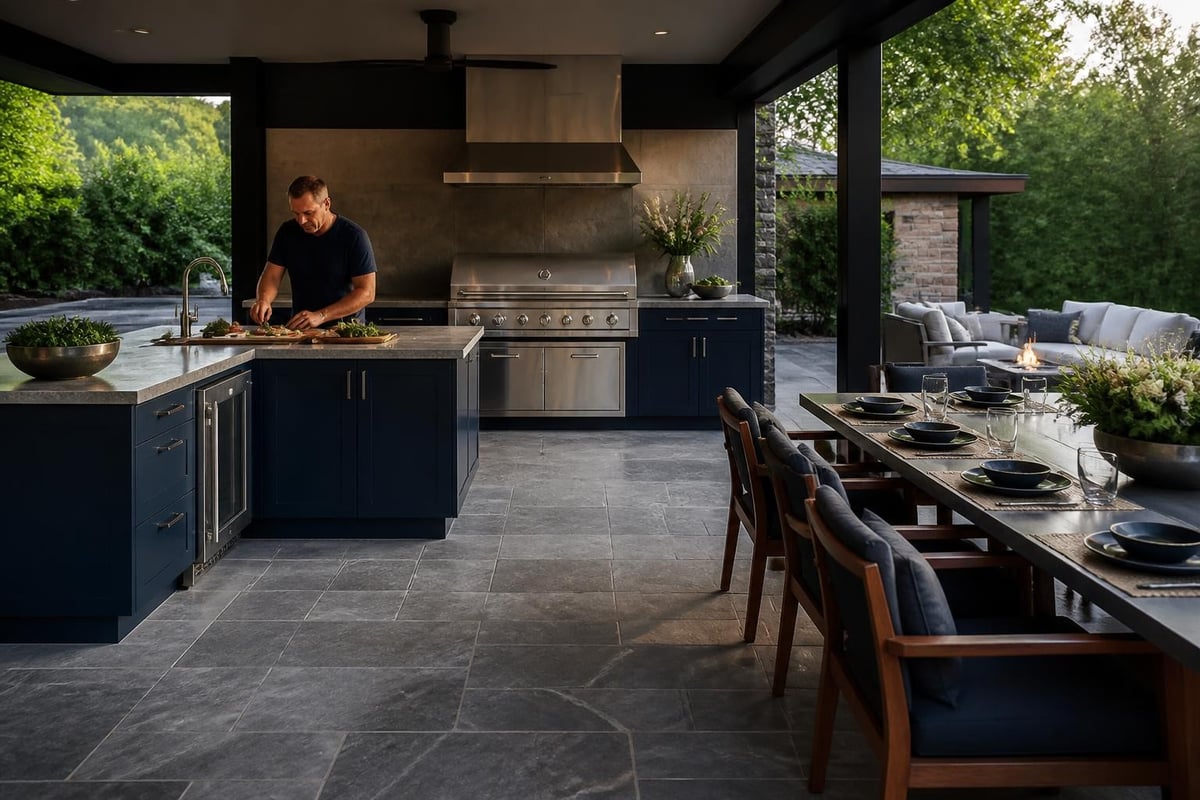
Strategic planning forms the foundation of any successful outdoor kitchen project. Before selecting appliances or materials, homeowners must carefully consider spatial relationships, workflow patterns, and integration with existing architecture.
Professional kitchen designers apply the classic work triangle principle to outdoor environments, positioning cooking appliances, preparation surfaces, and refrigeration within efficient reach of one another. This approach minimises unnecessary movement whilst maintaining logical workflow sequences.
Key spatial considerations include:
The Cubic C1 Style Outdoor Kitchen exemplifies this modular approach, offering configurable layouts that adapt to various garden dimensions whilst maintaining optimal workflow efficiency. Its sleek minimalist design incorporates integrated storage, preparation zones, and appliance housing within weather-resistant materials engineered for longevity.
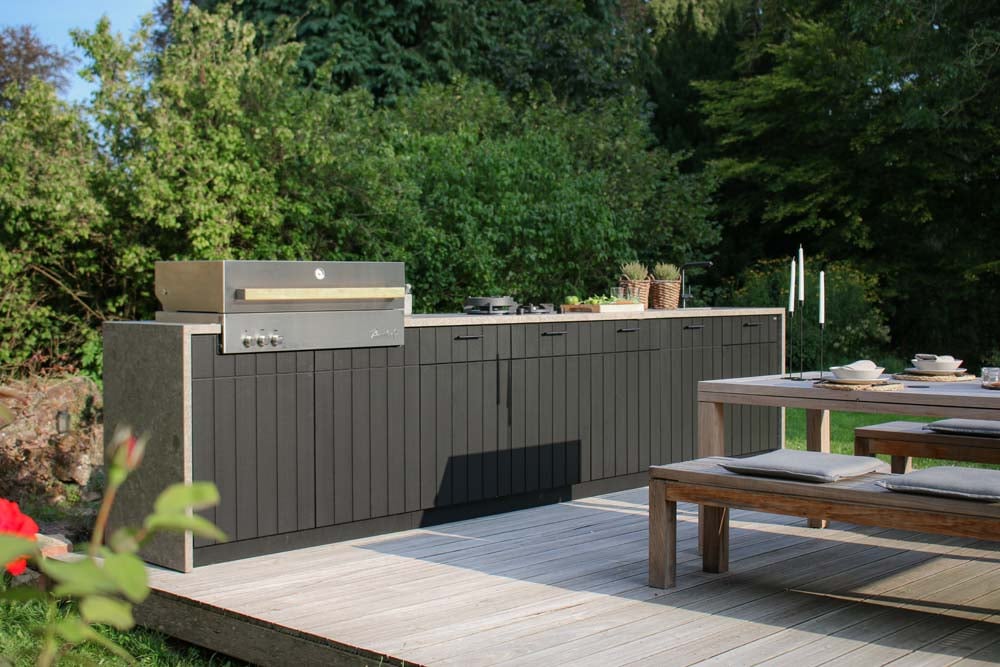
Different garden geometries and entertaining styles demand distinct layout approaches. Understanding these configurations helps homeowners select designs that complement their specific requirements and spatial constraints.
| Layout Type | Best For | Key Benefits | Spatial Requirements |
|---|---|---|---|
| Linear/Straight | Narrow gardens, terraces | Space-efficient, simple workflow | Minimum 3m length × 0.8m depth |
| L-Shaped | Corner locations, medium gardens | Defines cooking zone, maximises counter space | 2.5m × 2.5m footprint minimum |
| U-Shaped | Larger gardens, dedicated entertaining | Enclosed workspace, maximum storage | 3m × 3m minimum clearance |
| Island | Spacious gardens, social cooking | 360-degree access, dramatic focal point | 4m × 4m clear zone recommended |
| Galley/Parallel | Wide gardens, professional-style cooking | Efficient workflow, separate zones | 2.5m width between runs |
Selecting the appropriate layout depends not only on available space but also on entertaining patterns, household size, and integration with existing garden features such as pergola structures or dining areas.
The choice of materials fundamentally impacts both the longevity and visual harmony of your outdoor kitchen. British weather conditions demand materials that resist moisture penetration, temperature cycling, and UV degradation whilst maintaining aesthetic appeal.
Selecting appropriate countertop surfaces requires balancing durability, maintenance requirements, and aesthetic preferences. Premium outdoor kitchens typically employ materials that combine practical performance with refined visual character.
Top-tier countertop options include:
Granite: Natural stone offering exceptional heat resistance, scratch durability, and unique veining patterns. Requires periodic sealing but withstands British weather admirably.
Porcelain Slabs: Large-format porcelain provides consistent appearance, minimal maintenance, and excellent stain resistance. Available in stone-effect finishes that complement traditional architecture.
Quartzite: Natural stone with superior hardness, heat tolerance, and weather resistance. More durable than marble whilst offering comparable aesthetic sophistication.
Concrete: Customisable surfaces that integrate seamlessly with contemporary design schemes. Requires professional sealing but offers unlimited colour and finish possibilities.
Stainless Steel: Professional-grade material providing hygiene, heat resistance, and modern aesthetic. Particularly suitable for preparation zones adjacent to cooking appliances.
Outdoor cabinetry must withstand constant moisture exposure, temperature fluctuations, and UV radiation that would rapidly degrade conventional kitchen materials. Premium outdoor kitchens employ purpose-engineered solutions rather than adapted indoor products.
Marine-grade stainless steel construction offers ultimate durability with minimal maintenance requirements. Powder-coated aluminium frameworks provide corrosion resistance whilst reducing weight. High-density polymer cabinetry delivers wood-grain aesthetics without moisture vulnerability.
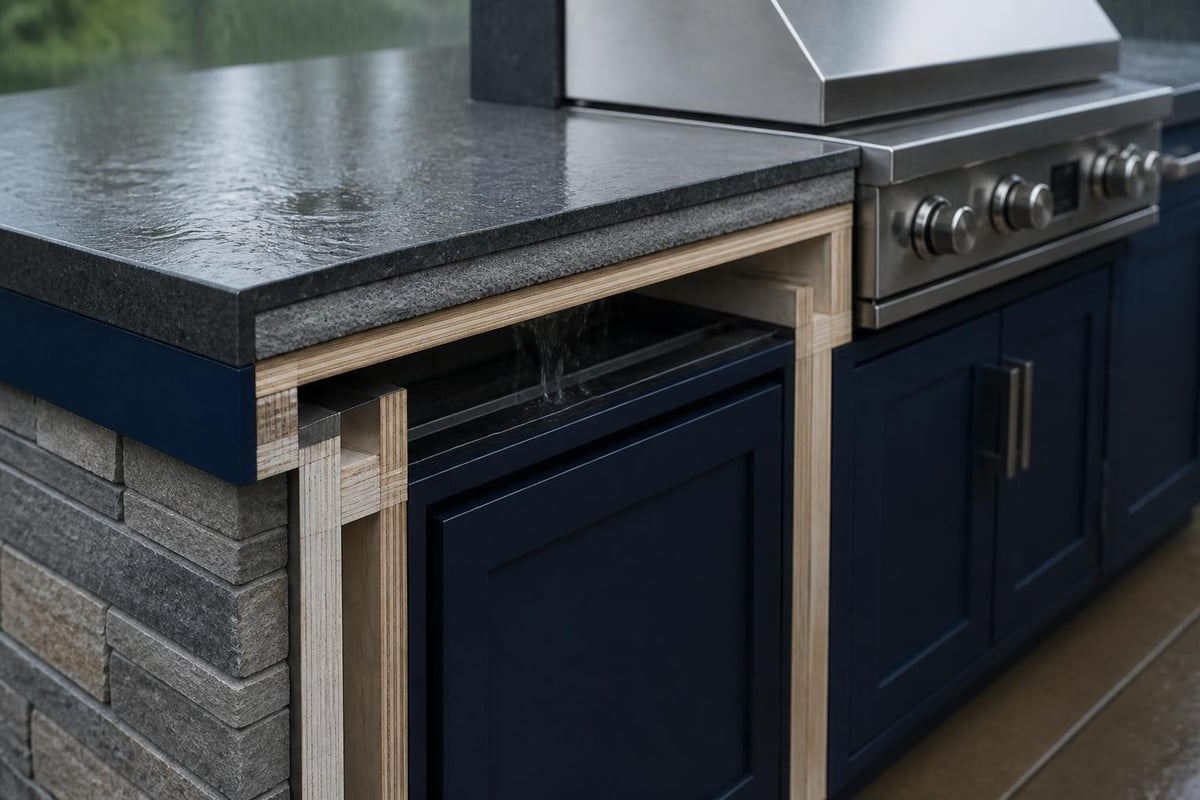
The heart of any outdoor kitchen lies in its cooking appliances and supporting equipment. Premium installations curate equipment that balances culinary performance, durability, and aesthetic integration.
Modern outdoor kitchens typically centre around one or more primary cooking platforms, each offering distinct capabilities and cooking experiences.
Built-in grills remain the cornerstone of most configurations, with premium models featuring multiple burners, infrared zones, rotisserie systems, and integrated temperature monitoring. The Whistler Grills collection exemplifies high-performance engineering with precise temperature control and exceptional heat retention.
Pizza ovens have transcended trend status to become permanent fixtures in sophisticated outdoor kitchens. Wood-fired models deliver authentic Neapolitan results, whilst hybrid systems offer the convenience of gas ignition combined with traditional wood-burning capability. Professional-grade units reach temperatures exceeding 500°C, enabling genuine 90-second pizza cooking times.
Outdoor ranges and cooking stations provide comprehensive cooking capabilities in single integrated units. These systems combine multiple heat sources-gas burners, griddle plates, and sometimes induction zones-creating versatile platforms for diverse culinary techniques.
Complete outdoor kitchens extend beyond primary cooking appliances to include essential supporting equipment that enables full meal preparation without indoor kitchen access.
Refrigeration: Built-in outdoor refrigerators and beverage centres maintain consistent temperatures despite exterior conditions. Premium units feature marine-grade components and enhanced insulation.
Sinks and water access: Stainless steel prep sinks with hot and cold water supply facilitate washing, cleaning, and food preparation. Consider frost-protected plumbing for year-round operation.
Storage solutions: Weatherproof cabinets, drawer systems, and overhead shelving keep cookware, utensils, and ingredients organised and protected.
Waste management: Integrated bin storage, compost systems, and recycling compartments maintain cleanliness whilst supporting sustainable practices.
British outdoor kitchens must address weather variability to achieve genuine year-round functionality. Sophisticated protection systems transform exposed cooking areas into comfortable, usable spaces regardless of conditions.
Premium bioclimatic pergolas represent the gold standard in outdoor kitchen weather protection. These engineered structures feature motorised louvred roofs that adjust blade angles to control sunlight, ventilation, and weather protection with precision.
Retractable systems allow complete roof opening during pleasant weather, partial closure for shade and ventilation, and full protection during rain. Integrated LED lighting, heating elements, and side glazing options create genuinely habitable outdoor rooms that function throughout the year.
The Tarsaola Technic bioclimatic pergola exemplifies architectural-grade weather protection, combining sleek European engineering with robust performance. Its powder-coated aluminium construction resists corrosion whilst maintaining refined aesthetics that complement both traditional and contemporary architecture.
Strategic heating integration extends outdoor kitchen usability well beyond summer months. Radiant patio heaters, integrated infrared panels, and fire features create comfortable ambient temperatures even during cooler evenings.
Effective lighting design addresses multiple functional requirements:
Successful outdoor kitchens feel like natural extensions of interior spaces rather than disconnected garden features. This requires careful attention to architectural language, material palettes, and visual flow.
Extending interior design themes into outdoor spaces establishes coherent aesthetic narratives. Consider how outdoor kitchen designs relate to existing architectural features-matching stone types, complementary colour palettes, and consistent detailing create unified compositions.
Traditional Cotswold properties benefit from natural stone integration, timber pergola structures, and sympathetic material selections that respect heritage whilst introducing contemporary functionality. Modern homes accommodate minimalist lines, industrial materials, and bold geometric forms that echo interior design directions.
The boundary between indoor and outdoor kitchens presents opportunities for dramatic architectural gestures. Bi-fold or sliding glass walls create seamless transitions, whilst thoughtful paving patterns and level changes guide movement between zones.
Consider these transition strategies:
Outdoor kitchen projects span vast budget ranges, from modest installations to comprehensive luxury environments. Understanding cost drivers and investment priorities helps homeowners make informed decisions aligned with their requirements and resources.
| Component Category | Budget Range (£) | Mid-Range (£) | Premium (£) | Investment Priority |
|---|---|---|---|---|
| Cabinetry & Structure | 3,000 - 6,000 | 8,000 - 15,000 | 20,000+ | High - Foundation element |
| Countertops | 1,500 - 3,000 | 4,000 - 8,000 | 12,000+ | High - Durability critical |
| Primary Grill | 2,000 - 4,000 | 5,000 - 10,000 | 15,000+ | High - Central appliance |
| Pizza Oven | 1,500 - 3,500 | 4,000 - 8,000 | 12,000+ | Medium - Specialty use |
| Refrigeration | 800 - 1,500 | 2,000 - 4,000 | 6,000+ | Medium - Convenience factor |
| Pergola/Shelter | 5,000 - 10,000 | 12,000 - 25,000 | 35,000+ | High - Weather protection |
| Installation & Services | 3,000 - 6,000 | 8,000 - 15,000 | 20,000+ | High - Professional quality |
Complete luxury outdoor kitchen installations typically range from £25,000 to £75,000+ depending on size, specification, and site complexity. Phased approaches allow homeowners to establish core functionality initially whilst planning future expansion as budgets permit.
Certain expenditures deliver disproportionate returns in terms of functionality, longevity, and property value enhancement. Prioritising these elements ensures optimal resource allocation.
Premium weather-resistant materials justify their cost through extended lifespan and reduced maintenance. Professional installation ensures proper utilities integration, weather protection, and code compliance. Architectural weather protection systems transform seasonal accessories into year-round living spaces that significantly enhance property appeal.
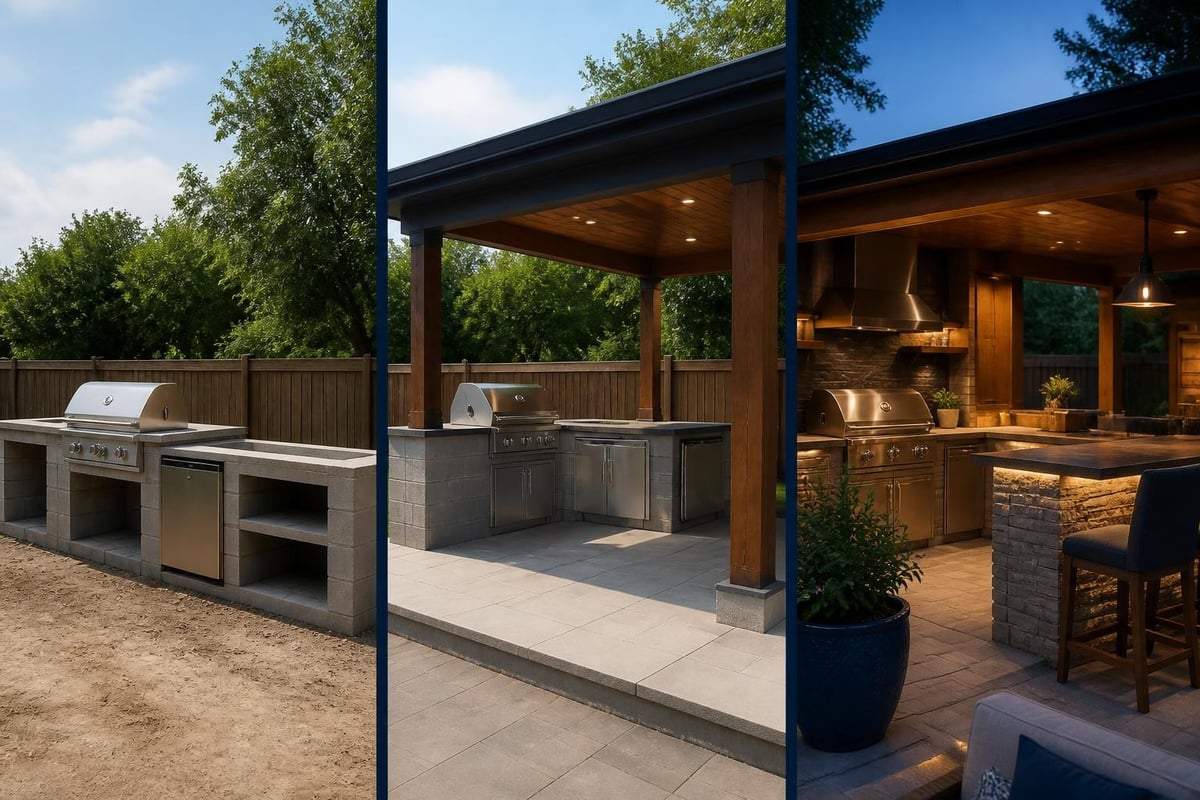
Preserving outdoor kitchen performance and appearance requires understanding material-specific care requirements and implementing appropriate maintenance schedules.
British weather cycles demand seasonal attention to ensure components remain protected and functional throughout the year.
Spring preparation tasks:
Autumn winterisation procedures:
Different surfaces and finishes demand tailored maintenance approaches. Stainless steel benefits from regular cleaning with specialised products that prevent water spotting and maintain lustre. Natural stone surfaces require periodic resealing to maintain stain resistance and weather protection.
Powder-coated finishes resist corrosion but should be cleaned gently to avoid scratching protective layers. Wood elements demand annual treatment with appropriate oils or stains to prevent moisture damage and UV degradation.
Outdoor kitchen installations may trigger various regulatory requirements depending on scope, location, and utilities integration. Understanding these obligations prevents costly modifications and project delays.
Most outdoor kitchen installations fall under permitted development rights, requiring no formal planning permission. However, structures exceeding certain height or proximity thresholds may require approval, particularly within conservation areas or listed building curtilages.
Gas installations must comply with Gas Safety regulations, typically requiring registered engineer certification. Electrical work should meet BS 7671 wiring regulations, with outdoor installations demanding appropriate IP-rated components and RCD protection.
Engaging experienced design consultancies provides access to expertise spanning architectural planning, utilities coordination, and regulatory compliance. Professional guidance ensures optimal spatial planning, appropriate material selection, and seamless integration with existing property features.
The consultative approach identifies potential challenges early in the planning process, preventing expensive revisions during construction. Expert specification ensures equipment selections match intended usage patterns whilst maintaining aesthetic coherence across the installation.
Beyond essential cooking and preparation zones, thoughtfully selected specialty features elevate outdoor kitchens from functional spaces to extraordinary culinary destinations.
Integrated fire tables, outdoor fireplaces, and contemporary fire pits extend usability whilst creating dramatic focal points. These elements provide warmth, atmosphere, and social gathering points that complement cooking and dining functions.
Water features introduce soothing acoustic elements whilst softening hardscape dominance. Fountains, rills, and pools create micro-climates that moderate temperature and add movement to static architectural compositions.
Modern outdoor kitchens increasingly incorporate entertainment systems that enhance social experiences. Weather-resistant televisions, outdoor audio systems, and smart home integration allow seamless control of lighting, heating, and music from mobile devices.
Popular entertainment additions include:
Contemporary outdoor kitchen design increasingly embraces sustainable principles, balancing luxury with environmental responsibility through thoughtful material selection, energy efficiency, and resource conservation.
Premium outdoor appliances now feature improved insulation, efficient burner designs, and smart controls that minimise energy consumption. Induction cooking platforms deliver precise temperature control whilst reducing gas dependency. LED lighting systems provide excellent illumination whilst consuming minimal electricity.
Solar integration offers opportunities for off-grid operation or grid-tied systems that offset energy consumption. Battery storage systems enable independence from mains electricity, particularly valuable for remote garden locations.
Outdoor kitchens present opportunities for grey water recycling, rainwater harvesting, and efficient irrigation integration. Collected water can serve garden irrigation requirements, reducing mains water consumption whilst maintaining landscape health.
Low-flow taps and spray heads reduce water usage without compromising functionality. Proper drainage design prevents water accumulation whilst directing runoff towards planted areas that benefit from additional moisture.
The outdoor kitchen landscape continues evolving, with several distinct trends emerging across luxury installations throughout 2026.
Clean lines, concealed storage, and integrated appliances characterise the minimalist direction gaining traction amongst design-conscious buyers. This approach emphasises uncluttered surfaces, monochromatic colour schemes, and seamless material transitions.
Handleless cabinetry, flush-mounted appliances, and continuous countertop surfaces create serene environments that foreground cooking experiences rather than equipment display. This aesthetic particularly suits contemporary architecture whilst offering timeless appeal that transcends passing fashions.
Outdoor kitchens increasingly serve multiple purposes beyond food preparation. Integrated workspaces accommodate remote working, whilst convertible dining surfaces transition between casual meals and formal entertaining. This flexibility maximises space utility, particularly valuable in compact urban gardens.
Modular furniture systems, retractable screens, and adaptable lighting create environments that transform throughout the day-from morning coffee stations to afternoon work zones and evening entertainment venues.
The incorporation of planted elements within and around outdoor kitchens strengthens connections with nature whilst providing functional benefits. Herb gardens integrated into kitchen islands offer fresh ingredients at arm's reach. Vertical green walls soften hardscape elements whilst improving air quality and providing natural cooling.
Living roofs on pergola structures enhance insulation, manage rainwater, and create habitat for beneficial insects. These elements transform outdoor kitchens from manufactured spaces into integrated garden features that evolve with seasonal cycles.
Modern outdoor kitchens embrace technology that enhances convenience, safety, and cooking precision without compromising aesthetic refinement.
Premium grills and ovens now feature WiFi connectivity, enabling remote temperature monitoring, cooking alerts, and guided recipe assistance through smartphone applications. These systems provide confidence for complex cooking techniques whilst allowing hosts to remain engaged with guests rather than tethered to appliances.
Integrated temperature probes, automated shut-off systems, and voice control compatibility represent evolving standards rather than luxury extras across high-end installations.
Sophisticated pergola systems integrate motorised louvres, retractable screens, and heating elements controlled through centralised systems. Weather sensors automatically adjust configurations in response to changing conditions, maintaining comfort without manual intervention.
Smart lighting systems adapt colour temperature and intensity throughout the day, enhancing circadian rhythms whilst providing optimal task illumination when required.
Creating an exceptional outdoor kitchen demands careful consideration of layout efficiency, material durability, weather protection, and aesthetic integration with your home's architecture. Whether you're planning a compact cooking station or a comprehensive culinary destination, professional guidance ensures your investment delivers lasting value and genuine year-round functionality. Cotswold Cooking Company offers complete design consultancy services, from initial concept development through specification, supply, and installation, helping discerning homeowners across the UK transform their outdoor spaces into refined entertaining environments that blend Cotswold heritage with contemporary performance.

Leave a comment