


The evolution of outdoor living has reached a pivotal moment in 2026, with outdoor kitchen pods emerging as the most sophisticated solution for homeowners who refuse to compromise on culinary capability or design excellence. These freestanding, self-contained cooking environments represent a fundamental shift from traditional patio installations, offering complete functionality within architecturally refined enclosures that protect equipment, extend seasonal use, and create dedicated zones for outdoor entertaining. For discerning property owners across the Cotswolds, Oxfordshire, and beyond, outdoor kitchen pods deliver the performance of indoor kitchens whilst maintaining the sensory pleasure of cooking beneath open skies.
Outdoor kitchen pods are purpose-built, weatherproof structures that house complete cooking facilities within a single, integrated unit. Unlike traditional outdoor kitchens that require extensive hardscaping and separate shelter solutions, these pods arrive as cohesive systems combining cooking appliances, preparation surfaces, storage, and overhead protection.
The architectural distinction matters significantly. A conventional outdoor kitchen might pair a built-in grill with separate countertops and a remotely positioned pergola. Outdoor kitchen pods unify these elements, creating enclosed or semi-enclosed spaces that function as garden rooms dedicated entirely to culinary pursuits.
Modern outdoor kitchen pods typically incorporate:
The modular nature of quality pods allows customisation without requiring full bespoke construction. Leading European manufacturers now offer configurator systems where clients specify dimensions, appliance selections, and material finishes to suit specific garden contexts.
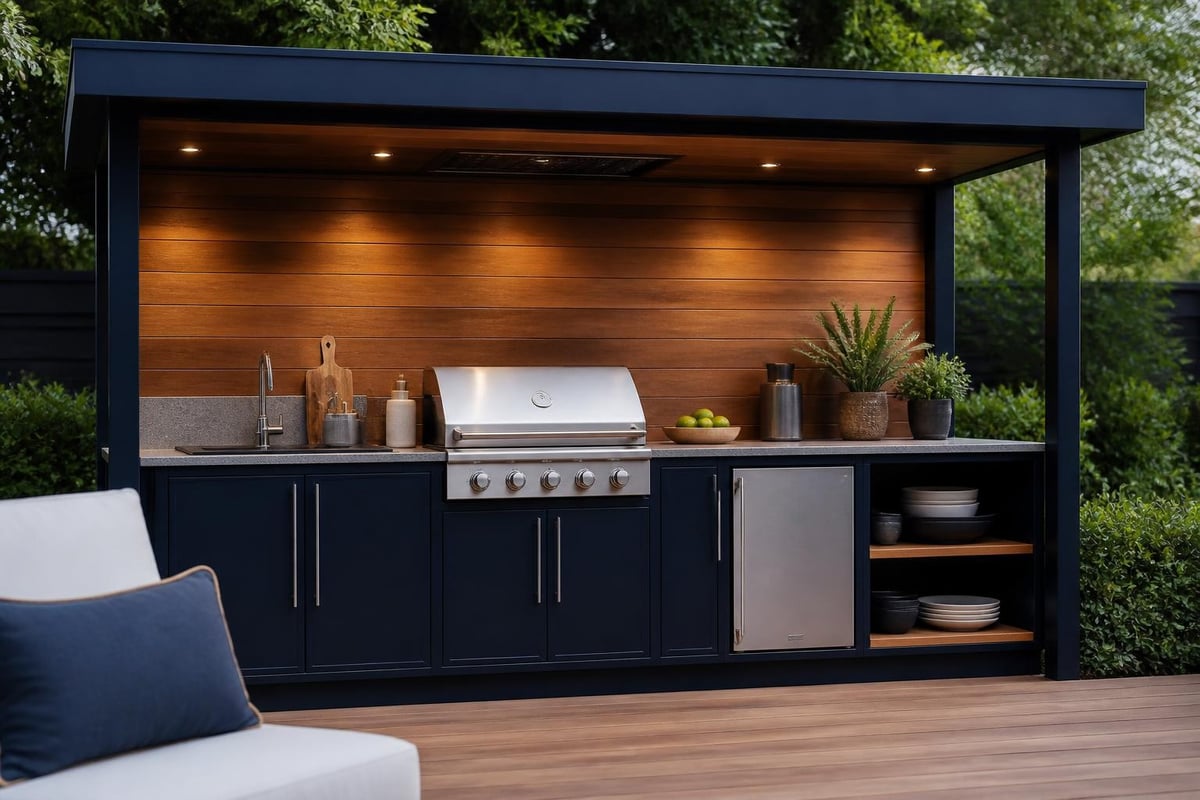
Successful outdoor kitchen pod installations demand careful attention to spatial planning, material durability, and regulatory compliance. The consultative process begins with site analysis, examining orientation, access routes, utility proximity, and visual relationships with existing architecture.
Garden placement fundamentally shapes how the pod functions throughout the year. South-facing orientations maximise natural warmth and daylight during cooler months, whilst west-facing pods capture evening light ideal for summer dining. Consider prevailing wind patterns – positioning the pod to create natural wind breaks enhances comfort and prevents smoke drift into entertaining areas.
The International Code Council provides detailed guidance on clearance requirements for outdoor cooking appliances, particularly regarding combustible materials and property boundaries. Most jurisdictions require minimum distances between cooking equipment and structures, with specific rules for gas-line routing and appliance ventilation.
| Positioning Factor | Optimal Specification | Common Pitfall to Avoid |
|---|---|---|
| Distance to main residence | 3-8 metres (maintains connection whilst creating distinct zone) | Placing too far reduces practical use |
| Utility access | Within 10 metres of existing gas/water/electric | Excessive trenching costs and disruption |
| Level foundation | Maximum 1:60 gradient | Installing on uneven ground without proper base preparation |
| Overhead clearance | Minimum 2.4m from cooking surface to canopy | Inadequate ventilation and heat accumulation |
The British climate demands materials engineered specifically for temperature fluctuation, moisture exposure, and UV degradation. Premium outdoor kitchen pods utilise marine-grade stainless steel (316 or 304 grade), powder-coated aluminium frames, and composite decking resistant to rot and warping.
Natural stone worktops – particularly granite, quartzite, or porcelain – withstand thermal shock from hot cookware whilst resisting staining and weathering. Avoid porous materials like marble or limestone unless properly sealed and maintained regularly. For cabinetry, high-density polymer or marine-ply with waterproof laminate outperforms traditional timber, which requires extensive maintenance to prevent moisture ingress.
The structural canopy deserves particular scrutiny. Fixed roofs provide maximum protection but may require planning permission depending on size and proximity to boundaries. Louvred bioclimatic systems offer adjustable coverage, allowing airflow during cooking whilst closing fully during inclement weather.
The functional heart of any outdoor kitchen pod lies in its appliance selection. Professional-grade equipment designed explicitly for outdoor use delivers reliability that domestic alternatives cannot match, withstanding humidity, temperature extremes, and exposure whilst maintaining precision temperature control.
Contemporary outdoor kitchen pods accommodate diverse cooking methods within compact footprints:
The Grillandia outdoor kitchens collection exemplifies modular flexibility, allowing clients to configure pod layouts with equipment tailored to specific cooking preferences. Modules integrate seamlessly, maintaining cohesive aesthetics whilst accommodating everything from teppanyaki plates to dedicated seafood steamers.
For properties where authenticity matters, wood-fired ovens bring theatre and flavour depth impossible to replicate with gas alone. However, they require proper ventilation consideration and sufficient clearance from overhead structures. Research from the National Fire Protection Association demonstrates that outdoor cooking fires often result from inadequate clearances and supervision, making professional installation and compliance non-negotiable.
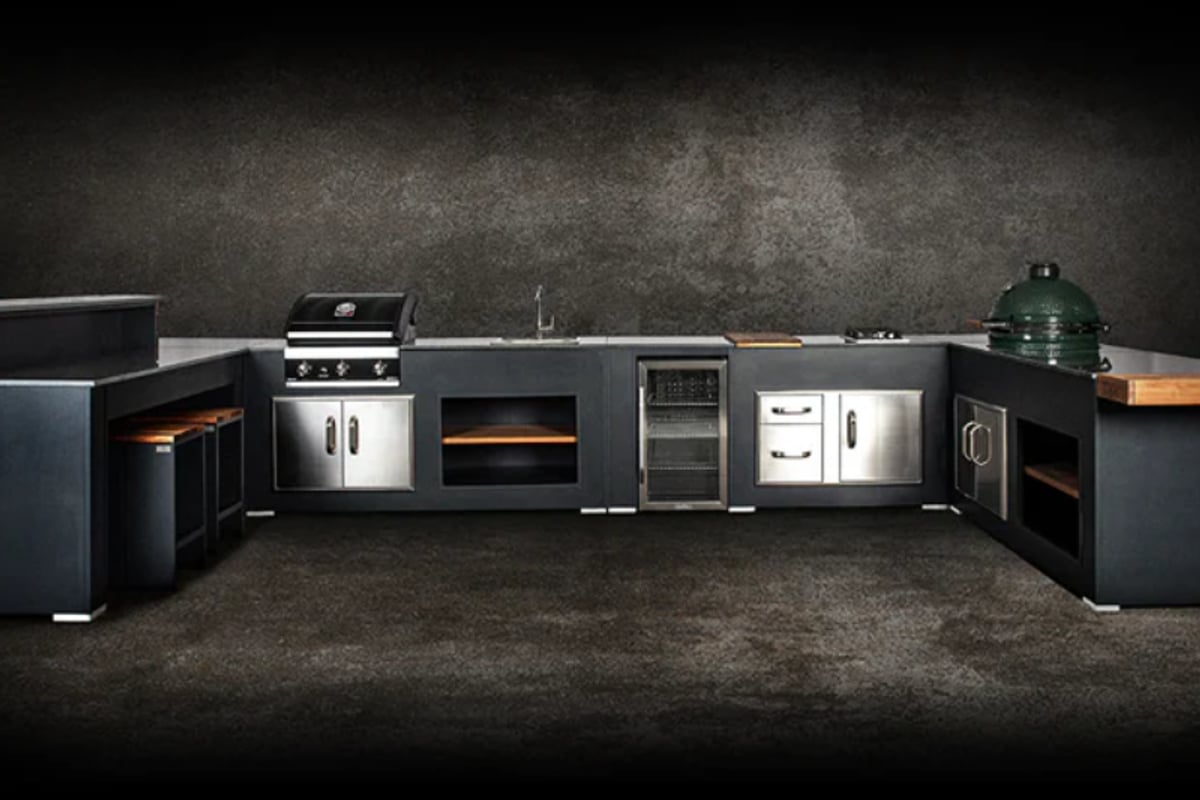
Unlike outdoor kitchen kits that rely on portable coolers, properly specified outdoor kitchen pods incorporate purpose-built refrigeration. Outdoor-rated refrigerators feature enhanced insulation, weatherproof seals, and compressor systems designed to operate efficiently across wider temperature ranges than domestic units.
Undercounter refrigeration drawers prove particularly practical in pod installations, maximising preparation surface area whilst keeping frequently used ingredients immediately accessible. For serious entertainers, dedicated beverage refrigeration, ice makers, and wine coolers transform the pod into a complete hospitality venue.
| Appliance Type | Key Outdoor Specification | Typical Energy Use |
|---|---|---|
| Outdoor refrigerator | Stainless steel exterior, -5°C to 40°C ambient operation | 350-500 kWh/year |
| Beverage centre | UV-resistant glass door, dual-zone temperature | 280-420 kWh/year |
| Ice maker | Weatherproof housing, self-draining capability | 320-480 kWh/year |
| Wine cooler | Vibration dampening, humidity control | 200-350 kWh/year |
The ENERGY STAR commercial food service resources provide efficiency benchmarks useful when comparing appliance specifications, particularly for hospitality applications where outdoor kitchen pods serve commercial entertaining functions.
The defining advantage of outdoor kitchen pods over open-air installations lies in their ability to extend usable seasons through intelligent environmental control. British weather demands systems that adapt rapidly, protecting equipment and users from sudden downpours whilst maximising pleasant conditions during favourable weather.
Contemporary pod canopy systems range from fixed hardtop structures to fully automated bioclimatic louvres. Fixed canopies provide permanent protection and can incorporate lighting, heating elements, and extraction systems. However, they create year-round shade that may prove excessive during summer months.
Bioclimatic louvred roofs offer superior versatility. Motorised slats rotate from fully open to completely closed positions, allowing precise control over sunlight, ventilation, and weather protection. When closed during rain, the interlocking louvres create weatherproof coverage. Opened, they promote airflow that prevents heat and smoke accumulation.
Proper ventilation becomes critical when pods incorporate high-output cooking equipment. The ASHRAE handbook guidance on kitchen ventilation specifies air-change rates and exhaust requirements that prevent grease accumulation and ensure comfortable cooking environments. Even semi-enclosed pods benefit from dedicated extraction, particularly when positioned near residential windows or outdoor seating areas.
Extending outdoor kitchen pod usability into autumn and winter requires supplementary heating. Modern solutions include:
Lighting design should address task illumination for food preparation alongside ambient lighting for entertaining. LED strip lighting beneath overhead canopies provides shadow-free work surfaces, whilst dimmable perimeter lighting creates atmosphere once cooking concludes. Many premium pods now integrate smart lighting systems controllable via smartphone apps, synchronising illumination with time of day and usage patterns.
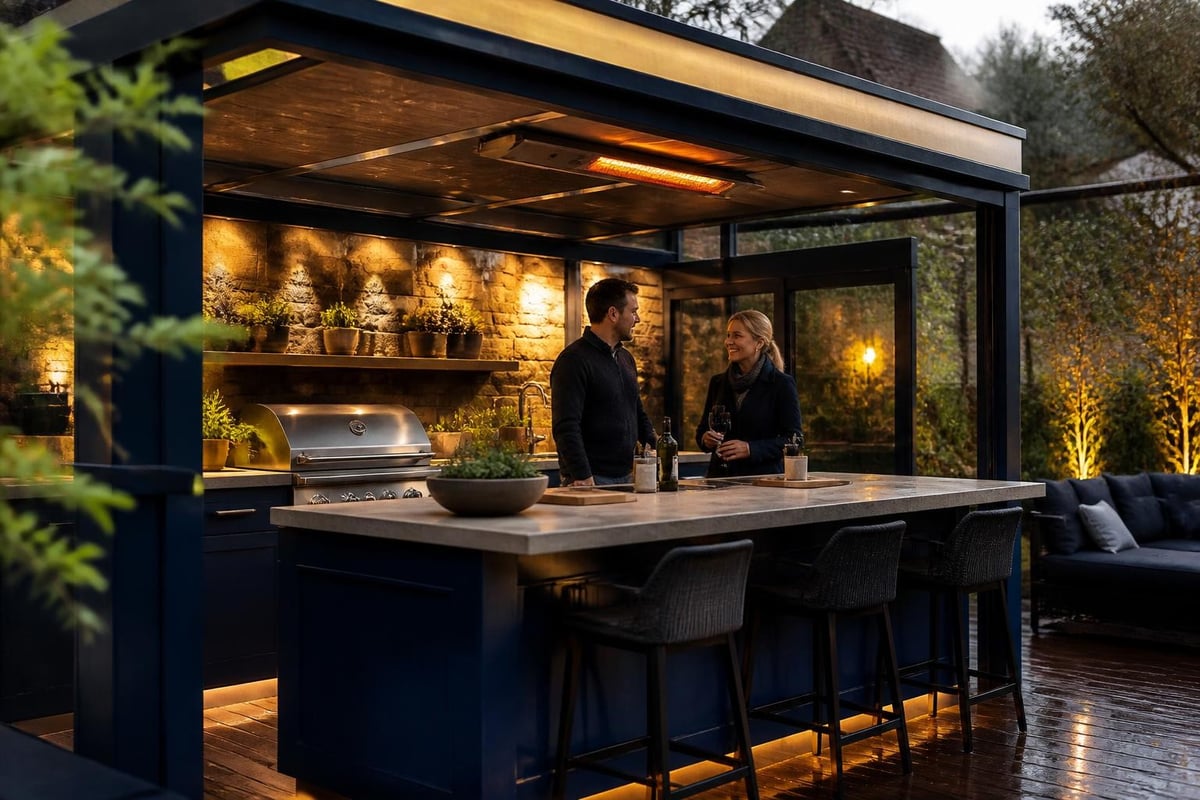
Professional outdoor kitchen pod installations require comprehensive utility planning and regulatory awareness. The complexity varies significantly depending on pod size, equipment specification, and local authority requirements.
Gas-fuelled appliances demand certified installation by Gas Safe registered engineers, with pipework routing, pressure regulation, and shut-off valves meeting current British Standards. Armoured cable buried at appropriate depths supplies electrical connections, with dedicated circuits for high-draw appliances like refrigerators and outdoor heaters.
Water supply serves multiple functions within outdoor kitchen pods: hand washing, food preparation, and appliance connections for ice makers or dishwashers. Proper drainage prevents standing water and incorporates grease traps where required by local water authorities.
The U.S. Fire Administration provides grilling safety resources that, whilst American-focused, offer universal principles regarding appliance spacing, supervision protocols, and fire-prevention best practices applicable to UK installations. Many insurers now require documentation of professional installation and regular servicing for outdoor cooking equipment.
Whether outdoor kitchen pods require planning permission depends on size, height, proximity to boundaries, and whether the property sits within designated areas like conservation zones or Areas of Outstanding Natural Beauty. Structures under 2.5 metres in height located more than two metres from boundaries typically fall under permitted development rights, though councils maintain discretion.
Building regulations apply when pods incorporate fixed utility connections or achieve certain size thresholds. Electrical work must comply with Part P (electrical safety), gas installations with Part J (combustion appliances), and structural elements with Part A (structural integrity). Working with experienced designers familiar with local authority expectations streamlines approval processes and ensures compliant installations.
Contemporary outdoor kitchen pods reflect broader design movements emphasising material authenticity, technological integration, and flexible functionality. Understanding current trends helps specify installations that remain relevant and valuable over decades of use.
Leading designers now approach outdoor kitchen pods as garden pavilions worthy of architectural consideration equal to the main residence. This manifests through:
The Architectural Digest perspective on contemporary outdoor kitchen design emphasises chef input in layout planning, ensuring workflow efficiency mirrors professional kitchen principles whilst maintaining residential comfort.
Market research from the National Association of Home Builders indicates that outdoor kitchens rank among the most desired features for homebuyers, with particularly strong appeal among purchasers of premium properties. Well-executed outdoor kitchen pods demonstrably enhance property value, offering returns that exceed initial investment.
Modern outdoor kitchen pods increasingly incorporate connected technologies:
For properties with dedicated home cinema and audio visual systems, extending entertainment infrastructure into outdoor kitchen pods creates seamless indoor-outdoor experiences, particularly valuable for sports viewing parties or garden cinema evenings.
Outdoor kitchen pods require systematic maintenance to preserve appearance and functionality across decades. Establishing routine care schedules prevents minor issues escalating into expensive repairs whilst maintaining the aesthetic refinement that justifies premium investment.
After each cooking session, cleaning protocols should address:
Weekly maintenance extends to refrigerator interior cleaning, checking gas connections for leaks using soapy water tests, and inspecting weatherproof seals on storage units. Many outdoor kitchen pod owners establish Sunday evening routines ensuring equipment remains ready for spontaneous midweek entertaining.
British winters demand specific preparation even for weather-resistant outdoor kitchen pods:
Autumn preparation checklist:
Spring recommissioning:
The NFPA code updates regarding outdoor cooking appliances periodically revise clearance requirements and installation standards, making annual professional inspections valuable for ensuring ongoing compliance and identifying potential safety concerns.
Outdoor kitchen pods represent significant investment, with pricing reflecting customisation extent, appliance specification, and installation complexity. Understanding cost structures helps establish realistic budgets and prioritise features delivering maximum value.
Entry-level outdoor kitchen pods with standard modular components, basic appliances, and simple canopy structures typically commence around £15,000-£25,000. Mid-range installations incorporating premium cooking equipment, enhanced weather protection, and custom sizing range from £30,000-£60,000. Bespoke architectural pods with luxury appliances, advanced automation, and full utility integration frequently exceed £75,000-£120,000.
| Budget Tier | Typical Inclusions | Suitable For |
|---|---|---|
| £15,000-£25,000 | Modular structure, mid-range grill, basic storage, simple canopy | Occasional entertainers, compact gardens |
| £30,000-£60,000 | Custom sizing, premium appliances, bioclimatic roof, integrated lighting | Regular outdoor cooks, larger properties |
| £75,000-£120,000+ | Architectural design, luxury brand appliances, full automation, bespoke detailing | Hospitality use, design-led properties, year-round outdoor living |
Installation costs vary based on site conditions, utility distance, foundation requirements, and access challenges. Properties requiring extensive trenching for gas and electrical supply, reinforced foundations for heavy equipment, or crane access for pod delivery incur additional expenses beyond base pod pricing.
Quality outdoor kitchen pods deliver value through multiple channels beyond immediate enjoyment. Property market analysis consistently demonstrates that well-executed outdoor living spaces enhance sale appeal and support premium pricing, particularly in areas where outdoor entertaining aligns with lifestyle expectations.
The investment return extends to reduced hospitality costs for frequent entertainers. Home-based events utilising outdoor kitchen pods eliminate restaurant hire fees whilst providing superior quality and personalisation. For hospitality businesses, outdoor kitchen pods transform garden spaces into revenue-generating zones for private dining, cookery classes, or seasonal pop-up concepts.
Energy efficiency considerations also impact long-term value. Properly specified outdoor kitchen pods with professional-grade appliances designed for outdoor use consume less energy than constantly transporting indoor equipment outdoors, whilst weatherproof storage prevents premature appliance replacement costs.
The outdoor kitchen pod market in 2026 offers unprecedented customisation capability, allowing clients to specify installations precisely matched to cooking preferences, aesthetic requirements, and spatial constraints. Understanding available options prevents over-specification whilst ensuring critical features aren't overlooked.
Modular outdoor kitchen pods utilise standardised components combined in configured arrangements. This approach delivers cost efficiency, shorter lead times, and proven performance from tested designs. Premium European manufacturers offer extensive modular ranges where clients select base sizes, appliance positions, storage configurations, and finish materials from defined option menus.
Bespoke outdoor kitchen pods involve custom design from initial concept, with every dimension, material, and detail specified uniquely. This route suits complex sites, unusual spatial requirements, or clients with specific architectural visions. Bespoke projects demand longer lead times, higher investment, and close collaboration with designers experienced in outdoor living environments.
When specifying appliances for outdoor kitchen pods, brand selection fundamentally impacts performance longevity and service availability. European and American manufacturers dominating the premium outdoor kitchen sector engineer equipment specifically for exterior use, addressing corrosion resistance, temperature tolerance, and weatherproof construction.
The outdoor cooking collection showcases brands meeting rigorous outdoor performance standards, from ceramic kamado grills offering exceptional heat retention to professional gas systems delivering restaurant-calibre results. For comprehensive outdoor living installations, luxury outdoor furniture complements cooking zones, creating cohesive entertaining environments.
Quality benchmarks to evaluate include:
The technical complexity of outdoor kitchen pods makes professional installation the prudent choice for most projects. However, understanding where DIY contribution remains viable helps clients engage meaningfully with the process whilst controlling costs where appropriate.
Certain outdoor kitchen pod elements suit competent DIY enthusiasts: foundation preparation, basic assembly of modular components, painting or staining timber elements, and installation of non-gas, non-electrical accessories. However, critical systems demand qualified professionals.
Gas connections require Gas Safe registered engineers by law, with severe penalties for unauthorised work. Electrical installations need Part P qualified electricians, particularly for outdoor circuits exposed to moisture. Plumbing connections, whilst seemingly straightforward, involve building control compliance regarding backflow prevention and waste routing.
Structural work also merits professional involvement. Outdoor kitchen pods incorporating substantial cooking equipment generate significant weight loads requiring engineered foundations. Wind loading calculations for canopy structures ensure stability during severe weather, whilst proper anchoring prevents movement or toppling.
Consultative outdoor kitchen pod specialists deliver value beyond component supply. Experienced designers identify site-specific challenges early, propose solutions avoiding costly mid-project changes, and coordinate trades ensuring seamless installation. This integrated approach proves particularly valuable when outdoor kitchen pods form part of broader garden renovations involving landscaping, pergolas, or pool installations.
The design consultation process typically examines cooking preferences, entertaining patterns, aesthetic aspirations, and budget parameters before proposing pod specifications. This investment in planning prevents the common pitfall of purchasing impressive equipment that doesn't align with actual usage patterns or spatial constraints.
Outdoor kitchen pods represent the convergence of architectural refinement, culinary capability, and year-round outdoor living, transforming gardens into sophisticated entertaining venues that rival indoor kitchens in functionality whilst maintaining the sensory pleasure of open-air cooking. From material selection and appliance specification through to weather protection systems and regulatory compliance, every decision shapes long-term satisfaction and investment value. The Cotswold Cooking Company brings decades of expertise to outdoor kitchen pod projects, offering consultative design services, carefully curated brand partnerships, and comprehensive installation support that transforms outdoor living aspirations into refined culinary destinations. Explore how Cotswold Cooking Company can craft your ideal outdoor kitchen pod, blending Cotswold heritage with cutting-edge performance for discerning clients across the UK.

Leave a comment