


An outdoor kitchen with bar transforms your garden into a sophisticated entertaining destination, blending culinary functionality with social hospitality. As discerning homeowners across the UK seek to extend their living spaces beyond the conservatory, the combination of professional-grade cooking equipment and dedicated bar service has become the hallmark of luxury outdoor design. This comprehensive guide explores the planning, design considerations, and premium solutions that elevate an outdoor kitchen from functional to exceptional.
The foundation of any successful outdoor kitchen with bar begins with thoughtful spatial planning. Unlike indoor kitchens constrained by existing walls and utilities, outdoor spaces offer the freedom to design around how you actually entertain.
Consider the classic work triangle first established for indoor kitchens, but adapt it for outdoor flow. Your grill or primary cooking surface, refrigeration, and preparation area should form an efficient circuit. The bar component then extends this triangle into a social zone where guests can gather without impeding the chef's workflow.
Professional designers typically divide an outdoor kitchen with bar into three distinct zones:
This zoning approach, highlighted in recent outdoor kitchen design galleries, ensures that food preparation flows seamlessly into service whilst creating natural gathering points for guests.
The bar counter height deserves particular attention. Standard bar counters sit at 1,050-1,100mm, whilst prep surfaces typically rest at 900-920mm. This height differential creates visual interest whilst delineating workspace from guest space. When planning counter heights and clearances, consider accessibility requirements outlined in the ADA design standards to ensure inclusive design.
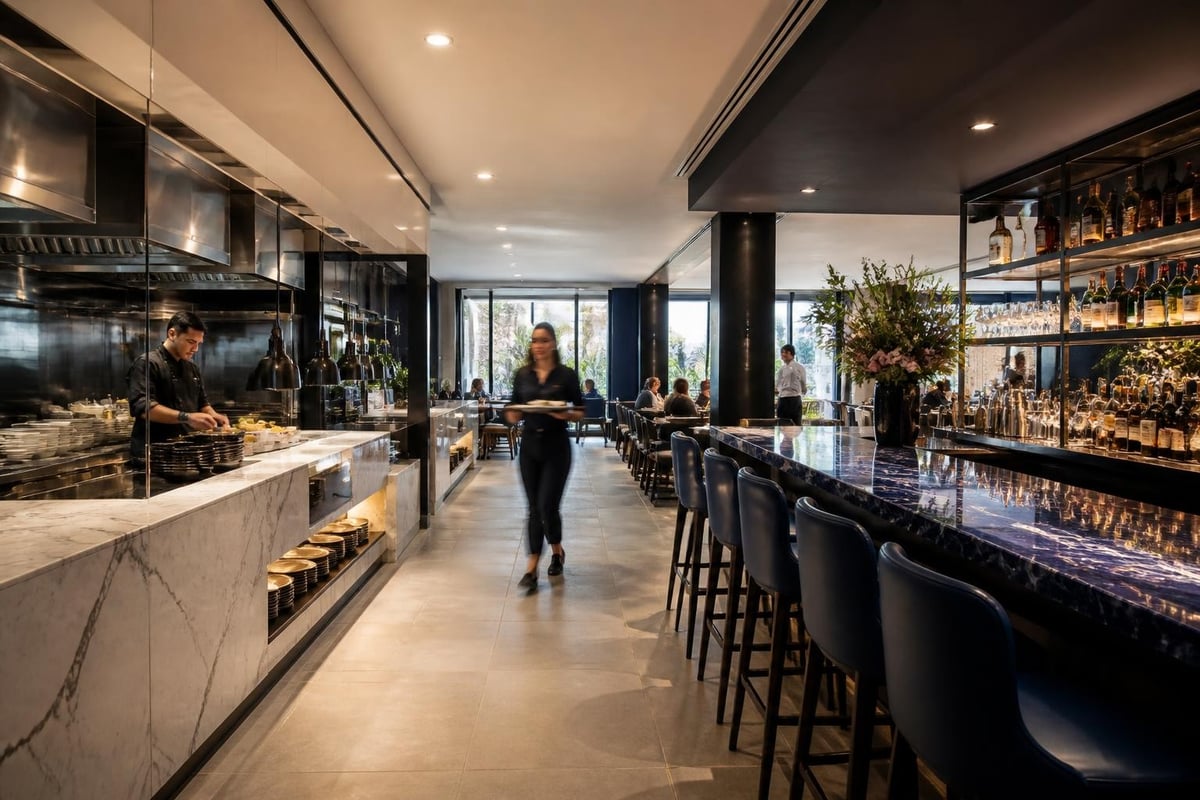
British weather demands robust material choices for any outdoor kitchen with bar. The marriage of aesthetic appeal and weather resistance separates temporary garden features from permanent luxury installations.
| Material | Benefits | Considerations | Typical Cost Range |
|---|---|---|---|
| Stainless Steel | Corrosion-resistant, professional appearance, low maintenance | Can show fingerprints, may feel industrial | £££ - ££££ |
| Powder-Coated Steel | Colour customisation, UV-resistant, modern aesthetic | Quality varies by coating process | ££ - £££ |
| Natural Stone | Timeless elegance, heat-resistant, unique character | Requires sealing, potential staining | £££ - ££££ |
| Porcelain/Dekton | Non-porous, stain-resistant, wide design options | Professional installation required | £££ - ££££ |
| Teak/Hardwood | Warm aesthetic, natural complement to gardens | Regular maintenance, UV protection needed | ££ - £££ |
Stainless steel remains the gold standard for outdoor kitchens, particularly for cabinetry and appliance housings. Grade 304 stainless steel offers excellent corrosion resistance for the UK climate, whilst grade 316 provides enhanced protection in coastal locations where salt air accelerates oxidation.
Your bar and preparation surfaces endure significant use and exposure. Porcelain surfaces have gained prominence in luxury outdoor kitchens for their remarkable durability and design flexibility. These engineered materials resist staining, scratching, and UV degradation whilst offering the aesthetic of natural stone or concrete.
Natural stone options like granite and slate deliver authentic character. However, these porous materials require annual sealing to prevent moisture ingress and staining from wine, citrus, and oil. For bar surfaces specifically, non-porous materials eliminate the maintenance burden whilst ensuring hygiene.
Cotswold limestone, whilst beautiful and locally resonant, requires more intensive care in outdoor applications. If regional materials matter to your design narrative, consider using Cotswold stone for decorative surrounds whilst specifying engineered surfaces for primary work areas.
The appliances you specify transform an outdoor counter into a fully functional bar. Modern outdoor-rated equipment has evolved beyond simple ice buckets and bottle openers.
Outdoor-rated refrigeration forms the cornerstone of bar functionality. Unlike standard domestic fridges, outdoor refrigerators feature:
When selecting outdoor appliances, verify they carry appropriate safety certifications. As noted in UL's appliance guidance, outdoor-rated equipment undergoes specific testing for environmental exposure, ensuring longevity and safe operation.
Wine refrigeration deserves special consideration for the outdoor kitchen with bar. Dual-zone wine fridges allow you to serve both red and white wines at optimal temperatures. Look for units with UV-resistant glass doors and vibration dampening to protect wine quality. The Cella wine fridge range offers outdoor-suitable options with panel-ready designs that integrate seamlessly into custom cabinetry.
A dedicated kegerator elevates the beer service experience. Single or dual-tap systems maintain draft beer at cellar temperature, delivering pub-quality pours in your garden. For the serious beer enthusiast, consider integrated CO2 systems and temperature controls that ensure perfect carbonation.
An ice maker eliminates the indoor-outdoor trips that interrupt entertaining flow. Built-in outdoor ice makers produce clear, restaurant-quality ice cubes, with production capacities ranging from 15-40kg daily. Position the ice maker within arm's reach of the bar to facilitate quick drink service.
Integrated sinks serve dual purposes: food preparation and glassware rinsing. Specify a sink with at least a 400mm basin depth and include a pull-down spray faucet for versatility. When planning outdoor plumbing, consult the EPA WaterSense technical guidance to ensure backflow prevention and lead-free compliance.
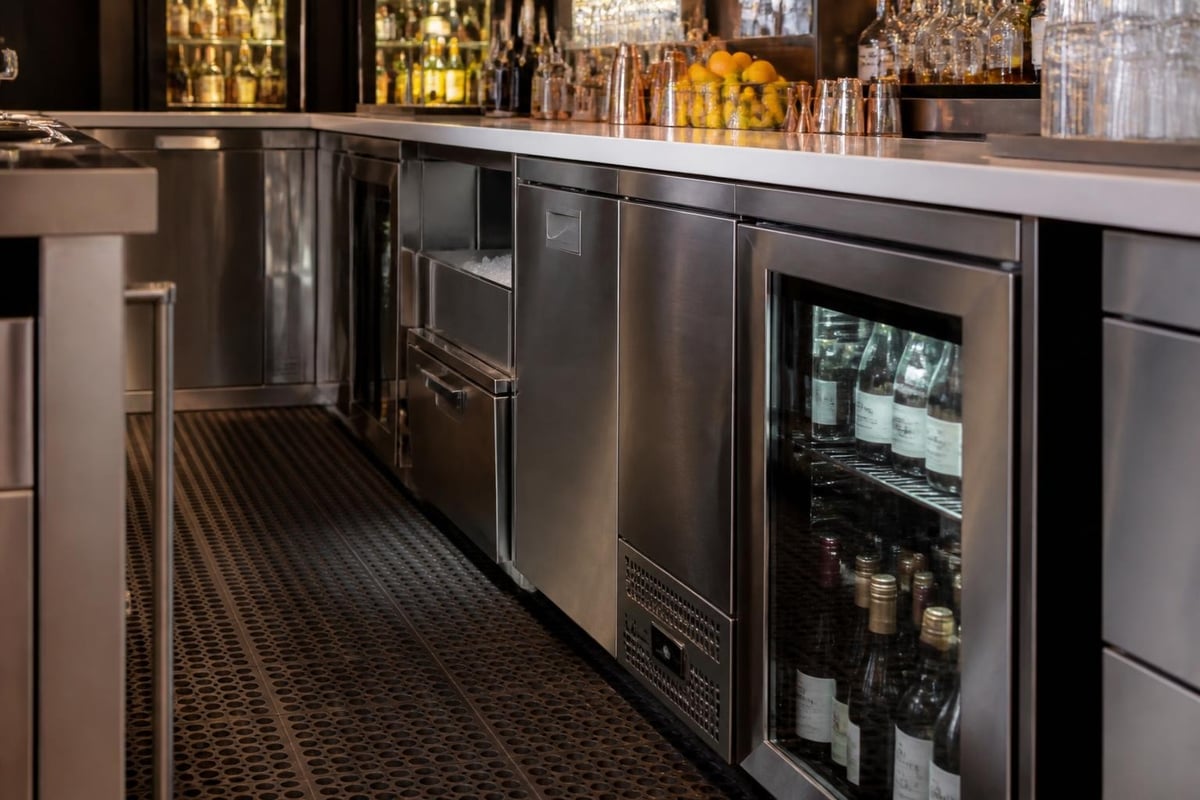
Whilst the bar provides the social anchor, the cooking equipment defines the culinary capability of your outdoor kitchen with bar. The synergy between cooking and beverage service creates the complete entertaining experience.
Built-in gas grills remain the centrepiece of most outdoor kitchens. Premium models feature:
When specifying gas appliances, verify compliance with current safety codes. The National Fuel Gas Code guidance addresses outdoor appliance installation, gas line sizing, and ventilation requirements that ensure safe operation.
Pizza ovens have transcended trend status to become permanent fixtures in luxury outdoor kitchens. Hybrid models that burn both wood and gas offer flexibility, reaching the 450-500°C temperatures required for authentic Neapolitan pizza whilst providing gas convenience for weeknight cooking.
Side burners, griddle plates, and wok burners expand your cooking repertoire. A high-output wok burner (typically 15,000+ BTU) enables authentic Asian cooking techniques outdoors, complementing Western grilling with diverse culinary options.
The bar component of your outdoor kitchen with bar should feel as refined as any indoor cocktail lounge. Thoughtful design details separate functional from exceptional.
Bar seating requires careful dimensional planning for comfort:
Choose seating that withstands British weather whilst providing comfort for extended conversations. Weather-resistant materials include:
Consider swivel stools for larger bars, allowing guests to rotate between the action at the grill and conversations along the bar. Fixed seating works better for smaller configurations where movement is limited.
An outdoor kitchen with bar requires layered lighting that transitions from food preparation to evening entertainment. Combine these lighting types:
All outdoor electrical installations must incorporate GFCI (Ground Fault Circuit Interrupter) protection. Recent updates to electrical safety standards, detailed in UL's GFCI guidance, address interoperability requirements for outdoor circuits, ensuring comprehensive protection against electrical hazards.
The UK climate necessitates weather protection for year-round usability. An outdoor kitchen with bar becomes a four-season asset when properly sheltered.
Bioclimatic pergolas represent the pinnacle of outdoor climate control. Motorised louvred roofs adjust to weather conditions: open for sunny days, tilted for partial shade, and closed for rain protection. Integrated LED lighting, heating elements, and drainage systems create controlled outdoor environments.
Premium pergola systems include:
Fixed roof structures provide permanent weather protection whilst reducing installation complexity. Consider translucent polycarbonate panels that admit natural light whilst blocking rain, or insulated roof panels for superior temperature control.
Outdoor heaters extend the season significantly. Options include:
Proper ventilation remains critical even in covered outdoor spaces. When cooking generates smoke and heat beneath a pergola or roof structure, ensure adequate clearance and air movement. The LEED ventilation guidance addresses air quality considerations for semi-enclosed outdoor spaces, balancing weather protection with healthy air exchange.
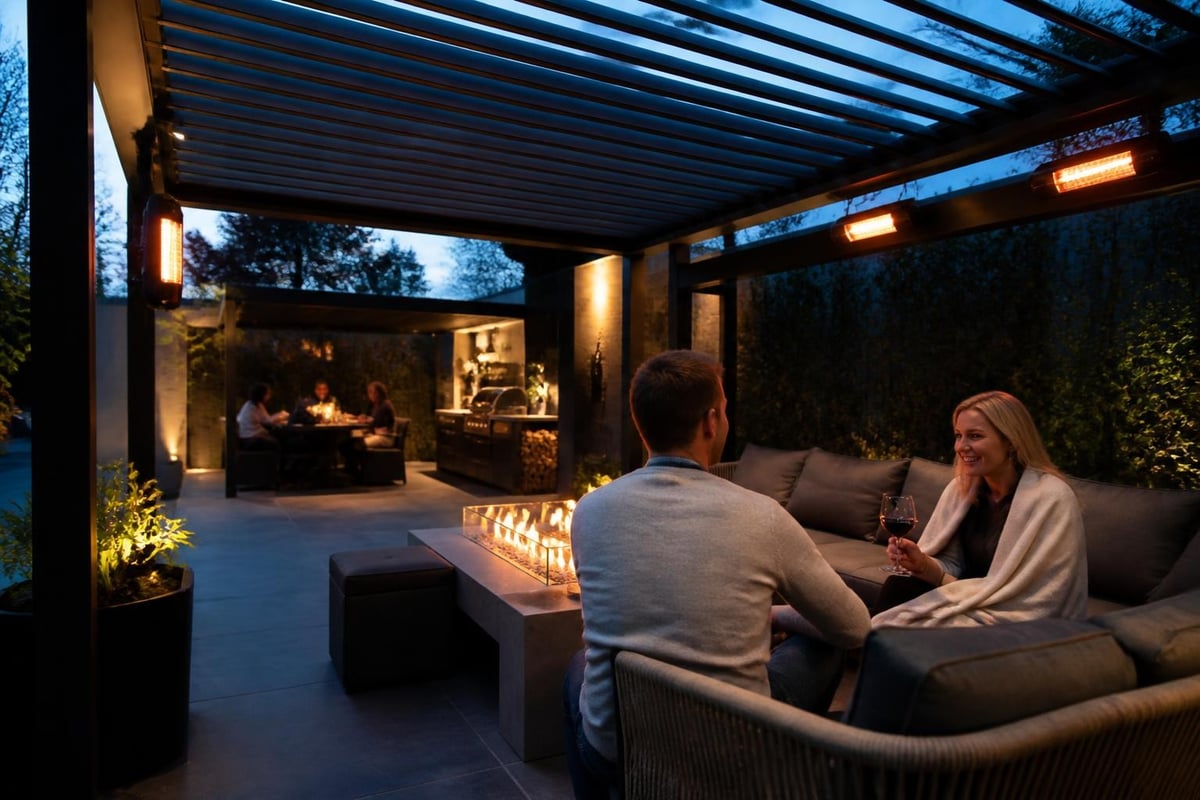
Thoughtful storage transforms an outdoor kitchen with bar from cluttered to streamlined. Unlike indoor kitchens with adjacent pantries, outdoor kitchens must contain everything needed for complete meal service.
Design your storage around three categories:
Cooking storage: utensils, platters, serving pieces, fuel (charcoal, wood pellets), grill accessories, and cleaning supplies. Dedicate one full cabinet section to grill tools and another to serving pieces.
Bar storage: glassware (wine glasses, tumblers, cocktail glasses), spirits, mixers, bar tools, napkins, and cocktail accessories. Include adjustable shelving to accommodate bottles of varying heights.
Consumables: non-perishable ingredients, oils, spices, condiments, paper products, and refuse bins. Separate wet waste from dry recycling with dual-bin solutions.
Weather-sealed cabinets with marine-grade latches prevent moisture ingress. Stainless steel or powder-coated aluminium construction resists corrosion, whilst adjustable feet accommodate uneven paving and ensure proper drainage underneath.
Deep drawers excel for storing:
Pull-out shelves maximise accessibility in base cabinets, particularly for heavy items like stockpots or cases of beverages. Soft-close mechanisms add refinement whilst preventing slamming in windy conditions.
The outdoor kitchen with bar market offers two primary design approaches, each with distinct advantages.
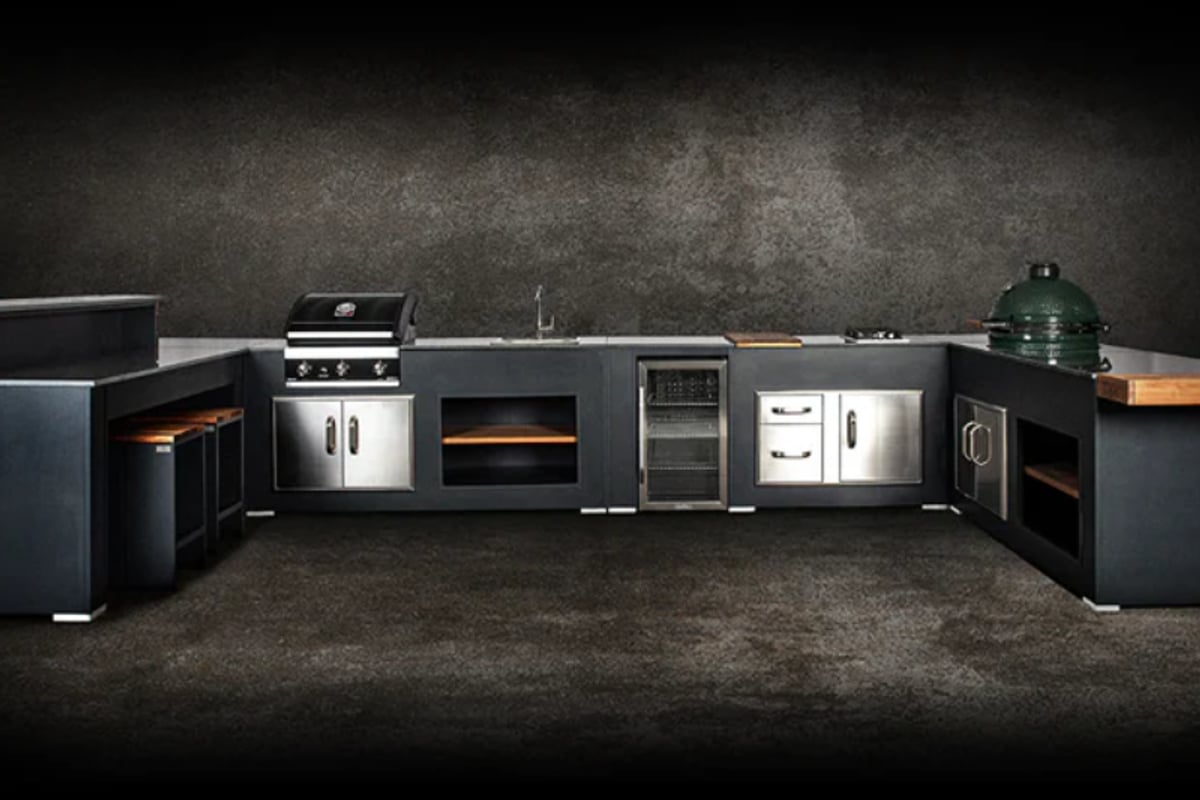
Modular outdoor kitchens comprise pre-engineered cabinet modules that connect to create custom layouts. Leading systems like Grillandia Outdoor Kitchens offer fully customisable modules in terms of size, colour, equipment, and configuration. High-quality outdoor materials ensure UV and weather resistance whilst maintaining design flexibility.
Advantages of modular systems include:
Modular systems suit homeowners seeking premium quality with defined timelines and budgets. The design process involves selecting modules (corner units, grill cabinets, sink modules, bar units) and arranging them to suit your space.
Fully custom outdoor kitchens offer unlimited design freedom. Working with designers and fabricators, every dimension, material, and detail reflects your specific requirements.
Bespoke designs excel when:
The bespoke process typically spans 8-16 weeks from initial consultation to installation, allowing for detailed design development, material sourcing, and precision fabrication.
Modern outdoor kitchens embrace technology whilst maintaining their connection to nature. An outdoor kitchen with bar becomes an entertainment hub with thoughtful integration.
Outdoor audio systems range from discrete landscape speakers to architectural sound solutions. Weather-rated speakers with marine-grade components deliver high-fidelity sound whilst withstanding rain, humidity, and UV exposure. Zone control allows different audio sources for cooking and bar areas.
For those creating dedicated outdoor entertainment spaces, integrating home cinema elements elevates the experience. Specialists like ANR media design custom audio-visual solutions that complement outdoor kitchens, from motorised TV lifts within cabinetry to surround-sound systems concealed within pergola structures.
Outdoor televisions now feature anti-glare screens, weatherproof enclosures, and brightness levels (1,000+ nits) that remain visible in daylight. Position screens to avoid direct sunlight whilst maintaining sightlines from both cooking and seating areas.
Integrated control systems manage lighting, heating, music, and even grill temperatures from smartphone apps. Premium systems include:
Smart technology enhances convenience without compromising the organic outdoor experience. The key lies in seamless integration where technology serves rather than dominates.
Luxury and sustainability increasingly converge in outdoor living design. An outdoor kitchen with bar can embody environmental responsibility without sacrificing performance.
Specify appliances with superior energy ratings. LED lighting consumes 75-80% less electricity than halogen equivalents whilst providing better colour rendering and longevity. Energy-efficient refrigeration uses advanced compressor technology and enhanced insulation to reduce consumption.
Induction cooktops adapted for outdoor use offer remarkable efficiency, converting 85-90% of energy into heat compared to 55-65% for gas burners. Whilst less common outdoors, induction technology continues advancing in weather-resistant formats.
Outdoor sinks and ice makers consume considerable water. Implement conservation measures including:
Prioritise materials with environmental credentials:
Planning an outdoor kitchen with bar in Britain requires understanding regional variations in climate, planning regulations, and design preferences.
Most outdoor kitchens constitute permitted development, avoiding formal planning applications. However, several factors may trigger planning requirements:
Building regulations generally apply to gas and electrical installations regardless of planning status. Qualified Gas Safe engineers must install gas lines and appliances, whilst Part P electrical regulations govern outdoor circuits.
Listed building consent requires particular sensitivity. In Cotswold conservation areas, for example, materials and designs should complement historical context whilst incorporating modern functionality discreetly.
Southern England (including the Cotswolds, Oxfordshire, London): Moderate rainfall (600-750mm annually) and milder winters allow year-round use with basic weather protection. Prioritise UV-resistant materials and consider pergolas for sun protection during summer.
Northern England and Scotland: Higher rainfall (800-1,400mm annually) and colder winters necessitate robust weather protection. Fixed roof structures or fully enclosed pavilions extend usability. Enhance heating capacity (3-4kW minimum) for comfortable autumn and spring use.
Coastal regions: Salt air accelerates corrosion. Specify marine-grade stainless steel (316) for all metalwork and implement regular maintenance protocols including fresh-water rinsing of exposed surfaces.
Urban environments: Noise considerations matter in dense residential areas. Acoustic panels, strategic landscaping, and respectful operating hours maintain neighbour relations whilst enjoying your outdoor kitchen with bar.
Understanding the investment required for an outdoor kitchen with bar helps establish realistic expectations and prioritise elements that matter most.
| Component | Budget Range (% of total) | Typical Cost (£) |
|---|---|---|
| Cabinetry & Structures | 25-30% | £5,000-£15,000 |
| Cooking Appliances | 20-25% | £4,000-£12,000 |
| Bar Appliances | 15-20% | £3,000-£9,000 |
| Countertops | 10-15% | £2,000-£7,000 |
| Weather Protection | 10-15% | £2,000-£8,000 |
| Utilities & Installation | 10-15% | £2,000-£6,000 |
| Lighting & Technology | 5-10% | £1,000-£4,000 |
A modest outdoor kitchen with bar (3-4m linear) suitable for regular family use typically ranges £15,000-£25,000. This includes quality modular cabinetry, a built-in grill, basic refrigeration, simple bar setup, and essential utilities.
Mid-range installations (4-6m linear) incorporating premium appliances, expanded storage, enhanced bar facilities, and pergola coverage range £25,000-£45,000. This tier delivers professional-grade cooking equipment and comprehensive weather protection.
Luxury outdoor kitchens (6m+ linear) with bespoke design, top-tier appliances, extensive bar facilities, climate control, and integrated technology exceed £45,000, often reaching £75,000-£100,000+ for exceptional installations.
Outdoor living spaces consistently rank among the highest-return home improvements. Estate agents report that well-executed outdoor kitchens can return 60-85% of investment upon resale, with premium installations in sought-after locations occasionally exceeding 100% return.
Beyond financial metrics, the lifestyle value proves immeasurable. Families report increased home usage, more frequent entertaining, and enhanced quality of life. An outdoor kitchen with bar transforms your property into a year-round destination rather than seasonal amenity.
Preserving your investment requires understanding maintenance needs across seasons. Outdoor kitchens demand more attention than indoor counterparts but reward proper care with decades of service.
Weekly during active season:
Monthly:
Seasonally:
Even year-round installations benefit from winter preparation:
Weather covers should breathe whilst repelling water. Completely sealed covers trap condensation, promoting rust and mould. Premium covers feature vents and water-resistant (not waterproof) fabrics.
Contemporary outdoor kitchen design reflects evolving lifestyle priorities and material innovations. Understanding current trends, as highlighted in Architectural Digest's outdoor kitchen ideas, helps future-proof your investment.
Matte black finishes have emerged as the sophisticated alternative to stainless steel's traditional dominance. Powder-coated black steel, dark-stained timber, and charcoal stone create dramatic, contemporary aesthetics whilst concealing minor wear better than polished surfaces.
Mixed materials add visual interest and textural depth. Combining stainless steel appliances with natural stone or timber cabinetry creates transitional styles that bridge modern and traditional design languages.
Minimalist aesthetics prioritise clean lines and integrated appliances. Handle-less cabinetry, concealed hinges, and flush-mounted appliances create seamless, architectural appearances.
Multifuel cooking accommodates diverse culinary techniques. Hybrid appliances that burn gas, charcoal, and wood appeal to serious cooks who appreciate each fuel's distinct characteristics.
Integrated refrigerated drawers replace traditional under-counter refrigerators in some designs, offering easier access and better organisation. Separate drawers for beverages, produce, and proteins maintain optimal temperatures for each category.
Automated climate control continues advancing. Next-generation systems learn usage patterns, automatically preparing the space before scheduled entertaining and optimising energy consumption during idle periods.
Creating an exceptional outdoor kitchen with bar requires balancing aesthetics, functionality, and durability within your specific context. From initial space planning through material selection, appliance specification, and ongoing maintenance, each decision contributes to a cohesive outdoor living environment that serves your family and guests throughout the seasons. Whether you pursue modular efficiency or bespoke craftsmanship, the investment transforms your property into a year-round entertaining destination. Cotswold Cooking Company brings decades of expertise in luxury outdoor kitchens to discerning clients across the UK, offering comprehensive design consultation, premium brand curation, and complete installation services that transform outdoor spaces into refined culinary destinations.

Leave a comment