


The outdoor oven has evolved from a simple backyard accessory into a cornerstone of sophisticated garden design, transforming patios and terraces into fully functional culinary destinations. Whether you're drawn to the artisanal charm of wood-fired cooking or the convenience of contemporary gas-powered models, selecting the right outdoor oven requires careful consideration of design, performance, and integration with your existing outdoor living space. As demand for year-round entertaining grows across the UK, discerning homeowners increasingly view these appliances not merely as cooking tools but as architectural statements that elevate both functionality and aesthetic appeal.
Modern outdoor ovens encompass a diverse range of technologies, each offering distinct advantages for different cooking styles and spatial requirements. The selection process begins with understanding how each type aligns with your culinary ambitions and garden architecture.
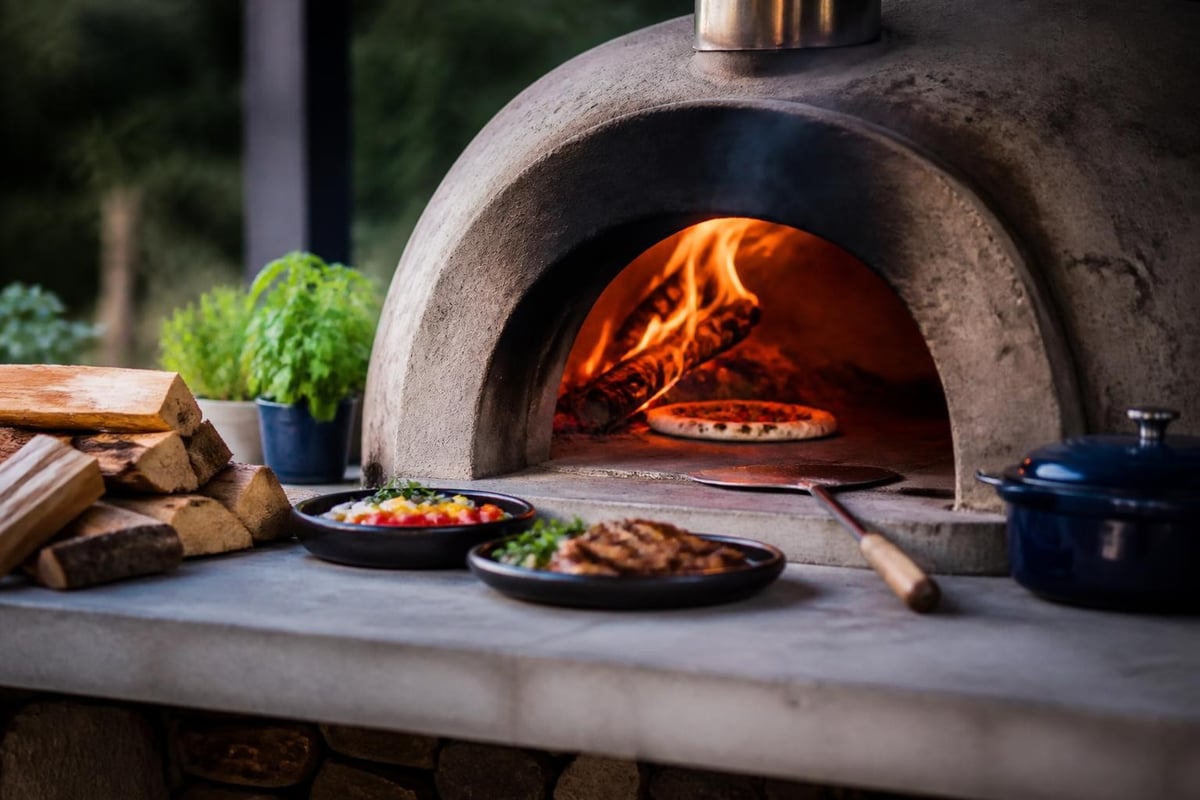
Traditional wood-fired models remain the gold standard for authentic flavour development and rustic appeal. These ovens achieve temperatures exceeding 500°C, making them ideal for Neapolitan-style pizzas that cook in approximately 90 seconds whilst developing characteristic leopard-spotted crusts.
Key advantages include:
The thermal mass of a properly constructed wood-fired outdoor oven allows for sequential cooking sessions, with residual heat perfect for roasting vegetables or baking desserts after the initial high-temperature pizza service.
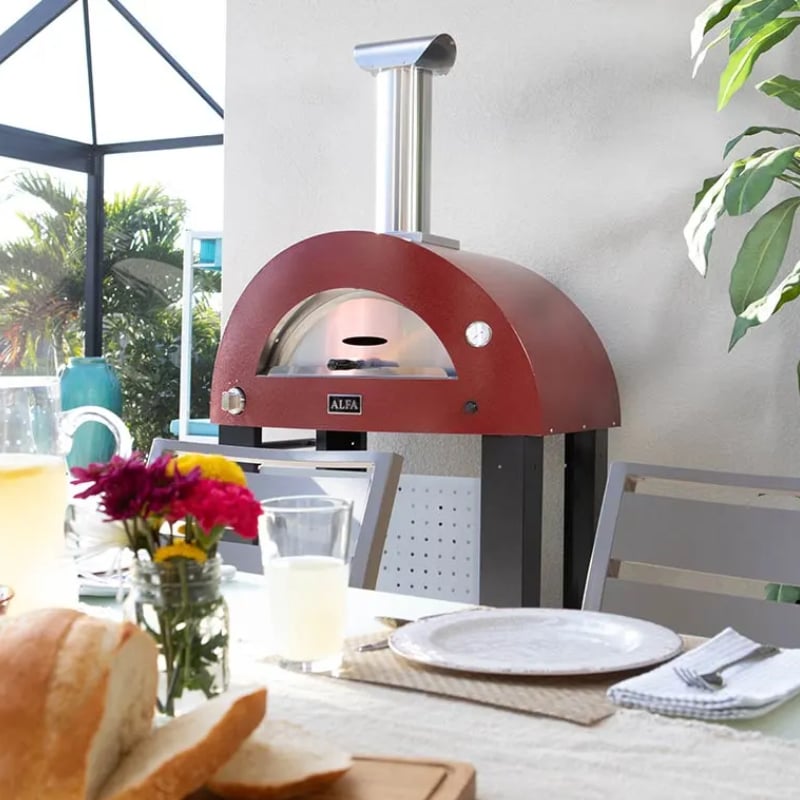
Gas-powered models deliver convenience without sacrificing performance, reaching operational temperatures within 20-30 minutes compared to the 60-90 minute preheat typical of wood-fired alternatives. Hybrid systems offer ultimate versatility, combining gas ignition systems with wood-burning capability.
These sophisticated appliances suit homeowners who value:
Compact ceramic outdoor ovens provide portability and efficiency for smaller gardens or terraced spaces. Electric variants eliminate fuel management entirely whilst maintaining respectable cooking performance, though they typically cannot achieve the extreme temperatures of wood or gas alternatives.
| Oven Type | Temperature Range | Preheat Time | Fuel Cost (Annual) | Flavour Profile |
|---|---|---|---|---|
| Wood-fired | 400-500°C | 60-90 minutes | £200-£400 | Authentic smoky |
| Gas-powered | 350-450°C | 20-30 minutes | £150-£300 | Clean, neutral |
| Hybrid | 400-500°C | 30-45 minutes | £250-£450 | Versatile |
| Electric | 300-400°C | 15-25 minutes | £100-£200 | Consistent |
Successful outdoor oven installation transcends mere appliance placement, requiring thoughtful integration with your garden's architectural language and functional flow. The most compelling installations treat the oven as a focal point around which the entire outdoor kitchen orbits.
Professional outdoor kitchen design emphasises the importance of establishing efficient work triangles connecting preparation, cooking, and service zones. Position your outdoor oven to allow comfortable movement whilst maintaining visual connection with entertaining areas.
Critical spatial requirements include:
The surrounding hardscape should accommodate high temperatures without degradation. Natural stone, porcelain pavers, and reinforced concrete provide suitable substrates, whilst timber decking requires protective heat shields and adequate ventilation beneath oven installations.
Contemporary outdoor ovens span aesthetic spectrums from rustic terracotta domes to sleek stainless-steel enclosures. The most successful installations echo the architectural character of both the main residence and garden design.
Traditional properties benefit from:
Modern homes demand:
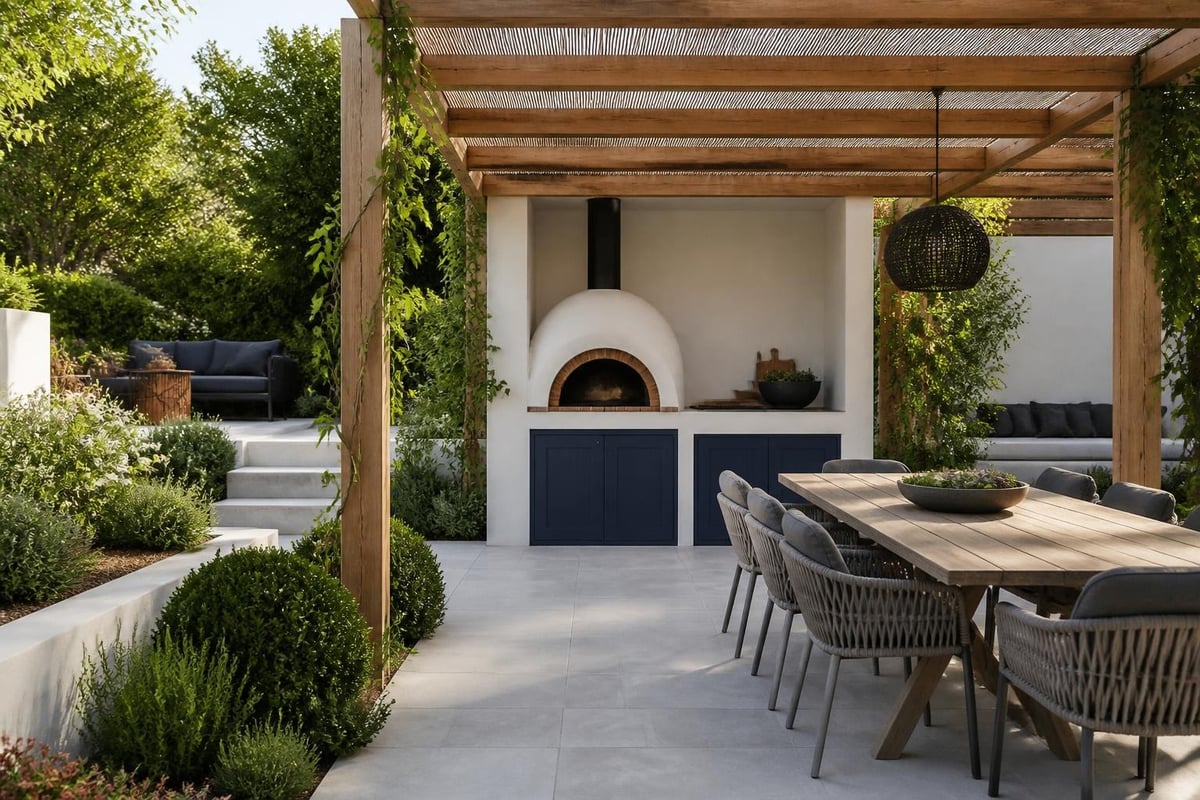
The longevity and performance of your outdoor oven depends fundamentally upon construction materials and engineering precision. Premium models incorporate refractory materials specifically formulated to withstand extreme thermal cycling without structural degradation.
Authentic Neapolitan-style ovens feature double-wall construction with insulating air gaps or ceramic fibre blankets minimising heat loss. The cooking floor requires dense firebrick with minimal thermal expansion, ensuring consistent heat distribution and preventing cracking under repeated heating cycles.
Quality indicators include:
British weather demands robust weatherproofing beyond the oven chamber itself. External finishes must resist freeze-thaw cycling, UV degradation, and moisture penetration whilst maintaining aesthetic appeal across seasons.
Premium outdoor ovens incorporate:
The Alfa Forni Moderno Hybrid Pizza Oven exemplifies this approach, combining handcrafted Italian construction with weather-resistant finishes and dual-fuel versatility, making it an ideal centrepiece for luxury outdoor kitchens where performance and aesthetics must coexist seamlessly.
Operating an outdoor oven safely requires adherence to established protocols and awareness of relevant regulations governing outdoor cooking appliances. The General Product Safety Regulation establishes baseline safety requirements for manufacturers and retailers, whilst local building regulations may impose additional constraints.
Professional installation ensures compliance with building codes and eliminates common hazards associated with improper placement or ventilation. Proper outdoor oven safety begins with understanding clearance requirements and fire prevention measures.
Essential safety considerations include:
Daily operation demands vigilance regarding surface temperatures, flame management, and fuel handling. Wood-fired models require particular attention to ember control and ash disposal, whilst gas systems necessitate regular leak testing and connection verification.
Establish protocols addressing:
| Safety Aspect | Wood-Fired | Gas-Powered | Hybrid | Electric |
|---|---|---|---|---|
| Ignition complexity | High | Low | Medium | Very low |
| Carbon monoxide risk | Moderate | Low | Moderate | None |
| Burn hazard severity | Very high | High | Very high | Medium |
| Fire spread potential | Moderate | Low | Moderate | Very low |
| Ventilation criticality | Essential | Important | Essential | Minimal |
Extracting maximum performance from your outdoor oven requires understanding thermal dynamics and developing techniques specific to each fuel type. Mastery transforms the appliance from simple cooking tool into precision culinary instrument.
Wood-fired ovens demand active fire management, positioning fuel to create distinct temperature zones within the cooking chamber. The hottest zone directly opposite the fire opening suits rapid pizza cooking, whilst cooler peripheral areas accommodate slower roasting and baking.
Temperature control techniques include:
Gas-powered models simplify temperature control through thermostat regulation, though optimal results still require understanding how oven design affects heat distribution. Rotating dishes during cooking ensures even results regardless of burner configuration.
Beyond pizza, outdoor ovens excel at diverse preparations capitalising on their unique thermal characteristics. High-heat searing, slow roasting, bread baking, and smoking each demand different fuel management and timing strategies.
Signature applications include:
Preserving your outdoor oven investment requires establishing comprehensive maintenance routines addressing both immediate post-cooking care and seasonal preparation protocols. Neglected ovens suffer accelerated deterioration compromising both performance and safety.
Post-cooking maintenance varies significantly by fuel type. Wood-fired ovens accumulate ash and creosote requiring removal after each use, whilst gas models demand burner inspection and grease management.
Daily maintenance includes:
British winters demand particular attention to frost protection and moisture management. Even weatherproof ovens benefit from additional protection during extended dormant periods.
Winter preparation protocols:
Reawakening ovens after winter storage requires gradual temperature increases preventing thermal shock to refractory materials. Initial firing should progress slowly over 2-3 hours, reaching full operating temperature only after complete moisture evacuation.
The most successful outdoor oven installations exist within comprehensive outdoor kitchen ecosystems integrating preparation, cooking, refrigeration, and entertaining zones. This holistic approach maximises functionality whilst creating cohesive design narratives.
Purpose-designed outdoor kitchen systems accommodate ovens within broader cooking suites incorporating grills, refrigeration, and prep surfaces. These modular approaches facilitate phased investment whilst maintaining design coherence.
Benefits of integrated systems include:
The relationship between outdoor cooking appliances and architectural pergolas continues strengthening as homeowners seek year-round outdoor functionality. Louvred roof systems provide weather protection whilst maintaining ventilation essential for safe oven operation.
Beyond the oven itself, successful outdoor cooking requires complementary equipment supporting preparation, service, and entertaining functions. Strategic accessory selection eliminates indoor kitchen dependency, enabling complete outdoor meal preparation.
Essential supporting elements include:
| Kitchen Component | Budget Option | Premium Solution | Key Benefit |
|---|---|---|---|
| Worktop surface | Composite stone | Natural granite/marble | Durability & aesthetics |
| Refrigeration | Freestanding outdoor fridge | Built-in drawer system | Space efficiency |
| Sink installation | Single-basin stainless | Double-basin composite | Workflow flexibility |
| Storage solution | Freestanding cabinets | Integrated weatherproof units | Weather protection |
| Lighting system | Solar path lights | Hardwired LED task lighting | Functionality |
Outdoor oven acquisition represents significant investment demanding careful evaluation of immediate costs against long-term value creation. Premium appliances command higher initial outlay but deliver superior performance, longevity, and property value enhancement.
Entry-level portable outdoor ovens commence around £300-£500, offering basic functionality suitable for occasional use. Mid-tier models ranging £1,500-£4,000 provide substantially improved build quality and cooking performance. Premium bespoke installations frequently exceed £8,000-£15,000, incorporating custom stonework, integrated utilities, and architectural detailing.
Cost determinants include:
Ongoing expenses vary dramatically by fuel type and usage intensity. Wood-fired ovens consume £15-£30 of seasoned hardwood monthly during active seasons, whilst gas systems incur £10-£25 in propane costs. Electric models prove most economical for light use but struggle with the high-temperature cooking defining premium outdoor oven experiences.
Maintenance budgets should anticipate annual expenditure of 2-5% of initial oven cost addressing routine servicing, replacement gaskets, and periodic repointing or refinishing.
Professionally designed outdoor kitchens centred around quality ovens demonstrably enhance property values, particularly within premium markets where outdoor entertaining infrastructure increasingly influences buyer decisions. Estate agents report well-executed outdoor cooking spaces contributing 3-8% premium to property valuations, with payback periods typically ranging 5-7 years.
The value proposition strengthens when outdoor ovens integrate within comprehensive landscape designs featuring weather protection, ambient lighting, and comfortable seating arrangements creating true outdoor room experiences extending viable entertaining seasons across British climates.
Conscious consumers increasingly evaluate outdoor ovens through sustainability lenses, considering carbon footprints, renewable fuel options, and operational efficiency. These considerations influence both appliance selection and ongoing operational decisions.
Responsible wood-fired cooking begins with sustainable fuel sourcing. Locally harvested, kiln-dried hardwoods minimise transport emissions whilst supporting regional forestry operations. Certified sustainable sources ensure replacement plantings maintain forest coverage.
Optimal wood choices include:
Avoid softwoods containing excessive resin and never burn treated timber, painted wood, or manufactured wood products releasing toxic compounds during combustion.
Modern outdoor ovens achieve remarkable thermal efficiency through advanced insulation and combustion management. Premium wood-fired models convert 65-75% of fuel energy into cooking heat, whilst gas systems approach 80-85% efficiency through precise burner design and airflow optimisation.
Carbon footprint assessment requires holistic evaluation considering manufacturing impacts, operational emissions, and appliance longevity. Well-constructed outdoor ovens serving 15-20 years distribute embodied energy across extended service lives, whilst quality construction eliminates premature replacement waste.
Selecting and integrating an outdoor oven transforms gardens into year-round culinary destinations where memorable meals and cherished gatherings naturally unfold. By carefully considering design integration, fuel technologies, safety protocols, and long-term value, discerning homeowners create outdoor cooking spaces delivering decades of exceptional performance. Cotswold Cooking Company brings unparalleled expertise to this journey, curating premium outdoor ovens from distinguished European manufacturers and delivering comprehensive consultative services from initial design through final installation, helping clients across the UK realise their vision for refined outdoor living spaces that honour both heritage craftsmanship and contemporary performance standards.

Leave a comment