


A pergola with barbecue represents the pinnacle of outdoor entertaining, combining architectural elegance with functional cooking space. This design approach transforms gardens and terraces into all-season culinary destinations, offering shelter, style, and a dedicated zone for grilling enthusiasts. Whether you're considering a traditional timber structure or a contemporary bioclimatic system, understanding the design principles, safety requirements, and material choices ensures your outdoor kitchen becomes a refined extension of your home.
A pergola with barbecue creates a defined outdoor room that elevates the grilling experience from casual weekend cooking to sophisticated year-round entertaining. The pergola structure provides partial overhead coverage, establishing a sense of enclosure whilst maintaining the open-air atmosphere that makes outdoor dining so appealing.
Modern pergola designs have evolved considerably from their classical origins. Today's structures incorporate adjustable louvred roofs, integrated lighting systems, and weather-resistant materials that accommodate the practical demands of barbecue placement. These advancements mean you can enjoy protected cooking spaces regardless of weather conditions.
The synergy between pergola and barbecue creates a focal point in garden design, drawing guests naturally towards the cooking area whilst providing the chef with a comfortable, sheltered workspace.
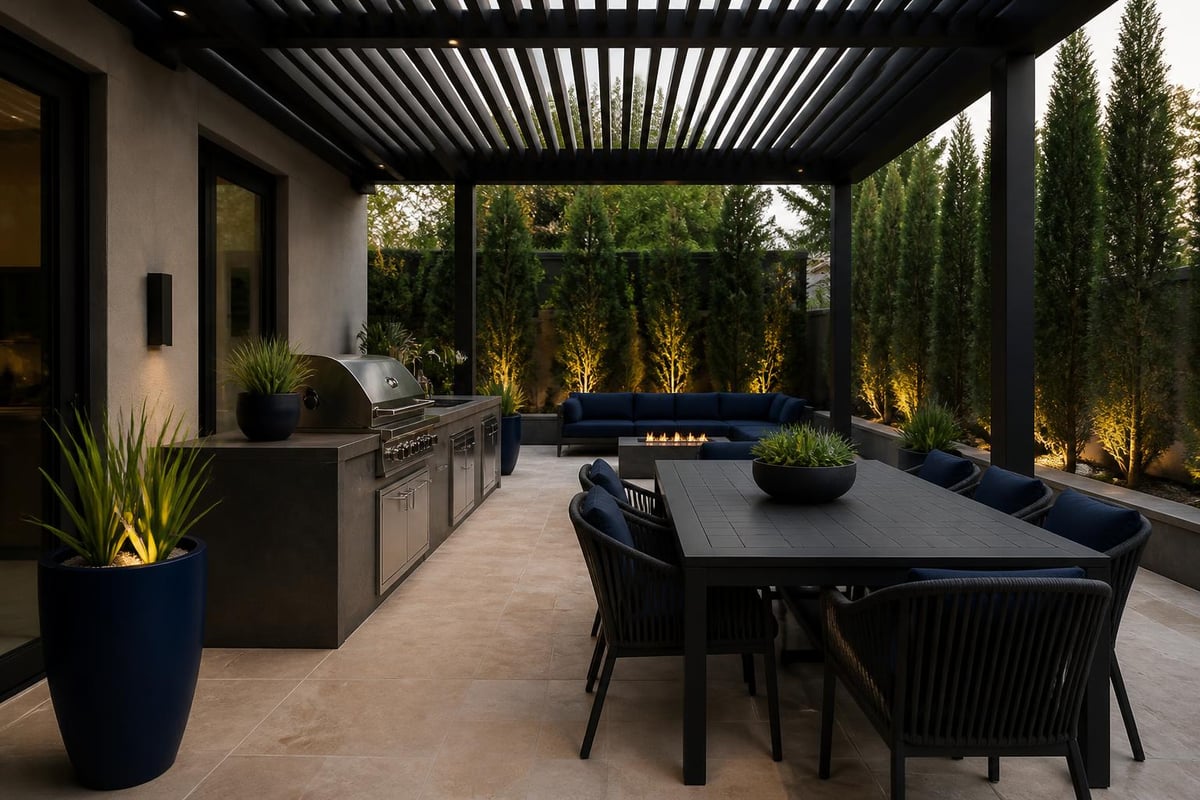
Strategic planning ensures your pergola with barbecue functions beautifully whilst meeting safety standards. The relationship between cooking equipment, overhead structure, and surrounding space requires careful consideration to prevent heat damage and ensure adequate air circulation.
Placement determines both safety and functionality. Position your barbecue at the pergola's outer edge rather than centrally beneath the canopy, allowing heat and smoke to dissipate naturally upwards and outwards. This configuration reduces heat accumulation around the overhead structure whilst maintaining protection from lateral weather.
Consider the prevailing wind direction in your location. Positioning the barbecue so smoke travels away from dining areas and neighbouring properties demonstrates thoughtful design. Creating comfortable outdoor dining spaces requires attention to these environmental factors.
| Design Element | Recommended Specification | Benefit |
|---|---|---|
| Clearance height | Minimum 2.4 metres | Prevents heat damage to structure |
| Barbecue offset | 1.2–1.5 metres from centre | Optimises smoke dispersal |
| Ventilation gap | Open sides or louvred panels | Reduces smoke accumulation |
| Surface materials | Non-combustible flooring | Enhances fire safety |
The materials comprising your pergola dramatically affect its suitability for barbecue integration. Aluminium pergolas offer exceptional durability and require minimal clearance thanks to their heat-resistant properties. Safety considerations when grilling under aluminium structures demonstrate these materials perform admirably in high-temperature environments.
Timber pergolas deliver traditional aesthetics but demand greater clearance distances and protective treatments. When selecting wood species, opt for naturally fire-resistant varieties such as cedar or treated hardwoods. Regular maintenance preserves both appearance and safety performance over time.
For discerning clients seeking uncompromising quality, architectural pergola systems combine engineered aluminium frames with powder-coated finishes that resist heat discolouration whilst complementing contemporary outdoor kitchen aesthetics.
Safety represents the foundation of successful pergola with barbecue design. Understanding fire risks, ventilation requirements, and clearance specifications protects both property and people whilst ensuring compliance with UK building regulations.
Establishing appropriate clearance between barbecue and overhead structure prevents heat damage and reduces fire risk. Gas barbecues generate intense heat plumes that rise vertically, requiring minimum clearances of 2.4 metres for most installations. Charcoal barbecues produce additional radiant heat, often necessitating greater distances.
Essential safety practices for barbecuing under pergolas emphasise the importance of considering equipment specifications alongside structural materials. High-performance grills generate more heat than standard models, requiring adjusted clearances.
Install heat shields or baffles between cooking equipment and pergola canopy when working with tighter spatial constraints. These protective elements deflect rising heat away from combustible materials whilst maintaining the visual coherence of your design.
Proper ventilation distinguishes a well-designed pergola with barbecue from a smoke-filled disappointment. Natural airflow through open sides remains the most effective ventilation method, allowing smoke to escape laterally whilst fresh air circulates freely around the cooking zone.
Bioclimatic pergolas with motorised louvres offer exceptional flexibility, allowing you to open roof panels completely during cooking sessions then close them for weather protection when the barbecue isn't in use. This adaptability makes them particularly suitable for year-round outdoor kitchens.
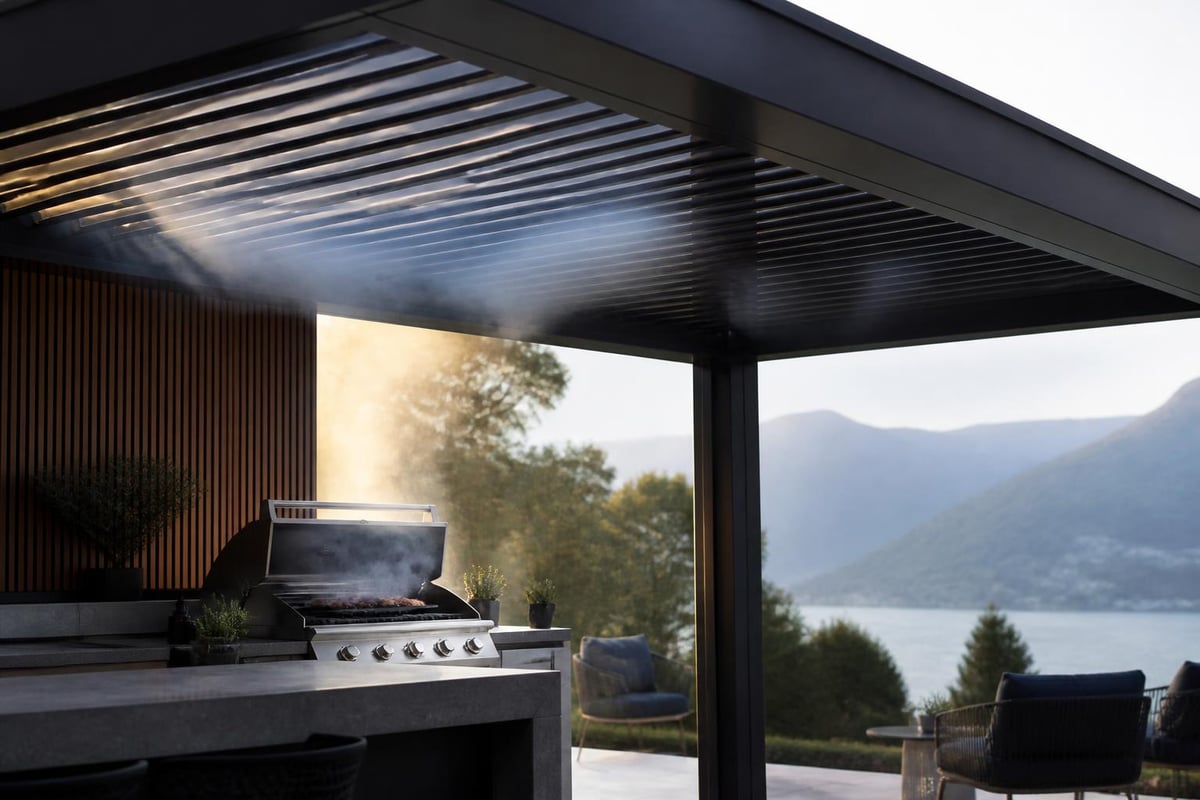
Elevating your outdoor cooking space from functional to exceptional requires considered design choices that reflect both personal style and practical requirements. Contemporary pergola with barbecue installations blend architectural sophistication with culinary performance.
Sleek aluminium pergolas with clean lines create stunning backdrops for integrated outdoor kitchens. Powder-coated frames in anthracite, bronze, or architectural white complement stainless steel barbecue equipment whilst maintaining visual cohesion. Integrated LED lighting within pergola beams illuminates cooking surfaces whilst creating ambient atmosphere for evening entertaining.
Modular outdoor kitchen systems pair beautifully with minimalist pergolas, offering customisable configurations that adapt to available space. These solutions incorporate barbecue units, preparation surfaces, storage, and often refrigeration within cohesive designs that appear purpose-built rather than assembled.
The Cubic outdoor kitchen range exemplifies this design philosophy, delivering weather-resistant modules with integrated barbecue zones that complement contemporary pergola structures. Their minimalist aesthetic and durable construction create seamless outdoor living environments suited to discerning tastes.
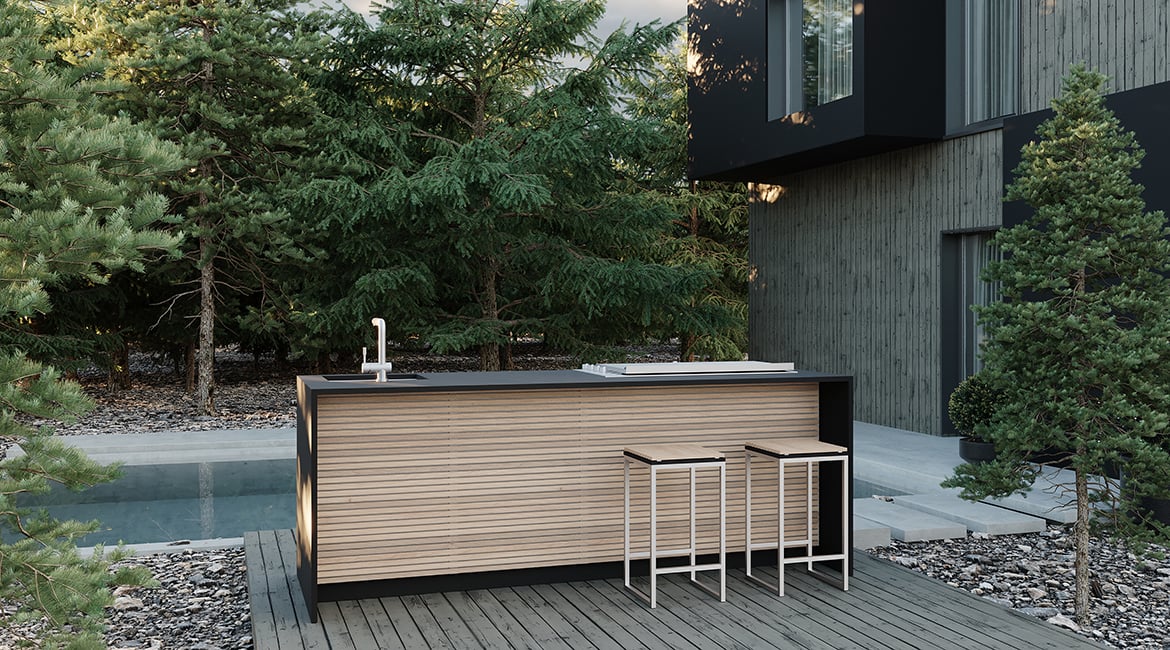
Timber pergolas crafted from oak or cedar evoke Cotswold heritage whilst providing substantial structures for outdoor kitchens. Heavy beams and traditional joinery techniques create enduring frameworks that develop beautiful patina over time, particularly when paired with stone or brick barbecue surrounds.
Consider incorporating climbing plants such as wisteria or grapevines that soften pergola structures whilst respecting clearance requirements around cooking areas. Creative pergola enhancement ideas demonstrate how vegetation adds seasonal interest without compromising functionality.
Hybrid approaches combine traditional aesthetics with modern performance, using treated timber cladding over engineered aluminium frames. This methodology delivers heritage appearance with contemporary durability and reduced maintenance requirements.
Professional installation ensures your pergola with barbecue meets structural, safety, and aesthetic standards. Understanding the technical requirements before commencing design helps avoid costly modifications and ensures compliance with relevant regulations.
Pergolas supporting integrated outdoor kitchens require robust foundations that accommodate both structural loads and equipment weight. Concrete pad foundations typically provide adequate support, though specific requirements depend on pergola size, material, and barbecue specification.
Consider utility connections during foundation planning. Gas lines, electrical supplies, and water services for sinks or preparation areas must route safely beneath or around foundation elements. Professional design consultants coordinate these services with structural requirements, preventing complications during installation.
| Pergola Type | Foundation Depth | Load Capacity | Best For |
|---|---|---|---|
| Freestanding Aluminium | 450–600mm | Moderate | Contemporary installations |
| Timber Post & Beam | 600–900mm | High | Traditional aesthetics |
| Bioclimatic Louvred | 450–600mm | Moderate to High | Year-round entertaining |
| Attached Structure | 300–450mm | Variable | Space-efficient layouts |
A pergola with barbecue functions optimally when designed holistically with all cooking equipment and preparation surfaces. Built-in grills, side burners, refrigeration, and storage should relate logically to the pergola structure, creating efficient work zones that support natural cooking workflows.
Exploring professional outdoor cooking solutions reveals the breadth of equipment available for integration with pergola structures. From compact charcoal grills to comprehensive cooking stations, selecting appropriately scaled equipment ensures your design remains proportionate and functional.
Premium brands such as Whistler deliver commercial-grade performance in residential formats, offering weather-resistant construction that withstands exposure within pergola-covered spaces. Their modular design philosophy allows configuration flexibility whilst maintaining cohesive aesthetics.
Extending the usability of your pergola with barbecue beyond summer months transforms it from seasonal amenity to year-round destination. Strategic enhancements accommodate British weather patterns whilst preserving the open-air character that defines outdoor living.
Infrared heaters mounted to pergola beams radiate warmth downwards, creating comfortable cooking and dining zones during cooler months. Position heaters to warm the chef's workspace and adjacent seating areas without interfering with barbecue operation or smoke dispersal.
LED lighting systems integrated within pergola structures serve both functional and atmospheric purposes. Task lighting illuminates cooking surfaces and preparation areas, ensuring safety and precision during evening use. Ambient lighting creates inviting atmospheres that extend entertaining well into the night.
Bioclimatic pergolas with adjustable louvred roofs offer unparalleled weather adaptability. Close louvres during rain to maintain dry cooking conditions, then open them fully when barbecuing to ensure optimal ventilation. This flexibility eliminates the compromise between weather protection and smoke management.
Retractable side screens or glass panels transform pergolas into semi-enclosed spaces during inclement weather whilst maintaining the option for fully open configurations during pleasant conditions. Innovative pergola design approaches demonstrate how layered protection systems create truly adaptable outdoor rooms.
Consider drainage carefully when specifying louvred roofs. Integrated guttering and downpipes channel rainwater away from cooking and dining areas, preventing pooling and ensuring comfortable conditions underfoot.
A comprehensive pergola with barbecue design often incorporates multiple cooking methods, creating versatile outdoor kitchens capable of diverse culinary techniques. Combining grilling with pizza ovens, smokers, or traditional ranges expands menu possibilities whilst creating visually compelling installations.
Pizza ovens complement barbecue equipment beautifully, offering high-temperature cooking for artisan flatbreads, roasted vegetables, and wood-fired specialities. Position pizza ovens adjacent to barbecue units within the pergola footprint, allowing the chef to manage multiple cooking methods simultaneously.
Hybrid pizza ovens that operate on both gas and wood offer exceptional flexibility for outdoor kitchens. The Alfa Forni collection delivers authentic Italian craftsmanship with contemporary convenience, creating focal points within pergola-covered cooking zones.
Ensure adequate clearance above pizza ovens, as they generate substantial heat and require ventilation similar to barbecue equipment. Louvred pergola roofs excel in these applications, allowing complete opening during high-temperature cooking sessions.
Dedicated zones for different cooking methods prevent congestion whilst supporting efficient food preparation during large gatherings. Establish distinct areas for grilling, smoking, pizza making, and preparation within your pergola footprint, connected by continuous worksurfaces that facilitate workflow.
This zoned approach mirrors professional kitchen design principles, adapted for outdoor environments and scaled appropriately for residential use.
Preserving the beauty and functionality of your pergola with barbecue requires appropriate maintenance tailored to materials and usage patterns. Regular care prevents deterioration whilst modest interventions extend serviceable life considerably.
Aluminium pergolas demand minimal maintenance beyond occasional cleaning with mild detergent and water. Their powder-coated finishes resist weathering, corrosion, and heat discolouration, maintaining appearance for decades with modest attention. Annual inspections of moving components in louvred systems ensure smooth operation.
Timber structures require more intensive maintenance, including regular application of protective oils or stains that prevent moisture ingress and UV damage. Inspect timber annually for signs of insect activity, rot, or structural weakness, addressing issues promptly to prevent escalation.
Barbecue maintenance directly affects both performance and safety within pergola environments. Regular cleaning prevents grease accumulation that poses fire risks, whilst proper covering protects equipment from weather exposure when not in use.
Professional servicing through specialist outdoor kitchen support ensures equipment operates safely and efficiently, extending its serviceable life whilst maintaining warranty coverage.
Creating an exceptional pergola with barbecue demands expertise across architecture, outdoor kitchen design, and technical installation. Professional consultation ensures your vision translates into reality whilst meeting safety standards, building regulations, and performance expectations.
Experienced designers assess site conditions, understand your entertaining patterns, and specify appropriate materials and equipment that align with budget and aesthetic preferences. They navigate planning permissions where required and coordinate trades to ensure seamless installation.
Booking a design consultation allows you to explore possibilities, review material samples, and develop detailed specifications before committing to installation. This consultative approach prevents costly mistakes whilst refining designs to perfectly suit your requirements.
Professional installation typically follows structured phases that minimise disruption whilst ensuring quality outcomes. Initial site preparation establishes foundations and routes services, followed by pergola installation and finally outdoor kitchen integration.
| Installation Phase | Duration | Key Activities |
|---|---|---|
| Site Preparation | 2–5 days | Foundations, drainage, services routing |
| Pergola Installation | 3–7 days | Frame erection, roofing, electrical integration |
| Kitchen Installation | 2–4 days | Cabinetry, equipment fitting, connections |
| Finishing & Testing | 1–2 days | Safety checks, equipment commissioning, handover |
Timelines vary based on project complexity, weather conditions, and material availability. Custom pergola fabrication may extend lead times, particularly for bespoke architectural designs or premium imported systems.
Understanding the financial investment required for a pergola with barbecue helps establish realistic expectations and guides specification decisions. Costs vary dramatically based on size, materials, equipment quality, and installation complexity.
Entry-level installations featuring modest timber pergolas with mid-range barbecue equipment typically begin around £8,000–£12,000 for complete installation. These systems deliver functional outdoor cooking spaces with attractive aesthetics, suitable for regular entertaining.
Premium installations incorporating bioclimatic aluminium pergolas with integrated outdoor kitchens, high-performance grills, and comprehensive amenities range from £25,000–£60,000 or beyond for exceptional specifications. These investments create architectural outdoor rooms that rival indoor kitchen functionality.
Several factors influence final costs beyond base equipment pricing:
High-quality outdoor kitchens with pergola structures demonstrably enhance property values, particularly in premium residential markets. Estate agents consistently report that exceptional outdoor living spaces attract buyer interest and command price premiums during sale.
Beyond financial metrics, the lifestyle value delivered by a well-designed pergola with barbecue proves immeasurable. Extended entertaining seasons, enhanced hosting capabilities, and daily enjoyment of refined outdoor spaces enrich home life considerably.
Pergola aesthetics should harmonise with existing architecture whilst reflecting personal style preferences. From traditional timber structures to cutting-edge bioclimatic systems, the breadth of available designs ensures appropriate solutions for every setting.
Traditional pergolas featuring substantial timber posts and beams complement period properties and rustic garden designs beautifully. Their robust proportions create presence whilst natural materials develop character through weathering. Inspiring pergola design collections showcase diverse traditional approaches suited to heritage settings.
Contemporary aluminium pergolas deliver clean lines and minimal visual weight, particularly appropriate for modern architecture and minimalist garden designs. Their slender profiles maximise light penetration whilst engineered construction ensures structural performance exceeds timber equivalents.
Hybrid designs bridge aesthetic preferences, combining contemporary materials with proportions and details referencing traditional craftsmanship. These approaches suit transitional architecture and clients seeking timeless designs that avoid stylistic extremes.
Bioclimatic systems with adjustable louvred roofs represent the pinnacle of pergola evolution, offering unprecedented control over environmental conditions. Motorised louvres rotate to modulate sunlight, ventilation, and weather protection, creating comfortable conditions regardless of external weather.
For pergola with barbecue applications, this adjustability proves invaluable. Open louvres completely during cooking sessions for optimal ventilation, then close them partially to provide shade over dining areas whilst maintaining airflow. Integrated sensors can automate adjustments based on weather conditions, ensuring appropriate configurations without manual intervention.
Premium bioclimatic systems incorporate drainage within louvre blades, creating genuinely weatherproof outdoor rooms when closed. This functionality transforms seasonal pergolas into year-round entertaining spaces, dramatically extending useable days throughout the British climate.
British weather patterns and regional architectural traditions influence pergola with barbecue design decisions. Tailoring specifications to local conditions ensures your outdoor kitchen performs optimally whilst complementing regional character.
The UK's temperate maritime climate brings considerable rainfall, moderate temperatures, and variable conditions throughout the year. Pergola designs must accommodate these patterns through appropriate material selection and weather protection features.
Specify materials with proven weather resistance, particularly for coastal locations where salt exposure accelerates corrosion. Marine-grade stainless steel for barbecue components and anodised aluminium for pergola structures deliver longevity in challenging environments.
Consider prevailing wind directions when orienting your pergola with barbecue. Positioning structures to provide shelter from dominant westerlies creates more comfortable cooking and dining conditions whilst reducing weather exposure to equipment and furnishings.
Pergola designs should respond to local architectural vernacular, particularly in conservation areas or listed property settings. Traditional timber structures with appropriate proportions and detailing typically gain approval more readily than contemporary aluminium designs in heritage contexts.
Permitted development rights often cover pergola installations, though size restrictions and proximity to boundaries require verification. Consulting with design specialists familiar with local planning requirements prevents complications and ensures compliant installations.
Some installations may require building regulation compliance, particularly when incorporating fixed cooking appliances with gas or electrical connections. Professional installers navigate these requirements, obtaining necessary approvals and ensuring safe, compliant outcomes.
A pergola with barbecue transforms outdoor spaces into year-round culinary destinations that combine architectural beauty with exceptional functionality. By carefully considering design, materials, safety, and equipment integration, you create refined entertaining environments that enhance both lifestyle and property value. Whether you're planning a contemporary bioclimatic installation or a heritage-inspired timber structure, Cotswold Cooking Company delivers the expertise, premium products, and consultative service to realise your vision, from initial concept through professional installation and beyond.

Leave a comment