


The resurgence of artisan pizza culture across the UK has transformed garden entertaining, with homeowners increasingly investing in dedicated pizza ovens that rival professional kitchens. Whether you're seeking the authenticity of wood-fired cooking or the convenience of gas technology, understanding the nuances of pizza ovens UK market offerings ensures you select an installation that complements both your culinary ambitions and your outdoor space's architectural character. This comprehensive guide explores everything from fuel types and construction materials to installation considerations and brand selection for discerning homeowners.
The UK market for outdoor cooking equipment has evolved dramatically over recent years, with pizza ovens representing one of the fastest-growing segments. According to comprehensive testing by industry experts, the variety now available spans from compact portable units to substantial architectural installations that become focal points of luxury outdoor kitchens.
British weather patterns historically discouraged year-round outdoor cooking, yet modern engineering has overcome these limitations. Contemporary pizza ovens UK manufacturers now produce models specifically designed for our climate, incorporating weather-resistant materials and efficient heat retention that performs reliably throughout the seasons.
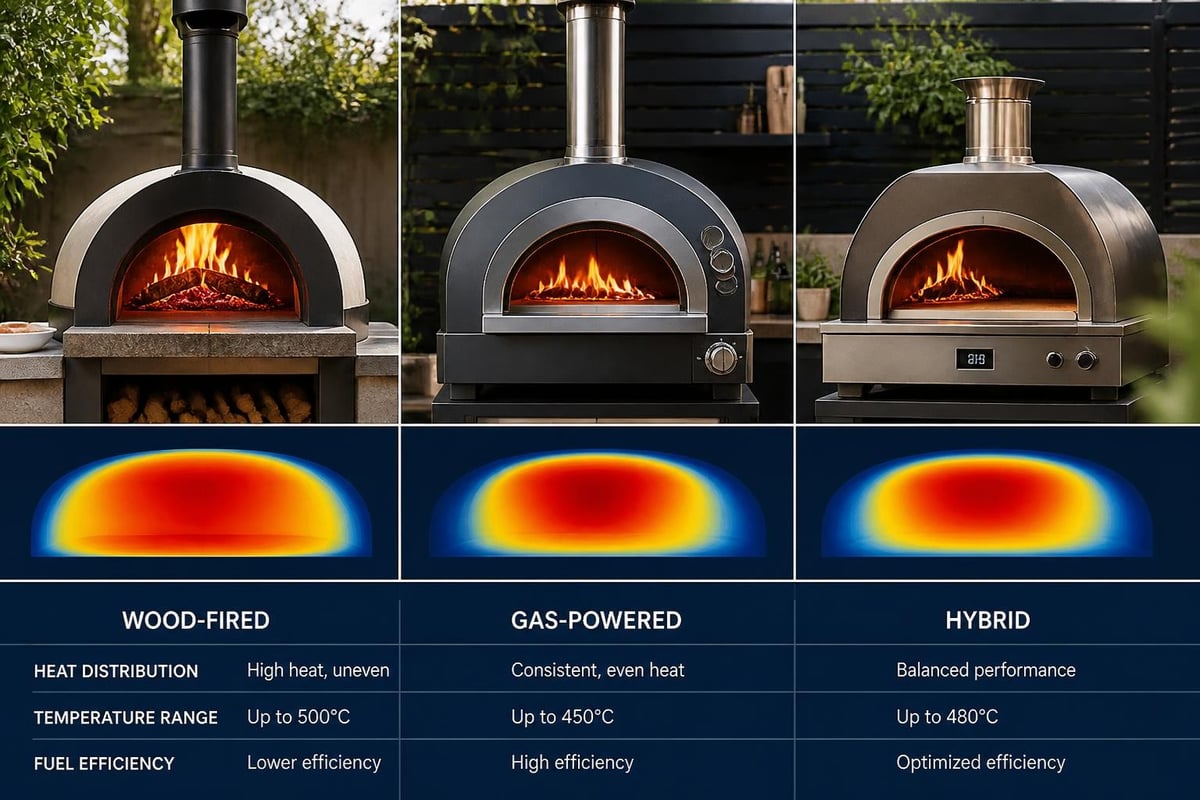
Selecting the appropriate fuel source fundamentally shapes your cooking experience and the installation requirements for your outdoor space.
Wood-Fired Pizza Ovens deliver unparalleled authenticity, imparting subtle smoky notes that define Neapolitan-style pizza. These ovens require proper ventilation, seasoned hardwood fuel, and a learning curve to master temperature control. The ritualistic nature of wood-fired cooking appeals to enthusiasts who value the sensory experience as much as the culinary results.
Gas Pizza Ovens provide precision temperature control and instant ignition, ideal for homeowners seeking convenience without compromising quality. Modern gas models reach optimal cooking temperatures within 20-30 minutes and maintain consistent heat throughout extended cooking sessions. They integrate seamlessly with existing outdoor gas supplies, making them practical additions to comprehensive outdoor kitchen designs.
Hybrid Pizza Ovens represent the convergence of tradition and convenience, allowing users to switch between wood and gas fuel sources. This versatility proves particularly valuable in the UK, where weather conditions might favour the convenience of gas during unpredictable periods whilst still offering wood-fired authenticity for special occasions.
| Fuel Type | Heat-Up Time | Temperature Control | Flavour Profile | Maintenance Requirements |
|---|---|---|---|---|
| Wood-Fired | 30-45 minutes | Manual, skill-dependent | Authentic smoky character | Regular ash removal, chimney cleaning |
| Gas | 15-25 minutes | Precise, adjustable | Clean, neutral base | Minimal, occasional burner inspection |
| Hybrid | 20-35 minutes | Flexible, dual options | Versatile, user's choice | Combined wood and gas maintenance |
Premium pizza ovens UK installations demand materials that withstand our climate's moisture, temperature fluctuations, and seasonal extremes whilst maintaining heat efficiency and aesthetic appeal.
The cooking floor represents the most critical component, with authentic installations featuring thick refractory stone or ceramic that stores and radiates heat evenly. High-quality refractory materials maintain temperatures exceeding 450°C, essential for achieving the rapid cooking times that produce properly blistered crusts without drying toppings.
Stainless steel construction dominates the external housing of contemporary models, particularly those from Italian and European manufacturers who understand outdoor durability requirements. Marine-grade stainless steel resists corrosion from British rainfall whilst providing structural integrity that supports the substantial weight of refractory interiors.
Ceramic fibre insulation separates professional-grade installations from basic models, creating a thermal barrier that maximises fuel efficiency and allows external surfaces to remain safely touchable even during operation. This insulation proves particularly valuable in luxury outdoor kitchen configurations where the oven sits adjacent to cabinetry and preparation surfaces.
Physical dimensions directly impact both cooking capacity and integration possibilities within your outdoor space. Understanding these parameters ensures your investment aligns with practical usage patterns and architectural proportions.
Single pizza models feature cooking floors measuring approximately 60-70cm in diameter, suitable for households preparing 1-2 pizzas simultaneously. These compact installations suit townhouse gardens and terrace settings where space comes at a premium, yet still deliver authentic results when properly specified.
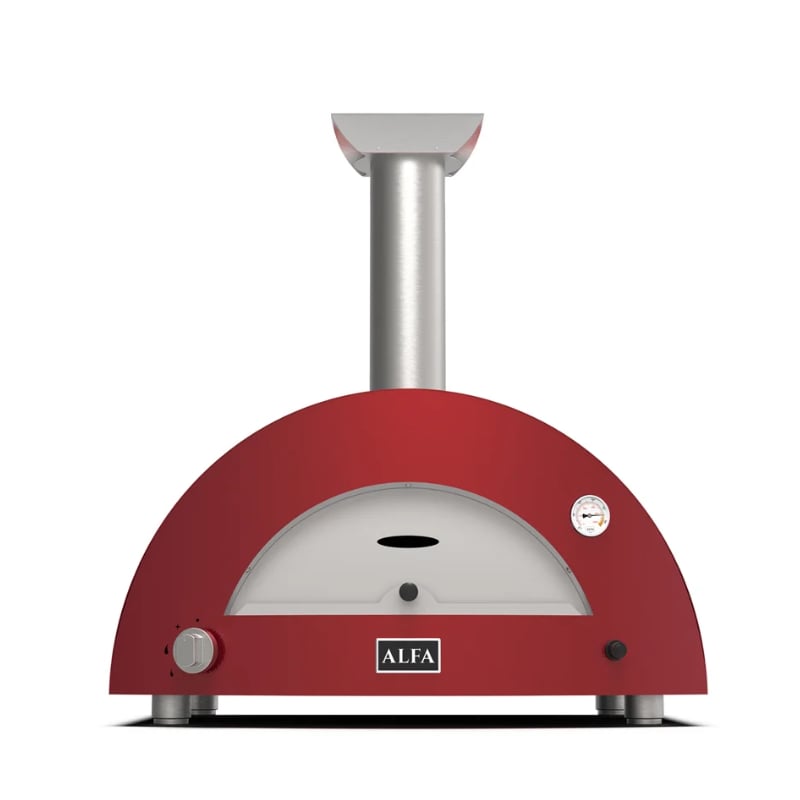
Double pizza configurations expand cooking floors to 80-100cm, accommodating two 12-inch pizzas side-by-side or allowing greater flexibility for roasting vegetables, baking bread, and preparing multiple courses. For homeowners who entertain regularly or envision their outdoor kitchen as a genuine cooking destination, this capacity proves invaluable. The Alfa Forni Modorno 2 Pizze Hybrid Pizza Oven exemplifies this category, combining generous cooking capacity with the flexibility of wood or gas fuel in a beautifully crafted Italian-made design that reaches 500°C in approximately 30 minutes.
Commercial-scale installations extend beyond 100cm, designed for hospitality applications or serious culinary enthusiasts who view their outdoor kitchen as an extension of professional capability rather than occasional entertainment.
Building regulations and manufacturer specifications dictate minimum clearances from combustible materials, typically requiring 50-100cm of space above the oven opening and adequate distance from overhead structures. When planning outdoor covered kitchens with integrated pergola systems, these clearances influence architectural design from the earliest planning stages.
Proper ventilation extends beyond regulatory compliance, directly affecting cooking performance and user comfort. Inadequate airflow causes smoke accumulation, temperature inconsistencies, and premature material degradation. Professional installation considers prevailing wind patterns, adjacent structures, and seasonal usage expectations.
Technical specifications reveal significant performance variations between models that superficially appear similar, making informed evaluation essential for matching equipment to expectations.
Authentic Neapolitan pizza requires cooking chamber temperatures between 430-480°C, achieved through combination of efficient fuel combustion and superior insulation. The oven's ability to recover quickly after door opening or pizza insertion separates professional-grade models from consumer alternatives, as detailed testing methodologies demonstrate.
Heat distribution uniformity prevents the frustration of burnt edges with undercooked centres, achieved through careful dome geometry and strategic placement of heat sources. Premium models incorporate design principles refined over generations of Italian craftsmanship, creating convection currents that envelope food in consistent heat from all directions.
Pizza ovens UK enthusiasts appreciate models that achieve cooking times of 60-90 seconds for traditional Neapolitan-style pizzas, demanding temperatures and heat retention that casual equipment cannot deliver. This rapid cooking preserves moisture in toppings whilst creating the characteristic leopard-spotted crust that defines quality.
Fuel efficiency impacts both running costs and environmental considerations, with well-insulated models requiring significantly less wood or gas to maintain operating temperatures. Over years of ownership, these efficiency gains compound substantially, making premium specifications financially sensible beyond their superior performance.
The pizza ovens UK market features manufacturers ranging from centuries-old Italian artisan workshops to innovative British engineering firms, each bringing distinct advantages to consideration.
Italian manufacturers built their reputations through generations serving restaurants in Naples and across the Mediterranean, where pizza holds cultural significance beyond mere food. Brands such as Alfa Forni combine traditional refractory techniques with contemporary materials science, producing ovens that honour heritage whilst incorporating modern conveniences like hybrid fuel systems and rapid heat-up capabilities.
Handcrafted attention to detail manifests in welding quality, finish consistency, and component tolerances that mass-production cannot replicate. When assessing expert reviews of premium models, these craftsmanship elements frequently distinguish exceptional installations from merely adequate ones.
Domestic manufacturers have entered the market with designs specifically addressing UK requirements: weather resilience, compact dimensions suitable for typical garden proportions, and aesthetic sensibilities that complement British architectural traditions. These brands often provide superior after-sales support and parts availability, considerations that grow increasingly important as installations age.
The manner in which your pizza oven integrates with broader outdoor living spaces fundamentally influences both functionality and visual impact, warranting careful planning during design phases.
Freestanding models offer installation flexibility and the possibility of relocation, appealing to homeowners who may reconfigure outdoor spaces or who rent rather than own properties. Contemporary designs elevate these units beyond basic functionality, incorporating architectural bases and weather-protective canopies that create visual presence.
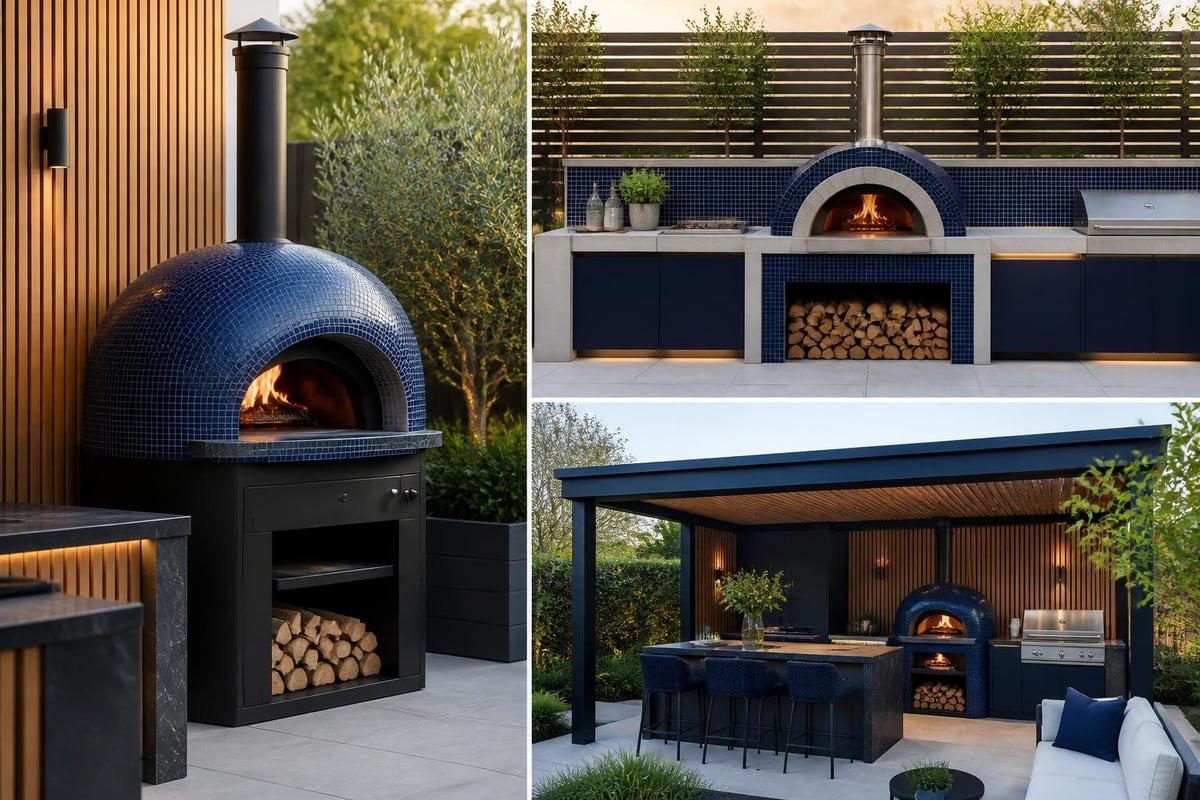
Built-in installations integrate pizza ovens into comprehensive outdoor kitchen designs, surrounding them with preparation surfaces, storage cabinetry, and complementary cooking equipment. This approach maximises workflow efficiency whilst creating cohesive aesthetic statements that enhance property value. According to research into various oven types, integrated installations allow better control over environmental factors affecting cooking performance.
| Installation Type | Initial Cost | Flexibility | Aesthetic Impact | Weather Protection |
|---|---|---|---|---|
| Freestanding Portable | £500-£2,000 | Excellent | Moderate | Requires covers |
| Freestanding Permanent | £2,000-£5,000 | Limited | Good | Can include canopy |
| Counter Built-In | £4,000-£8,000 | None | Excellent | Kitchen overhang |
| Full Integration | £8,000-£20,000+ | None | Outstanding | Complete shelter |
Professional-quality outdoor cooking demands supporting infrastructure beyond the oven itself. Adequate work surfaces positioned at ergonomic heights facilitate dough preparation, topping assembly, and plating. Weather-resistant storage protects tools, serving platters, and fuel supplies from the elements between cooking sessions.
Utilities including water supply for cleanup, electrical power for lighting and potential appliances, and gas lines for hybrid or gas-dedicated models require planning during initial installation phases. Retrofitting these services proves significantly more disruptive and expensive than incorporating them from the outset.
The UK climate presents specific challenges that influence both equipment selection and installation design, particularly for homeowners seeking to maximise their investment through extended seasonal usage.
Positioning pizza ovens beneath architectural pergola systems transforms occasional-use equipment into year-round culinary destinations, protecting against rain whilst maintaining essential ventilation. Modern louvred roof systems provide adjustable weather protection, opening during fair weather to create alfresco ambiance whilst closing automatically when sensors detect precipitation.
This integration approach aligns perfectly with comprehensive outdoor kitchen planning, where all cooking, preparation, and dining functions benefit from coordinated weather protection. The investment in quality pergola structures distributes across multiple functional benefits, making the cost more palatable than standalone protection for individual equipment pieces.
Stainless steel grades, powder coating quality, and gasket materials should all meet specifications appropriate for sustained exposure to British weather patterns. Marine-grade components resist the corrosive effects of moisture and temperature cycling that would compromise lesser materials within several seasons.
Refractory materials require protection from direct water saturation, which can cause thermal shock and cracking. Even when positioned under cover, allowing ovens to cool completely before covering prevents condensation accumulation that degrades mortar and refractory integrity over time.
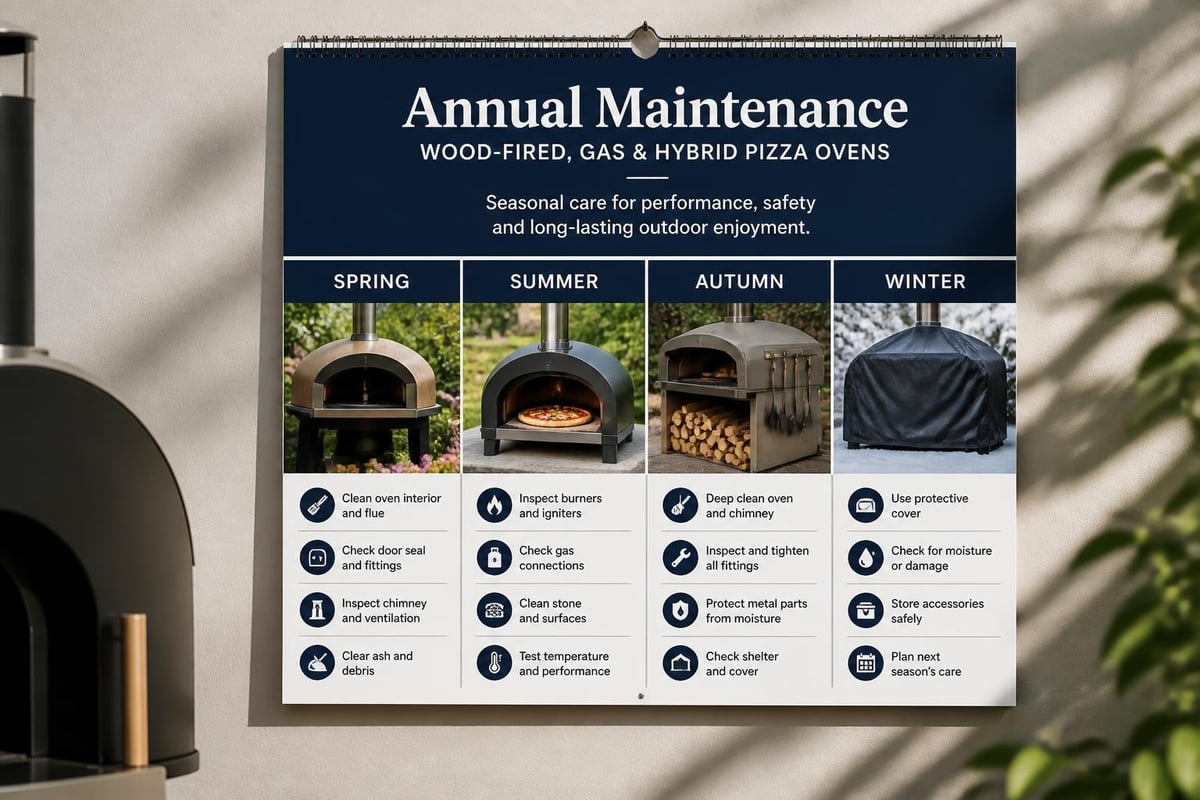
Proper maintenance distinguishes installations that provide decades of reliable service from those requiring premature replacement, making understanding these requirements essential before committing to specific models.
Wood-fired models accumulate ash residue requiring removal after each use or series of uses, preventing buildup that impedes airflow and reduces cooking chamber volume. High-quality designs incorporate ash drawers or cleanout ports that facilitate this process without disturbing refractory surfaces.
Cooking surface maintenance varies by material, with some refractory stones developing seasoned patinas that enhance performance over time, whilst others benefit from periodic brushing to prevent carbonised residue accumulation. Manufacturers provide specific guidance matched to their materials and construction approaches.
Gas burner systems require annual inspection to verify proper flame patterns, check for blockages in ports or venturi tubes, and confirm secure gas connections. These inspections prevent performance degradation and ensure continued safe operation throughout the equipment's lifespan.
Before extended dormant periods, thorough cleaning removes organic residues that might attract pests or promote mould growth. Applying protective covers specifically designed for your model prevents water intrusion whilst allowing sufficient ventilation to prevent condensation. As noted in comprehensive buying guides, proper off-season care significantly extends equipment longevity.
Components particularly vulnerable to freeze-thaw cycles, such as ceramic elements or water-based mortar joints, benefit from additional protection in regions experiencing harsh winters. Understanding your specific model's vulnerabilities informs appropriate seasonal protocols.
Investment in quality pizza ovens UK installations ranges dramatically based on capacity, materials, fuel type, and brand positioning, making careful value assessment crucial for satisfaction.
Entry-level portable models begin around £300-£500, providing genuine pizza-making capability for occasional use with modest performance expectations. Mid-range freestanding installations spanning £1,500-£4,000 deliver substantially improved materials, insulation, and cooking performance suitable for regular home use.
Premium permanent installations ranging from £5,000-£15,000 incorporate superior refractory materials, architectural aesthetics, and build quality that supports intensive usage patterns comparable to commercial applications. For homeowners creating comprehensive outdoor culinary spaces, these investments align appropriately with overall project budgets and performance expectations.
Fuel expenses vary considerably between wood and gas operation, with regional availability and pricing fluctuations affecting long-term economics. Wood-fired cooking typically costs £3-£5 per session for quality seasoned hardwood, whilst gas operation runs approximately £2-£4 depending on usage duration and local rates.
Energy-efficient models with superior insulation reduce fuel consumption by 30-50% compared to basic designs, creating ongoing savings that partially offset higher initial costs. Over a decade of ownership, these efficiency gains become financially significant whilst simultaneously reducing environmental impact.
The most successful pizza oven installations result from holistic planning that considers workflow, aesthetics, and lifestyle patterns rather than treating the oven as an isolated equipment purchase.
Professional kitchen designers position pizza ovens to create efficient work triangles between preparation surfaces, the oven opening, and serving or plating areas. This arrangement minimises movement during cooking, allowing the chef to monitor multiple dishes whilst maintaining conversation with guests.
Complementary cooking equipment such as grills, side burners, and warming drawers positioned adjacent to the pizza oven expand culinary possibilities whilst sharing supporting infrastructure. Coordinating these elements during initial design phases creates cohesive installations that function as true outdoor kitchens rather than collections of individual appliances.
Material palettes, finish selections, and architectural detailing should create visual harmony between the pizza oven, cabinetry, countertops, and any overhead structures. Contemporary designs often contrast sleek stainless steel oven exteriors against natural stone or engineered surfaces, creating sophisticated tension between modern and traditional elements.
Lighting design extends usability into evening hours whilst highlighting architectural features and creating ambiance. Task lighting illuminates work surfaces and the oven interior, whilst accent lighting showcases the installation as a garden feature even when not in active use. For homeowners investing in complete outdoor transformations, these details distinguish exceptional projects from basic installations.
UK regulations governing outdoor cooking installations vary by location and installation scope, making early investigation essential for avoiding complications during or after construction.
Most freestanding pizza ovens fall within permitted development rights requiring no formal approval, provided they meet height restrictions and boundary setback requirements. Built-in installations forming part of substantial outdoor kitchen structures may trigger building regulation requirements, particularly regarding gas installations, electrical work, or structural foundations.
Listed buildings and conservation areas impose additional restrictions affecting appearance, materials, and installation approaches. Homeowners in these designations benefit from early consultation with local planning authorities and conservation officers who can guide compliant design approaches before significant investment.
Gas appliance installations must comply with current Gas Safety regulations, typically requiring certification by Gas Safe registered engineers who verify proper connections, pressure regulation, and ventilation. These requirements apply equally to bottled LPG and mains natural gas supplies, with specific protocols for each.
Electrical connections powering lighting, ignition systems, or ancillary equipment should meet current wiring regulations, installed by qualified electricians who can certify compliance. Professional installation ensures safety whilst protecting homeowners from liability concerns should incidents occur.
Navigating the abundance of pizza oven reviews requires understanding testing methodologies and identifying which performance metrics align with your priorities and usage expectations.
Reputable reviewers employ systematic testing protocols examining heat-up time, maximum temperature achievement, temperature stability, cooking evenness, and fuel consumption across multiple cooking sessions. Detailed methodology descriptions reveal the rigour behind rankings, helping readers assess review credibility.
Real-world usage scenarios provide context beyond laboratory measurements, demonstrating how equipment performs during actual entertaining situations with multiple pizzas, varying weather conditions, and typical user skill levels. Reviews incorporating these elements offer more reliable guidance than those relying solely on specifications.
Long-term ownership reviews highlight aspects only apparent after months or years of use: durability of moving parts, ease of cleaning, availability of replacement components, and manufacturer responsiveness to warranty claims. These factors significantly impact satisfaction yet rarely feature in initial reviews focusing on cooking performance.
Community forums and owner groups provide unfiltered perspectives from individuals who've invested their own resources and reputation in equipment choices, offering candid assessments of strengths and limitations that professional reviews may understate.
Whilst pizza-making drives most purchase decisions, quality ovens support diverse culinary applications that expand their utility and value proposition for homeowners who enjoy varied cooking techniques.
Retained heat in wood-fired models creates ideal conditions for artisan bread baking, with falling temperature curves matching traditional baker's ovens. After pizza cooking concludes at peak temperatures, inserting shaped loaves as the oven cools produces spectacular crusts and crumb structures impossible to achieve in conventional ovens.
Roasting applications benefit from the intense radiant heat and convection currents within properly designed ovens, producing restaurant-quality results for vegetables, whole chickens, and substantial cuts of meat. This versatility transforms pizza ovens from single-purpose equipment into central cooking appliances for outdoor entertaining.
Dutch ovens and cast iron cookware thrive in the controlled high-heat environment pizza ovens provide, supporting stews, braises, and casseroles that develop complex flavours through extended slow cooking. This application particularly suits wood-fired models where gradual temperature decline over hours creates natural slow-cooking conditions.
Selecting equipment that adapts to evolving needs and expectations ensures satisfaction throughout ownership whilst protecting resale value should circumstances change.
Systems designed with expansion possibilities allow incremental investment as budgets permit or requirements evolve. Starting with a quality oven and basic counter installation creates immediate functionality whilst leaving options for adding storage, refrigeration, or complementary cooking equipment as outdoor living patterns develop.
Technology integration increasingly features in premium outdoor cooking equipment, with temperature monitoring, automated controls, and connectivity becoming standard rather than novelty features. Whilst not essential for quality cooking, these capabilities appeal to some users and support consistent results during the learning curve.
Premium installations from recognised manufacturers retain value significantly better than budget alternatives, important for homeowners who may relocate or redesign outdoor spaces. Quality equipment properly maintained attracts buyers seeking turnkey outdoor entertaining capabilities, potentially recouping substantial portions of initial investment.
Documented maintenance history, retained instruction manuals, and preserved warranty documentation enhance resale appeal whilst demonstrating responsible ownership that reassures potential buyers regarding equipment condition and remaining service life.
The expertise and service quality your supplier provides influences satisfaction as significantly as the equipment itself, making careful selection essential for successful projects.
Specialist retailers offering comprehensive design services help homeowners navigate the complexity of creating cohesive outdoor kitchens that balance aesthetics, functionality, and budget realities. These consultations explore lifestyle patterns, entertaining frequencies, and culinary aspirations that inform appropriate equipment specifications and spatial arrangements. For those considering comprehensive outdoor living transformations, this expertise proves invaluable.
Access to premium brands distinguishes specialist suppliers from general retailers, providing homeowners exposure to equipment unavailable through mainstream channels. Curated selections reflecting deep category knowledge eliminate the overwhelming choice that characterises broader marketplaces whilst ensuring quality standards.
Professional installation ensures equipment operates optimally from commissioning whilst meeting all regulatory requirements and manufacturer specifications. This service particularly benefits homeowners lacking technical expertise or time to manage tradespeople coordination across gas fitting, electrical work, and construction elements.
Ongoing parts availability, warranty support, and technical assistance create peace of mind throughout ownership, addressing issues promptly when they arise rather than leaving homeowners struggling with unresponsive manufacturers or discontinued components. Established suppliers maintain relationships supporting clients years beyond initial purchase.
Investing in quality pizza ovens UK homeowners can rely upon transforms outdoor spaces into year-round culinary destinations that enhance lifestyle and property value. Whether you're drawn to the authenticity of wood-fired cooking or the convenience of modern gas technology, matching equipment capabilities to your specific requirements ensures lasting satisfaction. The Cotswold Cooking Company brings decades of experience curating premium outdoor cooking equipment from respected European manufacturers, offering the consultative expertise and installation support that turns aspirations into exceptional reality across properties throughout the UK.

Leave a comment