


A built in bbq transforms your outdoor space from a simple patio into a sophisticated culinary destination. Unlike freestanding alternatives, a built-in installation creates a permanent, architecturally coherent cooking station that elevates both property value and entertaining capability. For discerning homeowners seeking to extend their living space beyond traditional boundaries, the decision to invest in a built in bbq represents a commitment to year-round outdoor hospitality and refined design. This comprehensive guide explores every aspect of specification, installation and integration, ensuring your outdoor kitchen delivers exceptional performance wrapped in timeless aesthetics.
A built in bbq comprises a grill unit integrated within a permanent structure, typically surrounded by weather-resistant cabinetry, worktop surfaces and storage solutions. This configuration differs fundamentally from portable grills, offering superior stability, enhanced functionality and seamless aesthetic integration.
The construction approach centres on creating a non-combustible framework that safely houses your chosen grill whilst providing practical adjacencies for food preparation, plating and service. This Old House provides comprehensive guidance on the structural considerations essential for successful installation.
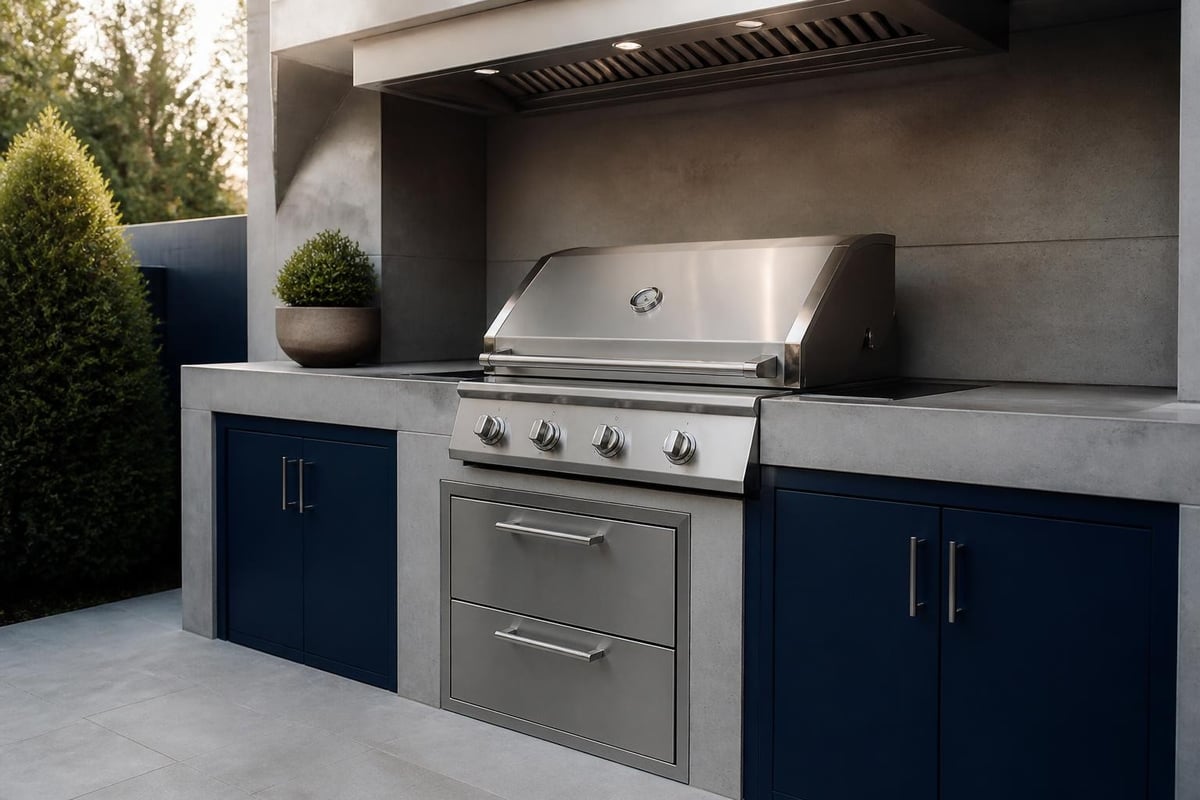
Every built in bbq installation comprises several interconnected elements:
When designing your outdoor kitchen, consider how these elements interact spatially. Adequate counter space either side of your grill prevents bottlenecks during service, whilst strategically positioned storage keeps essential tools immediately accessible. For comprehensive planning guidance, explore our approach to outdoor kitchen accessories that complement built-in installations.
The grill unit itself represents the heart of your built in bbq installation. Your selection determines cooking versatility, maintenance requirements and long-term operating costs.
| Fuel Type | Benefits | Considerations | Best For |
|---|---|---|---|
| Natural Gas | Consistent heat, low running costs, clean burning | Requires professional installation, fixed location | High-frequency users, permanent installations |
| LPG | Flexible placement, powerful heat, readily available | Tank replacement needed, storage requirements | Most UK installations, versatile cooking |
| Charcoal | Authentic smoky flavour, high temperatures, traditional | Longer heat-up time, ash management, skill required | Weekend entertainers, flavour purists |
| Hybrid | Fuel flexibility, convenience meets authenticity | Higher initial investment, complex installation | Serious outdoor cooks seeking versatility |
Gas-fired units dominate the built in bbq market due to their convenience and precise temperature control. Natural gas connections offer the ultimate in operational simplicity, eliminating fuel storage concerns entirely. However, LPG systems provide comparable performance with greater installation flexibility, particularly valuable for properties without mains gas access.
Beyond fuel type, several technical specifications directly impact cooking capability:
Burner configuration determines heat distribution and zone control. Premium built in bbq units feature multiple independently controlled burners, enabling simultaneous high-heat searing and gentle warming.
BTU output (British Thermal Units) quantifies total heat production. Whilst higher numbers suggest greater power, efficient burner design and heat retention matter equally. Quality stainless steel construction and ceramic briquettes improve heat distribution whilst reducing fuel consumption.
Cooking surface area must accommodate your typical guest count. A minimum 500 square inches suits family cooking, whilst serious entertainers benefit from 700+ square inches. Fireplace Bros offers detailed guidance on matching grill size to entertaining requirements.
A built in bbq should appear as an intentional architectural element rather than an afterthought. Successful integration requires careful consideration of materials, proportions and spatial relationships.
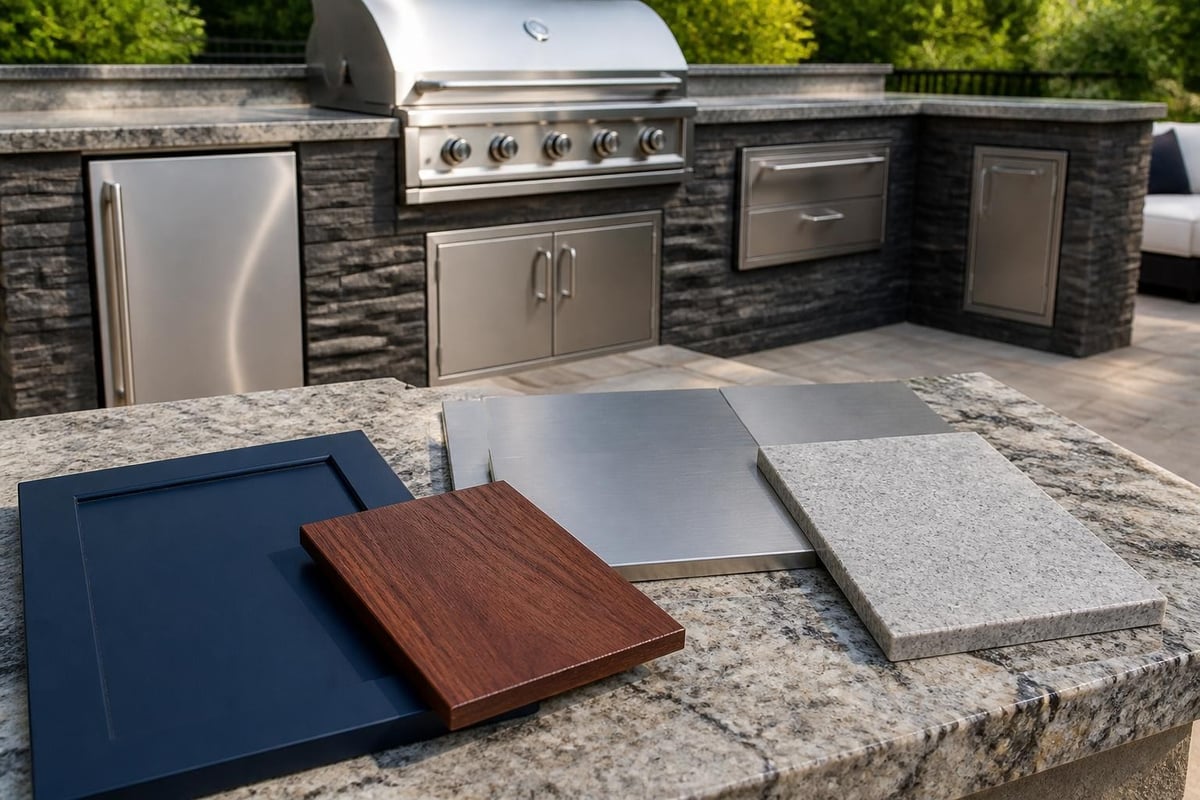
Outdoor environments demand exceptional material durability. British weather patterns particularly challenge outdoor structures with freeze-thaw cycles, persistent damp and UV exposure.
Premium built in bbq installations utilise:
Structural frameworks require non-combustible materials throughout. Concrete block, brick or stone construction creates safe, stable foundations capable of supporting substantial weight. Structural requirements for built-in grills emphasise the importance of proper clearances and ventilation, ensuring both safety and longevity.
The Cubic C1 Style Outdoor Kitchen exemplifies this material philosophy, combining marine-grade stainless steel with powder-coated aluminium frameworks and optional teak accents. These modular systems integrate built in bbq units seamlessly whilst maintaining architectural coherence and weather resilience.
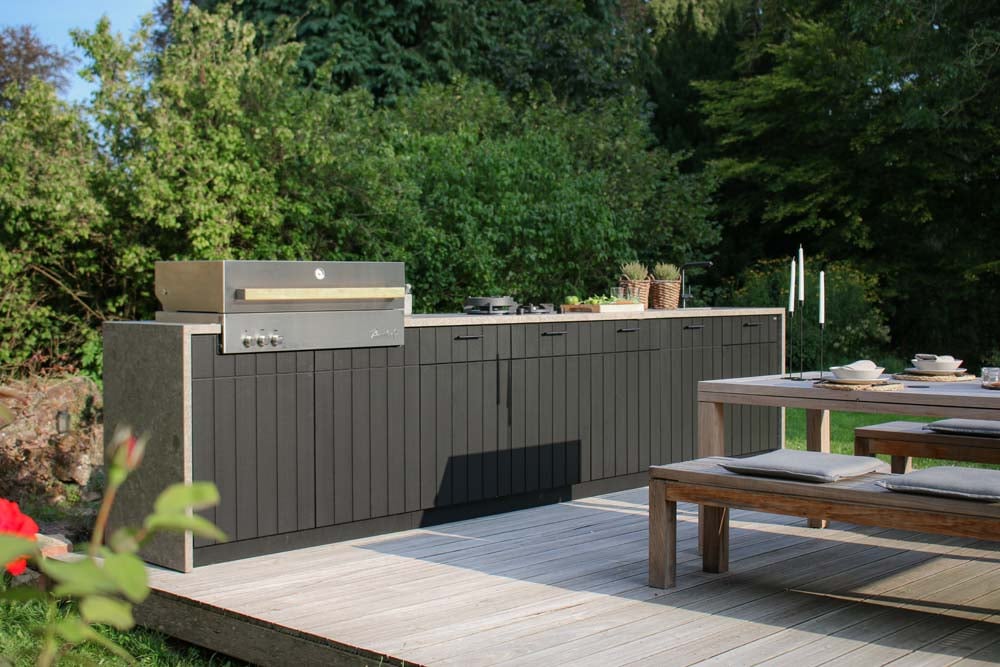
Professional outdoor kitchen design follows the same workflow principles as indoor equivalents. The classic work triangle concept translates effectively outdoors, positioning your built in bbq, preparation zones and serving areas for intuitive movement.
Minimum dimensions ensure comfortable operation:
British building regulations require specific setbacks from property boundaries and structures. Consult local planning authorities before finalising placement, particularly for installations incorporating gas connections or permanent roofing structures.
Whilst enthusiastic DIYers might consider self-installation, built in bbq projects typically benefit from professional expertise. Gas connections, electrical circuits and structural construction demand certified tradespeople ensuring safety and compliance.
The foundation represents your most critical investment. A properly levelled, reinforced concrete pad prevents settling and cracking whilst providing stable support for substantial weight. UK building codes typically require 100-150mm thickness with appropriate reinforcement mesh.
Professional installation follows a logical progression:
Framework construction establishes the structural envelope using concrete blocks, brick or metal studs. This phase incorporates utility rough-ins and ensures proper clearances around the grill opening.
Counter and cabinetry installation follows framework completion. Precision measurement ensures grill units drop into prepared openings with appropriate support and ventilation access.
Equipment commissioning involves connecting gas supplies, testing ignition systems and verifying proper operation. Only Gas Safe registered engineers should perform natural gas or LPG connections, ensuring compliance with current safety standards.
For detailed installation guidance tailored to UK contexts, Glowing Flames provides practical advice covering framework construction, material choices and finishing touches.
British outdoor kitchens require thoughtful weather protection to maximise usability across seasons. A built in bbq installation represents significant investment; appropriate sheltering extends both equipment lifespan and practical usage periods.
Covered outdoor kitchens transform seasonal amenities into year-round destinations. Several architectural approaches suit different aesthetic preferences and spatial constraints:
Pergolas with adjustable louvres offer exceptional versatility, adapting to changing weather conditions throughout the day. Motorised systems enable instant transition from full sun exposure to complete rain protection. These structures suit properties seeking contemporary aesthetics with maximal functionality.
Fixed roof structures provide permanent weather protection with integrated lighting and heating possibilities. Whilst less flexible than louvred alternatives, they offer superior shelter and support heavier equipment installations.
Retractable awnings present economical weather protection for moderate climates, though British wind conditions may limit their practicality as primary sheltering.
The specialist knowledge required for pergola design and integration ensures your built in bbq benefits from appropriate overhead protection whilst maintaining architectural harmony with existing structures.
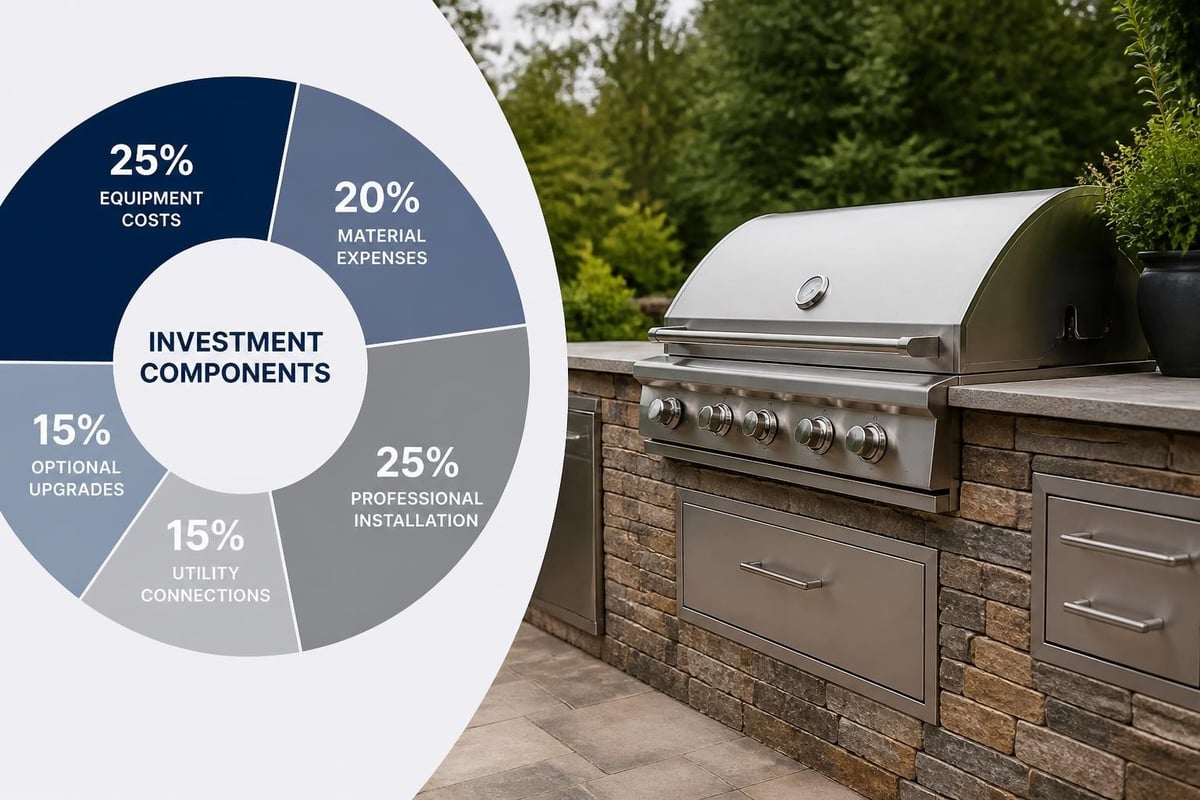
Built in bbq projects span considerable price ranges depending on equipment specification, material selection and installation complexity. Understanding cost drivers enables realistic budgeting and informed specification decisions.
| Component | Entry Level | Mid-Range | Premium |
|---|---|---|---|
| Grill Unit | £800-£1,500 | £1,500-£4,000 | £4,000-£12,000+ |
| Cabinetry & Worktops | £1,200-£2,500 | £2,500-£6,000 | £6,000-£15,000+ |
| Installation Labour | £1,000-£2,000 | £2,000-£4,000 | £4,000-£8,000+ |
| Gas/Electric Work | £400-£800 | £800-£1,500 | £1,500-£3,000+ |
| Total Project | £3,400-£6,800 | £6,800-£15,500 | £15,500-£38,000+ |
These figures reflect 2026 UK market conditions for complete installations. Individual circumstances vary based on site complexity, material choices and regional labour rates. Comprehensive cost breakdowns help establish realistic budgets, though UK-specific pricing typically runs 15-25% higher than equivalent US projects due to material costs and VAT.
Certain features justify premium investment through enhanced functionality or longevity:
When specifying your built in bbq, prioritise elements directly impacting cooking performance and weather durability. Decorative flourishes can always follow, whilst core infrastructure proves difficult to retrofit.
Premium built in bbq installations reward proper maintenance with decades of reliable service. Establishing routine care protocols prevents deterioration whilst maintaining optimal performance.
Post-cooking cleaning represents your most important habit. Burnt residue becomes increasingly difficult to remove over time, eventually compromising flavour and heat distribution. Stainless steel grates benefit from wire brushing whilst still warm, followed by occasional deep cleaning with specialised degreasers.
Burner inspection should occur quarterly, checking for blockages, corrosion or uneven flame patterns. Spider webs and insect debris frequently obstruct gas jets, causing dangerous flashbacks or poor ignition. Compressed air clears most blockages without disassembly.
Weather protection extends equipment lifespan substantially. Even within covered structures, fitted grill covers prevent moisture accumulation and wind-blown debris entry. During extended non-use periods, disconnect and cap gas supplies whilst storing removable components indoors.
Annual comprehensive servicing maintains peak performance:
Professional servicing every 2-3 years ensures gas safety compliance whilst identifying potential issues before they compromise functionality. Gas Safe registered engineers should inspect all fuel system components, testing for leaks and verifying proper combustion.
A truly functional outdoor kitchen extends well beyond the built in bbq itself. Strategic additions enhance capability whilst maintaining cohesive design language.
Side burners prove invaluable for sauce reduction, vegetable sautéing and multi-course preparation. These auxiliary cooking zones prevent constant trips indoors whilst keeping your main grill focused on protein cooking.
Warming drawers maintain finished dishes at serving temperature, essential when cooking for larger groups with staggered timing requirements. Quality units reach 80°C, ideal for proofing bread or holding roasted vegetables.
Integrated sinks with hot and cold water transform outdoor kitchens into genuinely self-sufficient spaces. Proper drainage connections prove essential, with waste plumbing requiring appropriate fall and connection to existing systems.
For outdoor enthusiasts exploring diverse cooking methods, integrating complementary equipment creates exceptional versatility. A kamado bbq positioned adjacent to your built in bbq enables low-and-slow smoking alongside traditional grilling, whilst dedicated pizza ovens satisfy sourdough enthusiasts.
When sourcing ingredients for your outdoor culinary adventures, quality cooking oils make substantial differences in final results. Premium vegetable oils from specialist suppliers like Thai Cooking Oils ensure your grilled dishes benefit from high smoke-point oils suited to intense heat, whilst their range of specialty oils adds distinctive finishing touches to plated presentations.
Modern built in bbq design transcends purely functional considerations, embracing aesthetic movements that blur indoor-outdoor boundaries. Contemporary design inspiration showcases diverse approaches from minimalist modernism to rustic traditionalism.
Seamless integration dominates luxury outdoor kitchen design, with built in bbq installations appearing as natural extensions of interior spaces rather than isolated garden features. Matching materials, consistent colour palettes and aligned architectural details create visual continuity that enhances property coherence.
Mixed material palettes combine industrial stainless steel with warm natural timbers, cool stone surfaces and textured ceramics. This layered approach prevents stark, commercial aesthetics whilst maintaining practical durability.
Smart technology integration brings connected convenience outdoors. Wi-Fi enabled temperature monitoring, automated ignition systems and integrated lighting control transform outdoor cooking into seamless experiences matching indoor kitchen sophistication.
British design sensibilities particularly value heritage materials and traditional craftsmanship reinterpreted through contemporary lenses. Reclaimed brick, aged timber and hand-forged metalwork sit comfortably alongside precision-engineered cooking equipment, creating spaces resonating with both history and modernity.
Proper illumination extends built in bbq usability into evening hours whilst creating inviting atmospheres for al fresco dining. Layered lighting approaches deliver both functional task lighting and ambient mood creation.
Task lighting positioned above cooking surfaces enables safe food handling and precise doneness assessment. LED strips under overhead structures or adjustable spotlights provide shadow-free illumination without excessive heat generation.
Accent lighting highlights architectural features, creating dramatic visual interest after dark. Uplighting stone facades, backlighting translucent panels or grazing textured surfaces adds depth and sophistication to outdoor spaces.
Ambient lighting establishes overall atmosphere through carefully positioned fixtures creating gentle, diffused illumination. String lights, lanterns and indirect LED installations foster relaxed, convivial settings ideal for extended gatherings.
Built in bbq installations must satisfy numerous safety requirements ensuring both immediate operational safety and long-term structural integrity. UK building regulations, gas safety standards and manufacturer specifications all impose specific obligations.
Clearance distances prevent fire hazards and heat damage to adjacent structures. Most manufacturers specify minimum 600mm clearances to combustible materials, though 900mm provides superior safety margins. Overhead clearances typically require 1200mm minimum to non-combustible surfaces.
Ventilation requirements ensure proper combustion and prevent dangerous gas accumulation. Open-sided structures naturally provide adequate airflow, whilst enclosed designs require engineered ventilation systems calculating volumetric air exchange rates.
Gas safety compliance demands professional installation by Gas Safe registered engineers for all natural gas and LPG connections. Annual inspections verify ongoing safety, testing for leaks, proper pressure regulation and complete combustion.
Fire suppression access should remain unobstructed, with appropriate extinguisher types positioned within easy reach. Class F extinguishers suit grease fires, whilst ABC units handle general combustibles and electrical fires.
For comprehensive safety guidance specific to built-in installations, detailed requirements and installation examples help ensure compliant, safe outdoor kitchens.
A premium built in bbq enables exploration of global culinary traditions, from Argentine asado to Korean barbecue and beyond. Equipment selection and accessory specification can enhance authenticity when pursuing specific cooking styles.
Rotisserie attachments prove essential for Middle Eastern shawarma, Greek gyros and Brazilian churrasco preparations. Heavy-duty motors capable of supporting substantial weight ensure even rotation of whole lambs or large beef cuts.
Adjustable grate heights enable Argentine-style live-fire cooking, where raising or lowering protein relative to heat sources provides precise temperature control without adjusting fuel intensity.
Wok burners delivering concentrated high heat suit Asian stir-frying techniques, achieving the essential "wok hei" flavour through rapid, intense cooking. These specialised burners typically produce 15,000+ BTUs from compact burner rings.
When preparing international dishes, authentic ingredients and quality seasonings prove equally important as equipment. Specialist suppliers like By NCC provide ready-to-use spice blends and cooking bases that bring authentic Indonesian, Malaysian and Thai flavours to your outdoor cooking, eliminating the complexity of sourcing individual exotic ingredients whilst ensuring genuine taste profiles.
The investment in a built in bbq justifies itself most completely when outdoor kitchens function across all seasons. British weather presents unique challenges, yet thoughtful design enables comfortable outdoor cooking even during cooler months.
Infrared patio heaters positioned strategically around cooking and dining zones extend comfortable outdoor periods substantially. Contemporary models integrate visually with architectural elements whilst delivering focused radiant warmth.
Fire features combine ambient heating with visual drama. Built-in fire pits or linear burners create focal points encouraging lingering even as temperatures drop, whilst radiating meaningful warmth to adjacent seating areas.
Wind protection proves equally important as overhead shelter in British contexts. Glass panels, living hedges or architectural screens block prevailing winds without creating enclosed, claustrophobic spaces. Strategic positioning relative to existing structures often provides natural wind breaks requiring minimal additional investment.
For comprehensive guidance on creating genuinely year-round outdoor spaces, explore strategies for year-round outdoor cooking lifestyles that transform seasonal amenities into permanent lifestyle enhancements.
The complexity of built in bbq installations rewards professional design consultation. Experienced outdoor kitchen specialists navigate equipment selection, spatial planning, regulatory compliance and installation coordination, ensuring cohesive results matching both functional requirements and aesthetic aspirations.
Equipment selection overwhelms many homeowners given the extraordinary range available. Consultants familiar with specific brands, performance characteristics and reliability histories guide informed decisions aligned with cooking preferences and budget parameters.
Spatial optimisation requires understanding workflow principles, ergonomic considerations and aesthetic proportions. Professional designers create functional layouts that feel intuitive during use whilst appearing visually balanced when inactive.
Material specification balances performance requirements, aesthetic preferences and budget realities. Specialists understand comparative material properties, identifying optimal combinations delivering longevity and beauty without unnecessary expense.
Project coordination manages numerous trades and delivery schedules, ensuring logical sequencing and minimising delays. Professional oversight prevents costly mistakes whilst keeping installations progressing smoothly towards completion.
The consultative approach offered by specialists such as Cotswold Cooking Company ensures your built in bbq installation benefits from accumulated expertise across hundreds of projects, avoiding common pitfalls whilst optimising every aspect of design and execution.
A built in bbq represents far more than outdoor cooking equipment, it establishes a permanent venue for culinary creativity, social connection and al fresco living that enhances property value whilst enriching daily life. From initial concept through final installation, thoughtful specification ensures your outdoor kitchen delivers exceptional performance wrapped in timeless design that serves your household beautifully for decades. Cotswold Cooking Company brings comprehensive expertise to every outdoor kitchen project, guiding discerning clients through equipment selection, bespoke design and professional installation that transforms gardens into refined culinary destinations suited to British lifestyles and weather patterns alike.

Leave a comment