


Creating an exceptional outdoor barbeque area transforms your garden into a sophisticated culinary destination that extends your living space far beyond the confines of your home. For discerning homeowners across the UK, the modern outdoor barbeque area represents a significant investment in lifestyle, combining architectural design, premium materials, and year-round functionality. Whether you're planning intimate family dinners or hosting elegant garden parties, a thoughtfully designed barbeque area becomes the centrepiece of outdoor entertaining, blending Cotswold heritage with contemporary performance.
Successful outdoor barbeque area design begins with strategic spatial planning that considers cooking zones, dining areas, and circulation patterns. The most effective layouts separate heat-intensive cooking equipment from comfortable seating whilst maintaining visual connection and conversational flow between hosts and guests.
A well-planned outdoor barbeque area incorporates distinct zones that serve specific purposes without creating barriers:
Understanding how to define cooking and seating zones separately ensures your guests remain comfortable whilst you prepare meals. The distance between your grill and dining table typically ranges from 2.5 to 4 metres, providing sufficient separation from heat and smoke whilst maintaining engagement.
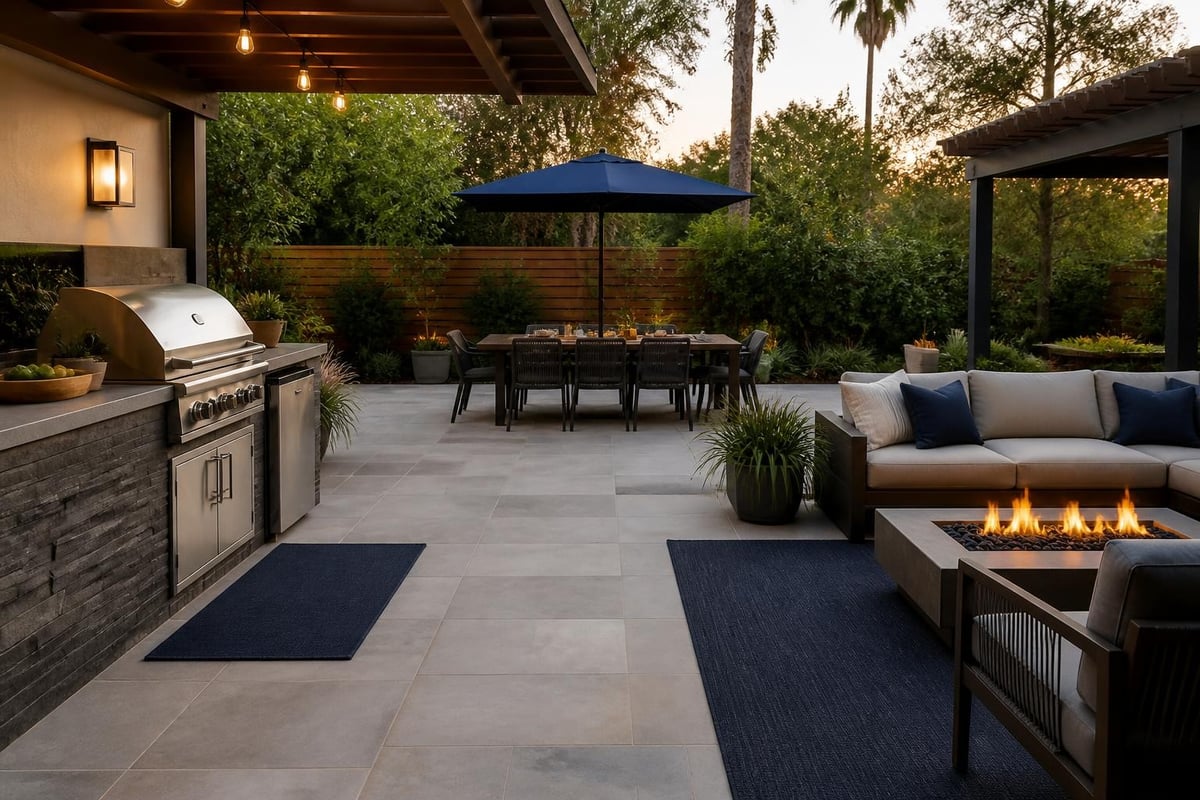
Location selection significantly impacts your outdoor barbeque area's performance and longevity. Position your cooking zone downwind from prevailing winds to prevent smoke from overwhelming dining areas, and ensure adequate clearance from boundaries, structures, and overhead vegetation. The City of San Diego's outdoor grilling safety guidelines recommend maintaining at least three metres from buildings and combustible materials.
Natural shelter from mature trees provides welcome shade during summer months, though you'll need to balance this with adequate ventilation for smoke dispersion. Many homeowners complement natural features with architectural pergolas that offer adjustable protection whilst maintaining airflow.
The foundation of any luxury outdoor barbeque area lies in carefully curated equipment that delivers exceptional performance across all seasons. Hand-selected brands combine engineering excellence with timeless aesthetics, ensuring your investment provides decades of reliable service.
| Equipment Type | Heat Source | Temperature Range | Best For | Maintenance Level |
|---|---|---|---|---|
| Built-in Gas BBQ | LPG/Natural Gas | 200-400°C | Consistent heat, quick ignition | Low |
| Charcoal Grill | Lumpwood/Briquettes | 250-500°C | Authentic smoky flavour | Moderate |
| Hybrid Pizza Oven | Wood/Gas | 300-500°C | Artisan bread, pizza, roasting | Low-Moderate |
| Integrated Range | Multiple fuel options | Variable zones | Complete outdoor cooking | Low |
Modern outdoor cooking has evolved far beyond basic barbeques. Today's luxury installations often incorporate multiple cooking methods within a single outdoor barbeque area, allowing you to grill steaks, bake artisan pizzas, and slow-roast vegetables simultaneously. For those seeking versatility without compromising on space, modular systems like the Cubic C1 Style Outdoor Kitchen deliver sleek minimalism with customisable configurations that adapt to your specific culinary preferences.
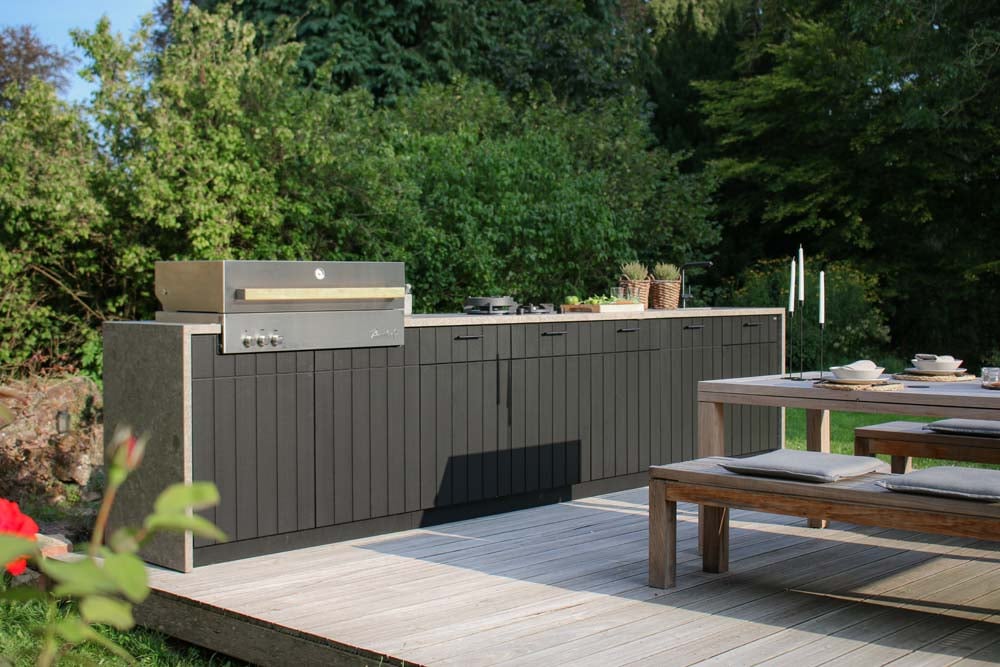
Premium outdoor barbeque areas demand materials engineered to withstand British weather whilst maintaining pristine appearance:
Worksurfaces: Granite, porcelain, and marine-grade stainless steel resist thermal shock, moisture penetration, and UV degradation. Honed granite provides subtle elegance whilst remaining practical for food preparation, whilst brushed stainless steel offers hygienic surfaces that age gracefully.
Cabinetry: Marine-grade aluminium and powder-coated steel frameworks resist corrosion far more effectively than traditional timber, requiring minimal maintenance whilst supporting substantial equipment loads. Weather-resistant finishes in anthracite, bronze, and champagne tones complement both traditional and contemporary garden designs.
Flooring: Natural stone paving, porcelain tiles, and resin-bound gravel provide stable, non-slip surfaces that drain effectively. Consider textured finishes that remain safe when wet, particularly in shaded areas where moss growth may occur.
British weather presents unique challenges for outdoor barbeque area design, making weather protection and heating essential considerations rather than optional extras. Transforming your space into an all-season culinary destination requires thoughtful integration of shelter, warmth, and lighting.
Fixed and adjustable overhead structures extend usability throughout the year. Bioclimatic pergolas with rotating louvres allow precise control over sunlight, ventilation, and rain protection, adapting to conditions in real-time. When louvres close completely, integrated drainage channels direct water away from cooking and dining zones, maintaining dry conditions even during persistent rainfall.
Retractable glass panels and fabric screens provide lateral protection from wind without creating closed, stuffy environments. Frameless glass creates seamless visual connection with your garden whilst blocking breezes that would otherwise extinguish candles and chill guests. For maximum flexibility, consider systems that retract completely during calm summer evenings.
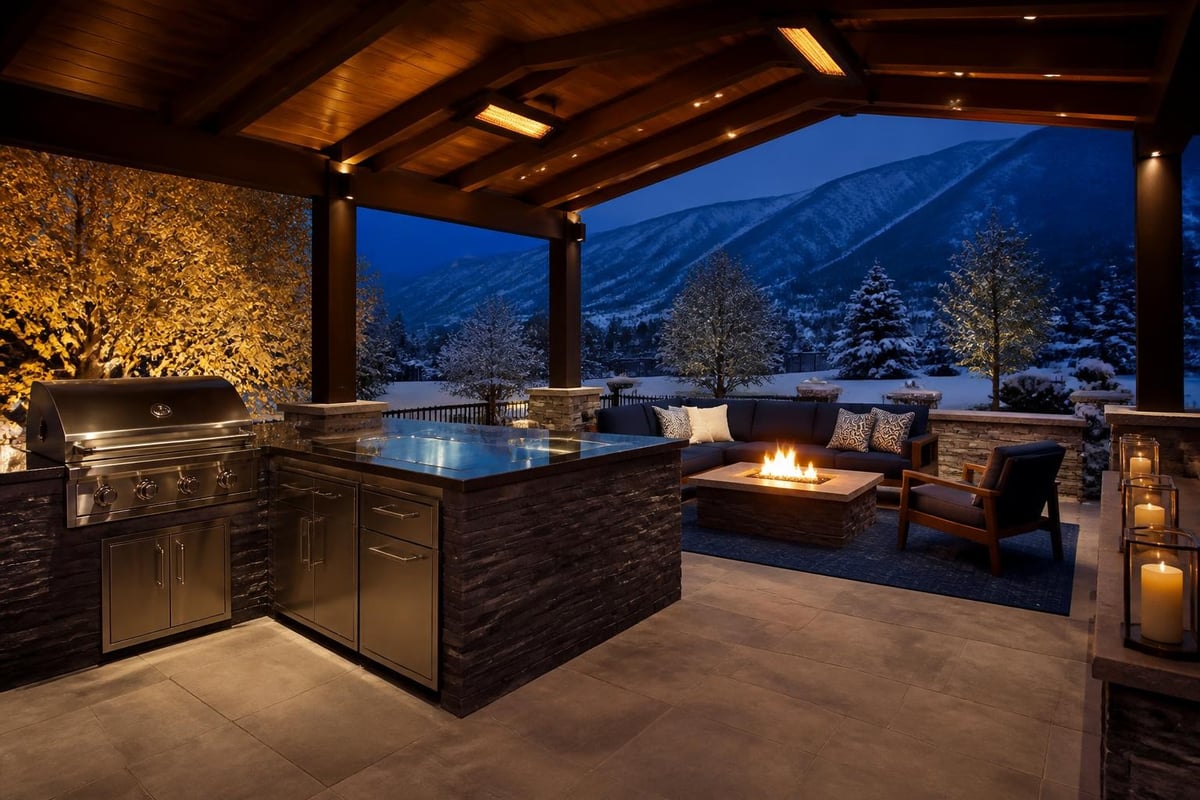
Radiant heating: Wall-mounted infrared heaters deliver focused warmth to specific zones without heating surrounding air. Position units above seating areas at 2.5-3 metres height for optimal heat distribution whilst avoiding head-level discomfort.
Fire features: Built-in fire pits and linear burners provide ambient warmth alongside visual appeal. Gas-powered systems ignite instantly and offer precise flame control, whilst bioethanol options eliminate the need for gas supply infrastructure.
Underfloor heating: For covered outdoor barbeque areas with solid roofs, electric underfloor heating integrated beneath natural stone paving creates gentle warmth that rises naturally, maintaining comfortable temperatures without visible equipment.
These heating solutions enable comfortable dining even during cooler months, extending your outdoor season from May through October into true year-round functionality. Discover more about creating year-round outdoor cooking lifestyles in our comprehensive guide.
Professional-grade outdoor barbeque areas require robust utility connections that support cooking equipment, lighting, water features, and entertainment systems. Early planning prevents costly retrofitting and ensures seamless integration with your home's existing services.
Professional installation by qualified tradespeople ensures compliance with current building regulations and gas safety standards. For properties in conservation areas or listed buildings, early consultation with planning authorities streamlines approval processes.
Contemporary outdoor barbeque areas increasingly incorporate connected technology that enhances convenience without compromising aesthetic refinement:
These systems integrate seamlessly with whole-home automation platforms, allowing you to pre-heat your grill, adjust lighting scenes, and activate heating from inside your home before stepping outdoors.
Beyond functional requirements, your outdoor barbeque area should reflect your personal aesthetic whilst complementing your home's architectural character. Thoughtful styling creates inviting spaces that encourage regular use rather than remaining underutilised showpieces.
Choose furniture constructed from weather-resistant materials that require minimal seasonal storage. Powder-coated aluminium frames with quick-dry cushion fabrics maintain appearance through exposure whilst remaining comfortable. For a more traditional aesthetic, FSC-certified teak ages to distinguished silvery patina whilst providing exceptional durability.
Modular seating arrangements offer flexibility for different entertaining scenarios. L-shaped configurations work particularly well in corner installations, maximising seating capacity whilst defining boundaries between cooking and dining zones. Consider pieces with hidden storage compartments for cushions, table linens, and serving accessories.
Layered lighting transforms your outdoor barbeque area from purely functional space into enchanting evening destination:
| Lighting Type | Purpose | Placement | Recommended Output |
|---|---|---|---|
| Task Lighting | Food preparation, cooking safety | Above worksurfaces, grills | 300-500 lux |
| Ambient Lighting | General illumination, movement | Overhead structures, pathways | 50-100 lux |
| Accent Lighting | Highlighting features, planting | Low-level uplights, spotlights | 20-50 lux |
| Decorative Lighting | Atmosphere, visual interest | String lights, lanterns, candles | Soft glow |
Professional lighting designers often recommend warm white LEDs (2700-3000K) for dining areas, as cooler temperatures can make food appear less appetizing. Dimmable circuits allow you to adjust intensity throughout evening progression, transitioning from bright task lighting during cooking to softer ambient glow for after-dinner conversation.
For comprehensive guidance on styling BBQ areas that balance practicality with visual appeal, interior design experts suggest repeating materials and colours from your indoor spaces to create cohesive flow.
The most successful outdoor barbeque areas accommodate diverse cooking techniques beyond traditional grilling. This versatility prevents culinary monotony whilst maximising your return on investment through regular year-round use.
Pizza ovens: Wood-fired or hybrid models reaching 400-500°C produce authentic Neapolitan pizzas in 90 seconds whilst also excelling at bread baking, roasting vegetables, and slow-cooking meats. Positioning your pizza oven adjacent to your main grill creates efficient workflow for multi-course meals.
Teppanyaki griddles: Large flat cooking surfaces accommodate breakfast pancakes, lunchtime stir-fries, and evening fajitas with equal facility. Integrated grease management systems maintain cleanliness during high-temperature searing.
Rotisserie systems: Motorised spits deliver evenly cooked whole chickens, legs of lamb, and pork joints with minimal attention required. Paired with drip trays positioned over secondary burners, collected juices create rich gravy bases.
Side burners: Dedicated hobs allow you to prepare sauces, boil vegetables, and warm serving dishes without returning to your indoor kitchen. Look for models with brass burners delivering minimum 3.5kW output for rapid heating.
This multi-technique approach mirrors the functionality of premium indoor kitchens, as explored in our guide to outdoor kitchen and grill integration strategies.
Limited garden dimensions need not prevent creation of impressive outdoor barbeque areas. Strategic design decisions and space-efficient equipment selections deliver full functionality within compact footprints.
Vertical integration: Stack cooking equipment, storage, and serving surfaces vertically rather than spreading horizontally. Wall-mounted fold-down worktops provide preparation space when needed whilst folding away to preserve circulation.
Multi-functional elements: Select furniture that serves multiple purposes, such as storage benches with lift-up seats or dining tables with integrated ice wells for beverage chilling. Every component should earn its spatial allocation through dual functionality.
Corner installations: L-shaped configurations maximise usable counter space whilst fitting neatly into garden corners. This arrangement naturally separates cooking and dining zones without requiring additional screening.
Reflective surfaces: Stainless steel backsplashes and glass balustrades create perception of greater space through light reflection. Avoid solid masonry walls that visually contract already limited areas.
For inspiration on small backyard BBQ area designs, video resources demonstrate creative solutions that prove size limitations need not compromise quality or functionality.
Protecting your investment requires consistent maintenance tailored to each season's specific challenges. Well-maintained outdoor barbeque areas retain pristine appearance whilst avoiding costly repairs from neglect.
Spring preparation (March-May):
Summer upkeep (June-August):
Autumn protection (September-November):
Winter preservation (December-February):
Your outdoor barbeque area succeeds not merely through equipment quality but through thoughtful consideration of guest comfort and convenience. Small details separate adequate spaces from exceptional ones that guests remember fondly.
Professional hospitality venues excel at creating seamless guest experiences through anticipating needs before they arise. Apply these principles to your outdoor barbeque area:
Dedicated beverage stations: Separate from food preparation areas, stock wine coolers, ice makers, and glass storage within easy reach. Under-counter refrigeration maintains beer, white wine, and soft drinks at optimal serving temperature.
Outdoor sinks: Eliminate trips indoors for hand washing or rinsing vegetables. Hot and cold mixer taps positioned near prep areas prove invaluable during extended cooking sessions.
Waste management: Discrete compartments for recycling, composting, and general waste prevent unsightly bin bags from marring your carefully designed space. Pull-out systems integrated within cabinetry maintain clean sightlines.
Weather monitoring: Wall-mounted weather stations provide real-time temperature, humidity, and wind speed readings, helping guests decide whether additional layers might be needed as evening progresses.
Consult comprehensive resources on creating ultimate outdoor entertaining areas for expert-approved strategies that ensure functionality and inviting ambiance throughout your space.
Creating a premium outdoor barbeque area represents significant financial commitment, though one that delivers substantial returns through enhanced lifestyle quality and property value appreciation.
| Component | Typical Budget % | Priority Level | Longevity |
|---|---|---|---|
| Cooking Equipment | 25-35% | Essential | 10-15 years |
| Weather Protection | 20-30% | High | 15-25 years |
| Hardscaping/Flooring | 15-20% | Essential | 25+ years |
| Utilities/Services | 10-15% | Essential | 20+ years |
| Furniture/Styling | 10-15% | Moderate | 5-10 years |
| Lighting/Technology | 5-10% | Moderate | 7-12 years |
Phased installation allows budget spreading across multiple years whilst ensuring critical infrastructure receives adequate investment from project outset. Begin with permanent elements like flooring, utilities, and weather protection before adding equipment and styling components.
Independent property valuation surveys consistently demonstrate that well-designed outdoor living spaces increase property values by 15-20% in premium market segments. Beyond financial appreciation, lifestyle benefits prove difficult to quantify but equally valuable:
For those exploring prefabricated outdoor kitchens, modular systems offer faster installation timelines and more predictable budgeting compared to fully bespoke constructions, though with some compromise on customisation.
Whilst enthusiastic homeowners may feel confident tackling basic installations independently, luxury outdoor barbeque areas benefit enormously from professional design expertise. Consultative approaches identify opportunities and prevent costly mistakes that become apparent only after completion.
Experienced designers begin with comprehensive site analysis, considering aspect, existing landscaping, architectural style, and intended usage patterns. This discovery phase reveals constraints and opportunities that inform creative solutions tailored specifically to your property.
Three-dimensional visualisation allows you to experience proposed designs before committing to construction. Walk-through animations demonstrate sightlines from various vantage points, confirming that cooking zones remain visually connected to dining areas whilst maintaining appropriate separation.
Material specification extends beyond aesthetic selection to encompass performance characteristics, maintenance requirements, and lifecycle costs. Premium suppliers provide detailed technical data supporting informed decisions rather than relying upon superficial appearance alone.
Installation coordination between multiple trades (groundworks, electrical, plumbing, joinery) requires careful scheduling and quality oversight. Professional project management ensures sequential work completion without delays or conflicts between contractors.
Operating cooking equipment outdoors introduces fire risks requiring careful management through equipment selection, positioning, and operational protocols. Regulatory compliance protects both occupants and property whilst ensuring insurance validity.
Clearance distances: Maintain minimum 3-metre separation between cooking equipment and combustible materials including timber structures, fencing, and overhanging vegetation. Non-combustible backsplashes protect adjacent surfaces from radiant heat.
Fire suppression: Position appropriate fire extinguishers (Class F for cooking fires) within 3 metres of cooking zones. Ensure all household members understand operation procedures before emergencies arise.
Gas safety: Annual servicing by Gas Safe registered engineers identifies developing issues before catastrophic failure. Never store LPG cylinders indoors or in enclosed spaces where leaks could accumulate.
Electrical protection: All outdoor circuits must incorporate 30mA RCD protection, with IP-rated enclosures appropriate for exposure levels. Qualified electricians should certify installations complying with BS 7671 wiring regulations.
Ventilation requirements: Even partially enclosed outdoor barbeque areas require adequate fresh air circulation preventing carbon monoxide accumulation. Natural ventilation typically suffices, though mechanical extraction may prove necessary for heavily enclosed designs.
Understanding outdoor grilling safety fundamentals protects your family whilst preventing property damage from preventable incidents.
Creating an exceptional outdoor barbeque area requires balancing architectural vision with practical functionality, premium materials with thoughtful maintenance planning, and personal style with timeless design principles. Whether you're beginning with preliminary concepts or refining detailed specifications, professional guidance ensures your investment delivers decades of culinary enjoyment and elegant entertaining. The Cotswold Cooking Company combines consultative expertise with hand-selected premium brands to transform outdoor spaces into refined, all-season destinations throughout the UK. Discover how our family-run team can help you create your dream outdoor barbeque area by visiting Cotswold Cooking Company today.

Leave a comment