


The concept of an outside kitchen has evolved dramatically from simple barbecue stations into sophisticated culinary environments that rival their indoor counterparts. For discerning UK homeowners, these refined outdoor spaces represent more than a seasonal indulgence-they embody a commitment to elevated living, architectural harmony, and the joy of al fresco entertaining throughout the year. As British gardens transform into year-round destinations, the outside kitchen emerges as the centrepiece of contemporary outdoor design, blending artisan craftsmanship with cutting-edge functionality.
The traditional British garden has undergone a remarkable transformation. What once served primarily as ornamental space now functions as an extension of the home's living quarters, with the outside kitchen taking centre stage in this evolution.
Modern outside kitchen design prioritises all-season usability, moving beyond the summer-only mindset that once dominated British outdoor living. This shift reflects changing lifestyles and advances in weather-resistant materials, allowing homeowners to embrace outdoor cooking regardless of the calendar.
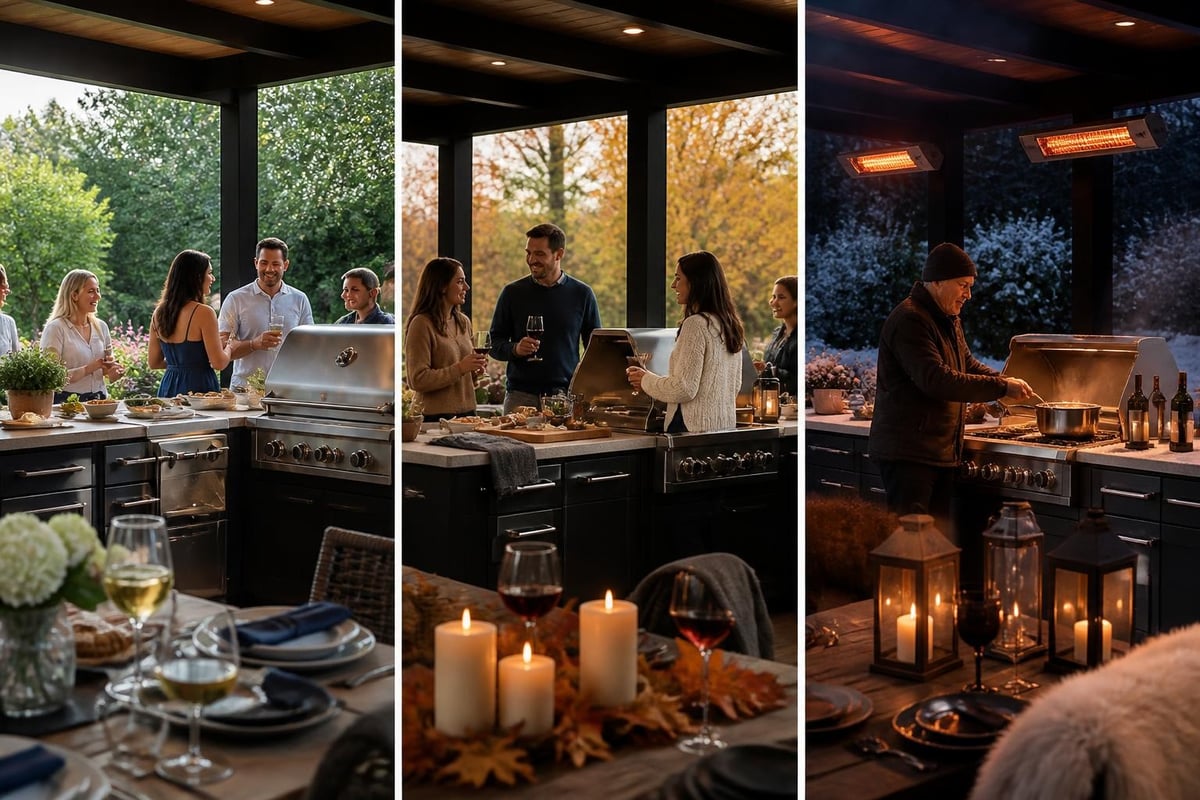
The integration of outdoor covered kitchen structures has become essential for British climates. These architectural elements provide shelter whilst maintaining the open-air ambiance that makes outdoor cooking so appealing. Consider these key developments:
When planning your space, designing an outdoor kitchen requires careful consideration of exposure, orientation, and protection from prevailing winds. The positioning of your outside kitchen directly influences its functionality throughout the seasons.
Creating a refined outside kitchen demands meticulous attention to both aesthetics and performance. Each component serves a specific purpose whilst contributing to the overall design narrative.
| Component | Primary Function | Material Considerations | Design Impact |
|---|---|---|---|
| Cooking Zone | Heat generation, food preparation | Stainless steel, cast iron, ceramic | Defines kitchen character and capability |
| Preparation Surface | Food handling, assembly | Granite, quartz, porcelain | Sets tone for luxury aesthetic |
| Storage Solutions | Equipment housing, weatherproofing | Marine-grade stainless, composite | Ensures longevity and functionality |
| Refrigeration | Ingredient preservation | Built-for-outdoor units | Elevates convenience and hospitality |
| Washing Station | Cleaning, food prep | Integrated sink systems | Completes self-sufficiency |
The heart of any outside kitchen lies in its cooking capability. Premium selections move far beyond basic grills, incorporating diverse cooking methods that expand culinary possibilities.
For those seeking authentic wood-fired cooking experiences, the Alfa Forni Moderno Hybrid Pizza Oven exemplifies versatility and performance. This Italian-crafted piece reaches 500°C in approximately thirty minutes, allowing you to achieve authentic Neapolitan results whilst offering the convenience of LPG gas operation. Such hybrid functionality proves particularly valuable in British settings where weather conditions may influence fuel choice.
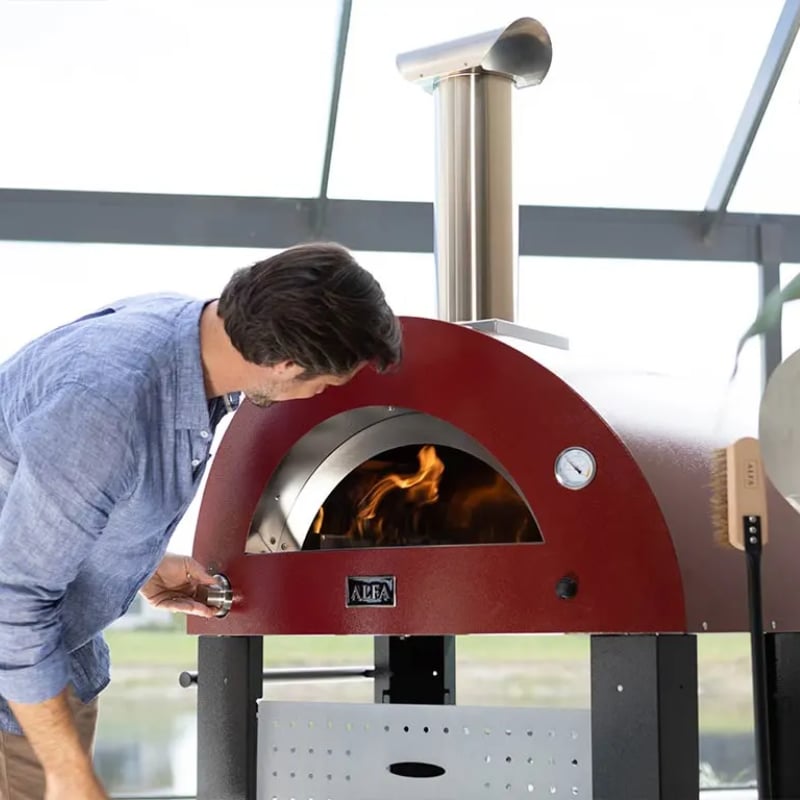
Modern outside kitchens increasingly incorporate multiple cooking zones, each serving distinct purposes. A comprehensive setup might include:
The selection of outdoor grill brands significantly influences both performance and longevity. Premium European manufacturers offer superior build quality, precise engineering, and materials specifically formulated for outdoor environments.
Effective outside kitchen design adapts to available space whilst maximising functionality. Various outdoor kitchen layouts offer solutions for gardens ranging from compact urban terraces to expansive country estates.
Limited square footage demands intelligent planning. The galley-style outside kitchen arranges components along a single axis, creating an efficient workflow within a minimal footprint. This configuration suits terraces, courtyards, and smaller gardens where space constraints require creative solutions.
Key strategies for compact outside kitchens include:
Even small outdoor kitchen designs can deliver remarkable functionality when properly conceived. The secret lies in prioritising essential components and selecting appropriately scaled appliances.
Larger gardens permit L-shaped, U-shaped, or island configurations that create dedicated zones for different activities. These layouts establish natural circulation patterns, separating cooking from serving and allowing multiple people to participate simultaneously.
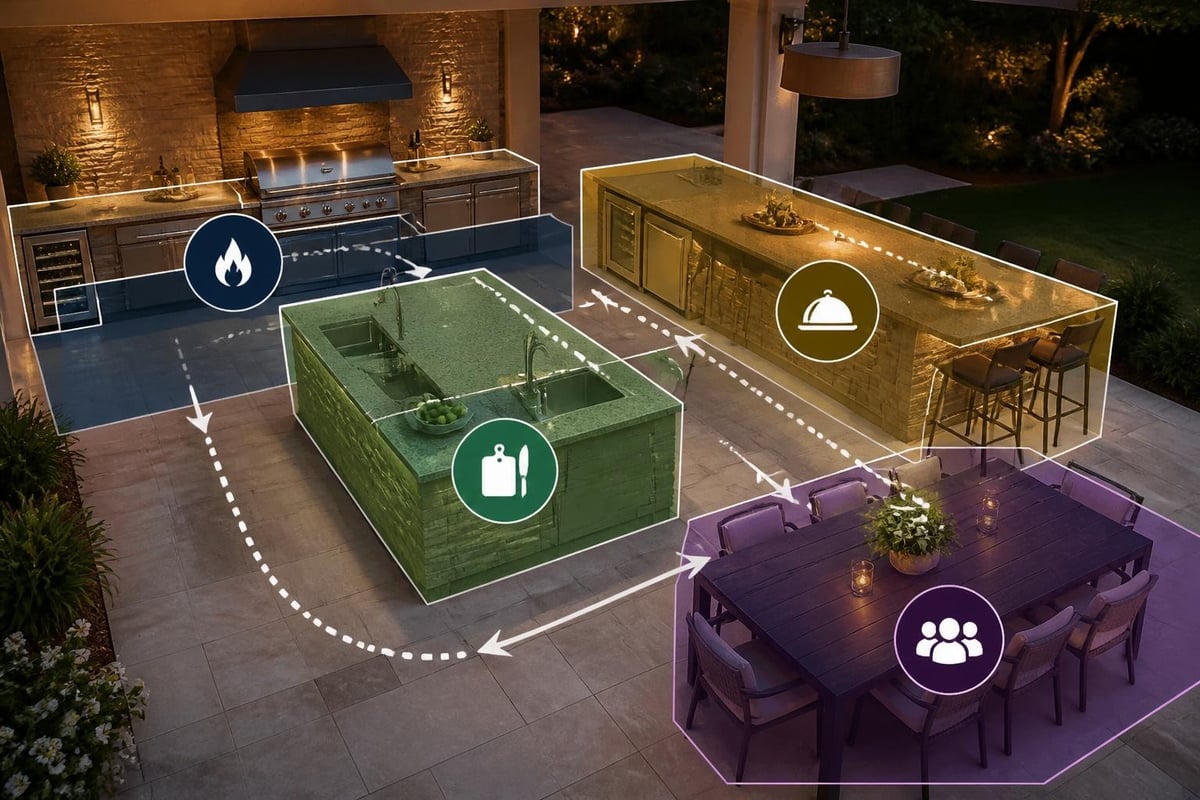
An L-shaped outside kitchen positions cooking appliances along one leg and preparation surfaces along the perpendicular section, creating a natural workspace that shields cooks from wind whilst maintaining visual connection to guests. The U-shaped variant fully encloses the cooking area, providing maximum counter space and storage whilst creating an intimate culinary theatre.
The UK climate presents specific challenges that demand thoughtful material selection. Moisture, temperature fluctuations, and UV exposure all impact outside kitchen longevity.
| Material Type | Durability Rating | Maintenance Level | Aesthetic Quality | Cost Position |
|---|---|---|---|---|
| Marine-grade stainless steel | Exceptional | Low | Contemporary sleek | Premium |
| Natural granite | Excellent | Medium | Classic elegance | Upper-mid |
| Porcelain surfaces | Exceptional | Very low | Versatile modern | Premium |
| Composite cabinetry | Very good | Low | Refined traditional | Mid-premium |
| Teak timber accents | Good | Medium-high | Warm natural | Premium |
Preparation surfaces must withstand temperature extremes, moisture exposure, and constant use. Granite remains popular for its natural beauty and proven durability, whilst engineered quartz offers consistent patterning and non-porous performance. Porcelain slabs have emerged as a contemporary favourite, combining exceptional hardness with resistance to staining, scratching, and UV degradation.
The selection process should account for:
Traditional wooden cabinetry struggles in outdoor environments unless specifically treated and maintained. Modern outside kitchens increasingly favour marine-grade stainless steel, powder-coated aluminium, or high-density polymer cabinets engineered for exterior exposure.
Premium systems incorporate ventilation to prevent moisture accumulation, sealed drawer systems to exclude insects, and adjustable feet to accommodate uneven surfaces. The investment in purpose-built outdoor cabinetry significantly exceeds adapted indoor units, but the performance differential justifies the expenditure.
No outside kitchen achieves true year-round functionality without adequate overhead protection. British weather demands solutions that manage both rainfall and temperature regulation whilst enhancing the overall design aesthetic.
Modern bioclimatic pergolas represent engineering excellence, featuring motorised louvre systems that adjust to prevailing conditions. These structures protect your outside kitchen from rain whilst allowing natural ventilation, preventing the stuffiness that fully enclosed spaces often create.
When selecting pergolas with sides, consider systems that incorporate:
The visual impact of pergola selection cannot be overstated. These structures define the architectural character of your outside kitchen, creating either seamless integration with existing buildings or deliberate contemporary contrast that makes a bold design statement.
Extending usable hours requires thoughtful environmental control. Infrared heaters provide targeted warmth without the wind interference that affects traditional patio heaters. Integrated into pergola structures, these systems operate discreetly whilst delivering effective temperature management.
Layered lighting transforms outside kitchens from daytime cooking spaces into evening entertainment venues. This approach combines:
Aesthetic direction shapes how your outside kitchen integrates with your property's overall character. Various outdoor kitchen design approaches offer distinct visual languages suited to different architectural contexts.
Clean lines, monochromatic palettes, and concealed storage characterise this approach. Handleless cabinetry, integrated appliances, and seamless surfaces create sophisticated simplicity. Stainless steel dominates material selection, often paired with dark granite or concrete-effect porcelain for dramatic contrast.
This aesthetic particularly suits modern architecture, where the outside kitchen becomes a natural extension of interior design philosophy. The emphasis falls on precision, proportion, and restraint rather than ornamentation.
For properties within traditional contexts, outside kitchens can honour local architectural heritage whilst incorporating modern functionality. Natural stone features, timber pergola structures, and earth-toned finishes create harmony with surrounding landscapes.
This approach doesn't mean sacrificing performance. Premium appliances integrate discreetly within traditional frameworks, their technical capabilities concealed behind aesthetically sympathetic facades. The result blends timeless character with contemporary convenience.
Exposed structural elements, raw material textures, and robust proportions define this increasingly popular aesthetic. Blackened steel frames, concrete countertops, and visible fixings celebrate honest construction whilst delivering undeniable presence.
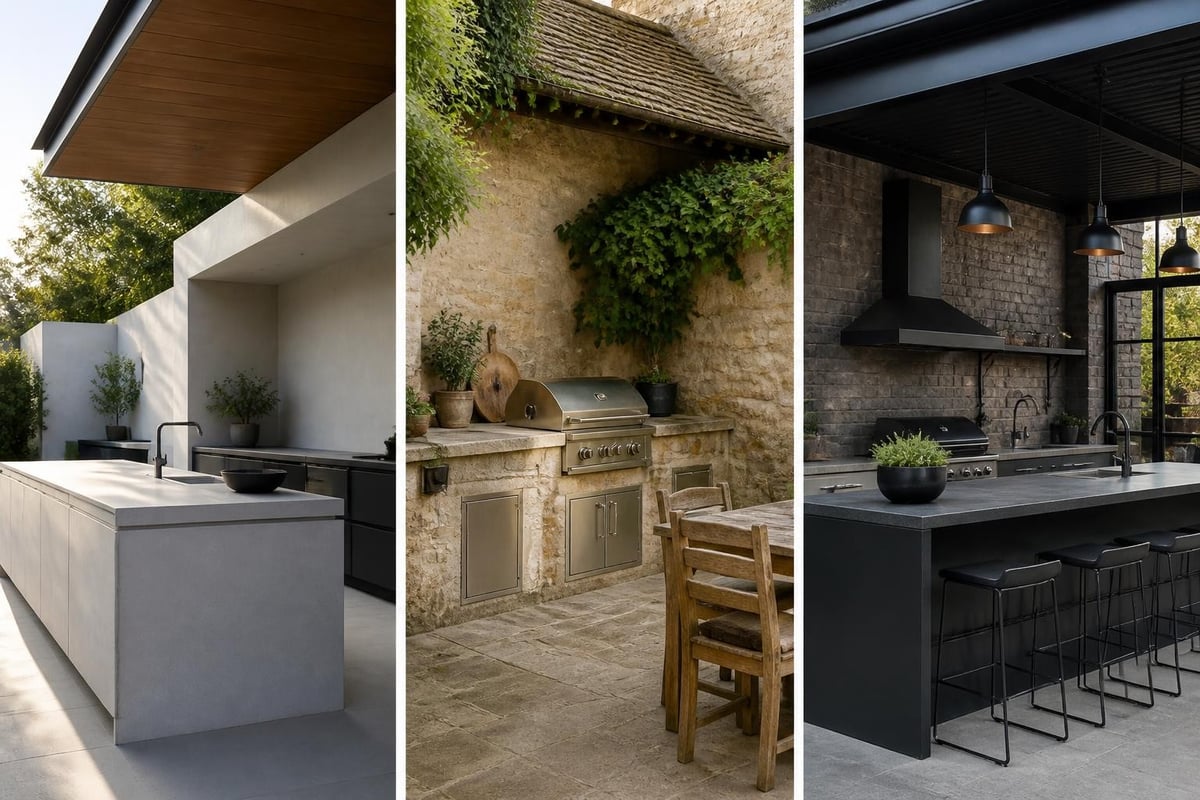
This style particularly appeals to converted properties, urban gardens, and clients seeking distinctive character. The industrial aesthetic proves remarkably versatile, adapting equally well to compact courtyards and expansive terraces.
Successful outside kitchen projects balance aspiration with pragmatism. Several practical factors significantly influence design decisions and long-term satisfaction.
Gas, water, and electrical services must reach your outside kitchen safely and reliably. Early planning prevents costly modifications after construction commences. Consider these infrastructure elements:
Professional installation ensures compliance with UK building regulations whilst protecting against safety hazards. The investment in proper infrastructure far exceeds the cost of remedial work following inadequate initial planning.
The arrangement of components directly affects cooking efficiency and user comfort. The classic work triangle principle applies equally to outside kitchens, positioning cooking, preparation, and cleaning stations within easy reach.
Counter heights deserve particular attention. Standard 900mm heights suit general preparation, whilst cooking surfaces often benefit from slightly lower positioning (850-875mm) for comfortable operation. Integrated seating areas should transition at appropriate heights, creating visual continuity without compromising function.
Equipment requires periodic maintenance, and components eventually need replacement. Design decisions that facilitate access prevent future frustration and expense. Modular construction, removable panels, and adequate clearances around appliances all contribute to long-term serviceability.
Dedicated storage for outdoor kitchen accessories keeps utensils, serving pieces, and cleaning supplies organised whilst protecting them from weather exposure. Built-in solutions integrate seamlessly whilst maintaining visual order.
Outside kitchen projects span enormous price ranges, from modest £5,000 installations to six-figure bespoke creations. Understanding cost drivers helps allocate resources effectively.
| Budget Tier | Investment Range | Typical Inclusions | Best Suited For |
|---|---|---|---|
| Entry-level | £5,000-£15,000 | Basic built-in grill, minimal storage, simple countertop | Occasional users, temporary solutions |
| Mid-range | £15,000-£35,000 | Quality appliances, weather-resistant cabinetry, modest cover | Regular entertainers, serious home cooks |
| Premium | £35,000-£75,000 | Top-tier equipment, comprehensive storage, architectural pergola | Design-conscious clients, year-round use |
| Bespoke luxury | £75,000+ | Fully customised design, imported appliances, integrated landscaping | Discerning homeowners, statement projects |
Limited budgets require strategic prioritisation. Investing in superior cooking appliances and weather-resistant construction delivers better long-term value than spreading resources thinly across numerous features. A smaller outside kitchen built with premium materials outperforms a larger installation using compromised components.
The pergola or cover system represents another critical investment. This element most dramatically affects usability duration, protecting your entire outside kitchen investment whilst defining its architectural presence. Economising here often proves false economy, as inadequate coverage limits functionality precisely when protection matters most.
The British climate demands outside kitchens that adapt gracefully to seasonal transitions. Thoughtful design anticipates these shifts, incorporating features that extend usability without compromising aesthetic integrity.
Warmer months prioritise openness, natural ventilation, and seamless indoor-outdoor flow. Retractable pergola systems fully open to embrace sunshine, whilst side panels remain stored. This configuration maximises connection to surrounding gardens, transforming the outside kitchen into a true al fresco environment.
Cooling becomes relevant during occasional heatwaves. Adequate shade provision, whether through adjustable louvres or retractable awnings, maintains comfortable temperatures without artificial cooling. Strategic planting around the perimeter offers natural climate moderation whilst enhancing visual appeal.
Cooler months reveal the true value of comprehensive weather protection. Enclosed sides block wind whilst maintaining views, and overhead coverage ensures cooking continues regardless of precipitation. Integrated heating transforms spaces that might otherwise sit dormant, extending the entertaining season well into winter.
The aperitivo corner trend offers an interesting alternative approach for those seeking lower-maintenance options. However, fully realised outside kitchens provide more substantial capabilities for serious cooking enthusiasts who refuse to abandon outdoor culinary pursuits when temperatures drop.
Whilst DIY enthusiasts may tackle basic outdoor cooking setups, luxury outside kitchens benefit enormously from professional expertise. Specialist designers bring spatial planning abilities, technical knowledge, and access to premium products that dramatically elevate final results.
Professional designers assess your specific site conditions, understanding microclimates, exposure, and existing architectural context. This analysis informs layout decisions, material selections, and specification choices that generic solutions cannot address. The consultative process explores lifestyle patterns, entertaining preferences, and aesthetic aspirations, translating these intangibles into concrete design parameters.
Detailed technical drawings prevent costly installation errors whilst ensuring regulatory compliance. These documents communicate precisely with contractors, specifying dimensions, materials, and construction methodologies that leave nothing to interpretation.
Access to trade-only brands and established relationships with premium manufacturers allows specialists to source equipment unavailable through consumer channels. This access extends beyond mere availability-it encompasses technical support, warranty administration, and long-term parts availability that protects your investment.
European manufacturers dominate the luxury outside kitchen sector, with brands such as Grillandia, Whistler, Renson, Morvelle, and Deponti offering performance and aesthetics unavailable from mass-market alternatives. Navigating these options requires familiarity with specifications, lead times, and installation requirements that experienced consultants provide.
Coordinating multiple trades-groundworks, utilities, construction, installation, and landscaping-demands project management expertise. Professional services assume this responsibility, maintaining schedules, managing contractors, and ensuring quality throughout the process. This oversight proves particularly valuable for complex projects incorporating architectural structures, extensive utility work, or integration with broader landscape renovations.
Different regions within the UK present distinct challenges and opportunities for outside kitchen design. Coastal locations contend with salt air corrosion, requiring enhanced material specifications. Urban environments may face space constraints but offer protected microclimates. Rural settings provide expansive canvases but encounter greater weather exposure.
Properties throughout Oxfordshire and the surrounding Cotswolds benefit from architectural heritage that informs outside kitchen aesthetics. Local stone, whether actual or replicated in contemporary materials, creates visual harmony with existing structures. Timber elements reference traditional outbuilding construction whilst supporting modern pergola systems.
The region's design-conscious community appreciates refined details and quality craftsmanship, making it particularly receptive to luxury outside kitchen installations. This cultural context supports investments in premium products and bespoke solutions that might seem excessive elsewhere.
Strategic planning considers not only immediate requirements but also evolving needs and technological advances. Building flexibility into your outside kitchen design protects against obsolescence whilst accommodating changing circumstances.
Specification systems that accommodate component upgrades or additions provide inherent adaptability. Starting with core functionality whilst planning for future expansion allows phased investment aligned with budget availability. This approach proves particularly valuable for younger families whose entertaining patterns and culinary ambitions evolve over time.
Infrastructure planning should exceed immediate requirements, providing capacity for additional appliances, expanded lighting, or enhanced connectivity. The marginal cost of oversized utility services during initial construction far undercuts later retrofitting expenses.
Smart controls increasingly manage outside kitchen functions, from temperature monitoring to lighting scenes. Designing infrastructure that accommodates these technologies without dependence upon them creates flexibility. Homeowners can adopt innovations as they mature without major reconstruction.
Voice control, automated weather responses, and remote monitoring represent capabilities available today, with further advances certain. Ensuring your outside kitchen can incorporate these features maintains its contemporary relevance throughout decades of use.
Designing an outside kitchen that truly elevates your property requires balancing aesthetic vision with technical precision, selecting materials engineered for British conditions, and specifying appliances that deliver professional performance. Whether you're envisioning a compact terrace installation or an expansive estate kitchen, success lies in thoughtful planning and expert execution. Cotswold Cooking Company brings decades of experience transforming outdoor spaces into refined culinary destinations, offering comprehensive design consultancy, access to Europe's finest cooking equipment and pergola systems, and complete installation services tailored to discerning clients throughout the UK.

Leave a comment