


When designing a luxury outdoor cooking space, the choice of barbecue material fundamentally shapes both aesthetic coherence and long-term performance. The stainless steel BBQ has emerged as the definitive choice for discerning homeowners and designers across the UK, combining exceptional durability with architectural refinement. This material transcends mere functionality-it represents a commitment to quality, weather resistance, and timeless design that aligns perfectly with contemporary outdoor living standards. Understanding the nuances of stainless steel construction, maintenance requirements, and design integration ensures your investment delivers decades of reliable performance whilst enhancing property value.
The quality of a stainless steel BBQ varies dramatically based on the grade of material used and manufacturing precision. Premium outdoor cooking equipment typically employs 304 or 316 stainless steel, each offering distinct advantages for UK climates.
Not all stainless steel delivers equal performance. The numbering system indicates alloy composition, with higher nickel and chromium content providing superior corrosion resistance.
304 stainless steel contains approximately 18% chromium and 8% nickel, offering excellent resistance to atmospheric corrosion and suitable for most UK outdoor environments. This grade represents the minimum acceptable standard for quality outdoor cooking equipment.
316 stainless steel incorporates molybdenum alongside chromium and nickel, delivering enhanced protection against chloride corrosion-particularly valuable in coastal regions or areas with high humidity. This marine-grade material justifies its premium positioning through exceptional longevity.
| Grade | Chromium | Nickel | Molybdenum | Corrosion Resistance | Typical Application |
|---|---|---|---|---|---|
| 304 | 18% | 8% | None | Excellent | General outdoor use |
| 316 | 16% | 10% | 2-3% | Superior | Coastal/marine environments |
| 430 | 16% | None | None | Moderate | Budget applications |
The fabrication technique significantly influences structural integrity and heat distribution. Seamless construction eliminates weak points where moisture might penetrate, whilst precision welding ensures consistent heat flow across cooking surfaces.
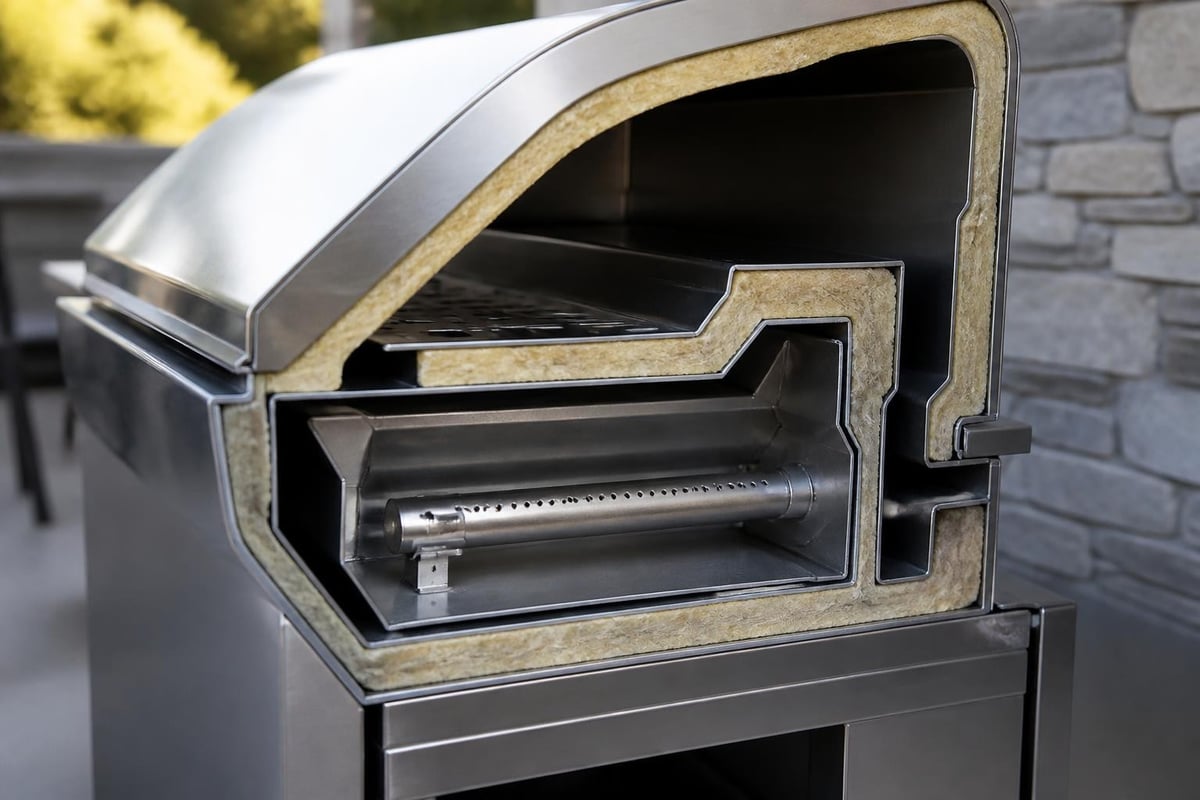
Premium manufacturers employ double-walled construction with air gaps or insulation between layers, improving heat retention whilst keeping external surfaces cooler to touch. This engineering detail separates professional-grade equipment from consumer alternatives.
A stainless steel BBQ functions as both culinary tool and architectural element within outdoor covered kitchens. The material's reflective properties and clean geometry complement contemporary design languages whilst remaining sufficiently neutral for traditional settings.
The brushed finish common on premium stainless steel BBQs reduces glare whilst minimizing the appearance of fingerprints and minor scratches. This practical surface treatment maintains visual appeal with minimal intervention.
When specifying equipment for integrated outdoor kitchens, consider how stainless steel interacts with surrounding materials:
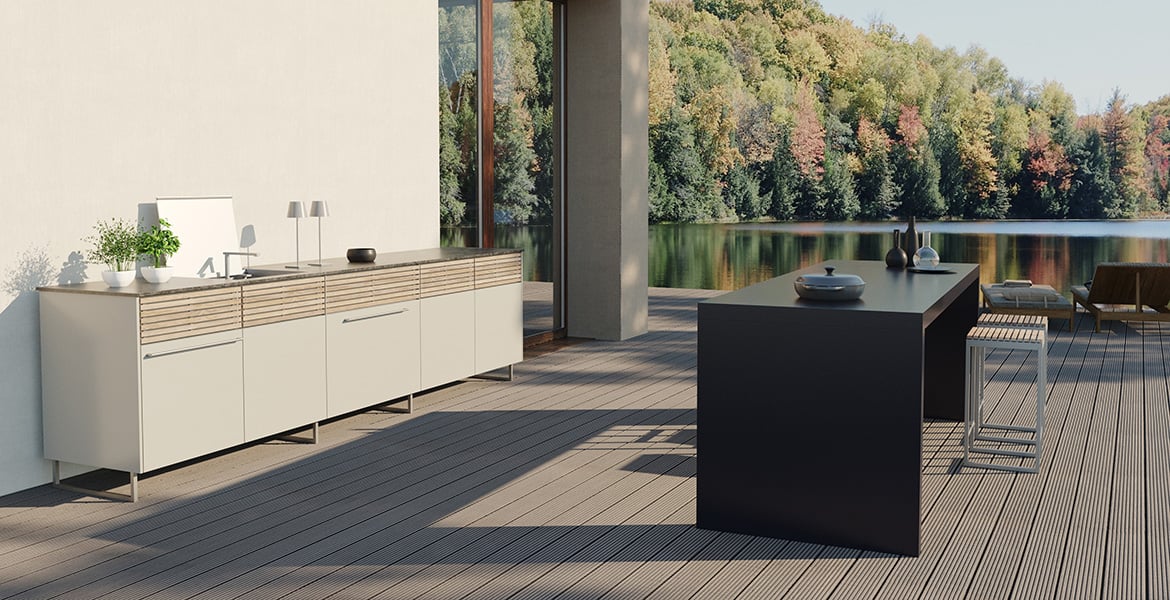
Modern stainless steel BBQ systems embrace modularity, allowing configurations that adapt to spatial constraints and culinary requirements. Built-in units integrate seamlessly with outdoor kitchen accessories including refrigeration, storage, and preparation zones.
The Cubic C1 Style Outdoor Kitchen exemplifies this integrated approach, where premium stainless steel construction forms the foundation of a complete outdoor culinary environment. Its modular design accommodates BBQ grills, side burners, and storage within a cohesive architectural framework.
Beyond aesthetic appeal, a stainless steel BBQ must deliver consistent thermal performance across diverse cooking techniques. Material thickness, burner quality, and heat distribution mechanisms determine practical capability.
Burner configuration fundamentally influences cooking versatility. Premium stainless steel BBQs incorporate multiple independently controlled burners, enabling simultaneous direct grilling and indirect roasting. Look for:
Whilst the BBQ body uses stainless steel, cooking grates may employ different materials. Comparing cast iron and stainless steel grill grates reveals distinct advantages for each material depending on cooking preferences.
Stainless steel grates require less maintenance and resist rust, though they may not retain heat as effectively as cast iron alternatives. Premium models use thick-gauge stainless rod construction providing adequate thermal mass whilst simplifying cleaning protocols.
The durability reputation of stainless steel BBQs depends entirely on appropriate maintenance practices. Even marine-grade materials require regular attention to preserve appearance and prevent degradation.
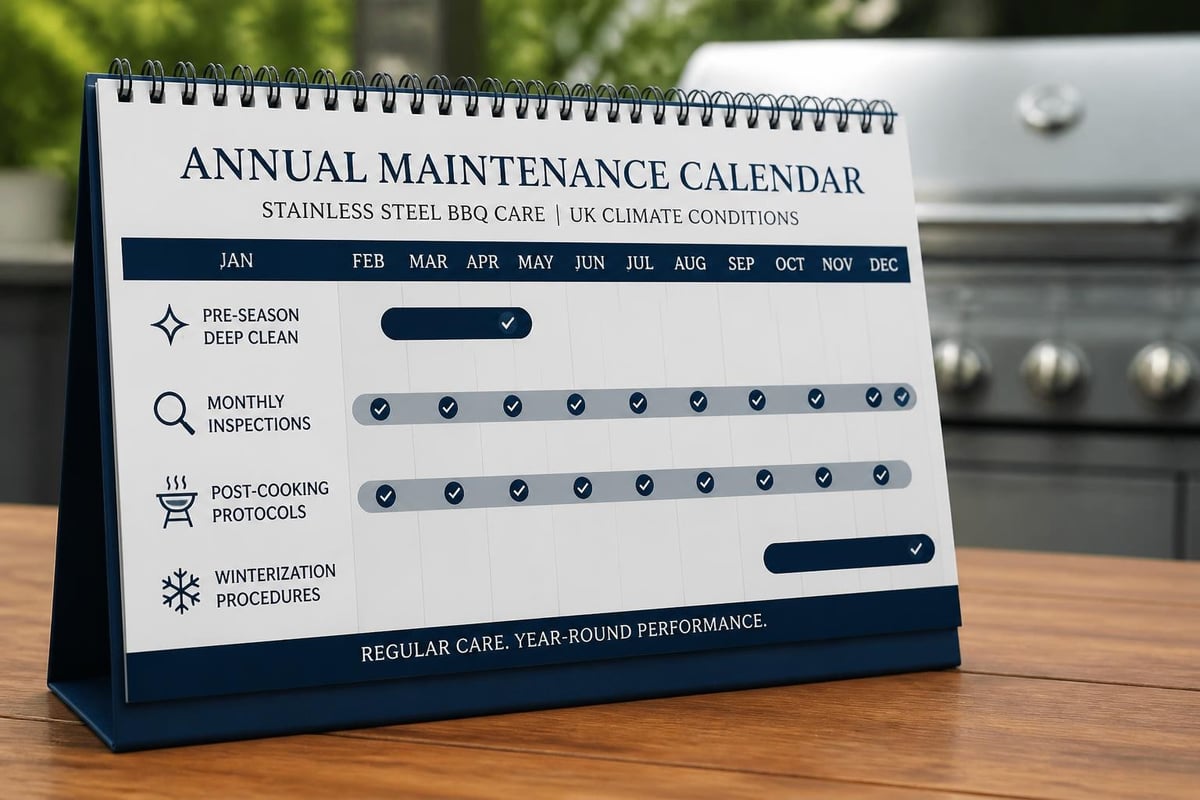
Establishing a consistent cleaning routine prevents buildup that can harbour moisture and accelerate corrosion. Professional guidance on cleaning stainless steel grills emphasizes gentle techniques that preserve surface integrity.
After each cooking session:
Monthly deep cleaning should include:
Contrary to popular belief, stainless steel can stain, scratch, and corrode without proper care. Maintaining stainless steel surfaces requires understanding the material's vulnerabilities.
Avoid these common mistakes:
Instead, clean with the grain direction using pH-neutral products specifically formulated for stainless steel. For stubborn residue, natural cleaning methods using baking soda pastes or white vinegar solutions prove surprisingly effective without risking surface damage.
UK weather patterns present unique challenges for outdoor cooking equipment. Temperature fluctuations, persistent moisture, and coastal air quality all influence the longevity of a stainless steel BBQ.
Quality covers represent minimum protection, but comprehensive weather resistance requires integrated design thinking. When planning outdoor grills within covered structures, consider overhead protection as essential rather than optional.
Premium solutions include:
| Protection Method | Weather Resistance | Aesthetic Impact | Cost Consideration |
|---|---|---|---|
| Quality fitted covers | Moderate | Minimal | Low |
| Integrated cabinetry with doors | High | Seamless | Moderate |
| Permanent roofed structures | Excellent | Architectural | High |
| Retractable canopy systems | Very high | Sophisticated | Premium |
Even with overhead protection, seasonal preparation extends equipment life significantly. Before extended periods of non-use:
Properties utilizing outdoor grills and smokers year-round should consider architectural protection ensuring equipment remains accessible regardless of weather conditions.
Whilst stainless steel dominates the premium segment, understanding alternative materials provides context for informed decision-making. Each option presents distinct advantages depending on priorities and budget parameters.
Cast aluminium offers lightweight construction with excellent heat distribution but lacks the structural rigidity and prestige of stainless steel. Powder-coated finishes require eventual refreshing as UV exposure degrades surface treatments.
Porcelain-enamelled steel provides affordable weather resistance but chips and scratches expose underlying metal to corrosion. This construction method suits budget-conscious applications rather than luxury installations.
Cast iron components within predominantly stainless steel BBQs deliver exceptional heat retention for specific cooking zones. Hybrid approaches combining materials leverage the strengths of each whilst managing costs.
The comparison between materials becomes particularly relevant when selecting grill grates, where cast iron versus stainless steel considerations influence both cooking performance and maintenance requirements.
The choice between gas, charcoal, or hybrid systems affects both cooking experience and practical requirements within outdoor kitchen designs. Stainless steel construction accommodates all fuel types, though implementation details vary significantly.
Natural gas or LPG installations provide immediate heat control and consistent temperatures ideal for precise cooking. Premium stainless steel BBQs incorporate sophisticated burner systems with multiple heat zones.
Benefits include:
Specification requires consideration of gas supply infrastructure. Natural gas connections demand professional installation with appropriate safety compliance, whilst LPG bottles require secure storage and regular replacement.
Enthusiasts preferring authentic smoke flavour often select charcoal-capable stainless steel BBQs despite increased maintenance demands. Hybrid systems offering both gas convenience and charcoal authenticity represent the ultimate flexibility, though at premium price points.
For those prioritizing wood-fired flavour profiles, dedicated pizza ovens complement rather than replace gas BBQ installations within comprehensive outdoor kitchens.
Proper installation fundamentally determines the long-term satisfaction derived from a stainless steel BBQ. Whether specifying freestanding units or built-in configurations, attention to detail during installation prevents future complications.
Integrated stainless steel BBQs require careful attention to:
Ventilation clearances: Manufacturer specifications dictate minimum distances from combustible materials. Premium units with insulated construction may permit closer proximity to cabinetry, but never compromise safety for aesthetics.
Utility connections: Gas lines require qualified installation with leak testing and appropriate shut-off valves. Electrical supplies for ignition systems and lighting demand weatherproof connections meeting relevant UK standards.
Structural support: Built-in BBQs impose significant weight on supporting cabinetry or masonry. Ensure foundations and framework accommodate equipment mass plus fuel supplies and outdoor kitchen accessories stored within adjacent modules.
Premium freestanding stainless steel BBQs on wheeled carts offer installation flexibility whilst maintaining sophisticated appearance. Quality units incorporate:
Position freestanding units on stable, level surfaces-ideally porcelain paving or concrete pads rather than loose gravel that may shift over time.
The luxury outdoor cooking market offers extensive choice, making brand selection and specification decisions potentially overwhelming. Focusing on provenance, warranty coverage, and after-sales support narrows options effectively.
Premium brands often originate from regions with established outdoor living cultures. German, Italian, and Scandinavian manufacturers bring engineering precision and design sensibility aligned with luxury UK installations.
When evaluating stainless steel BBQ options, consider:
Specialists such as Cotswold Cooking Company curate collections from manufacturers meeting rigorous quality standards, simplifying the selection process whilst ensuring appropriate specification for UK conditions.
Sustainability increasingly influences luxury purchasing decisions. Stainless steel BBQs offer inherent environmental advantages compared to alternative materials, though operational choices also impact ecological footprint.
Stainless steel recyclability approaches 100%, with the material retaining full properties through multiple recycling cycles. Premium BBQs built from 304 or 316 grade stainless steel maintain value at end-of-life, contributing to circular economy principles.
Longevity represents the most significant sustainability factor. A properly maintained stainless steel BBQ delivers 15-25 years of service, dramatically reducing embodied carbon compared to frequent replacement of lower-quality alternatives.
Modern stainless steel BBQs incorporate features reducing energy consumption and emissions:
Selecting appropriately sized equipment prevents the wastefulness of oversized BBQs operating inefficiently for typical household requirements.
Premium stainless steel BBQs represent significant investment, with quality built-in units ranging from £2,500 to £15,000 depending on size, specification, and brand positioning. Understanding total cost of ownership justifies initial outlay.
| Factor | Budget Impact | Specification Considerations |
|---|---|---|
| Stainless steel grade | High | 316 commands 20-30% premium over 304 |
| Burner quantity and quality | Moderate | Each additional burner adds £300-800 |
| Cooking surface area | High | Cost increases exponentially with size |
| Brand prestige | Variable | Established names carry 15-40% premium |
| Integrated features | Moderate | Rotisserie, lighting, side burners add £200-600 each |
Depreciation rates for premium stainless steel BBQs compare favorably to alternative outdoor investments. Quality units retain 40-60% of original value after five years, whilst enhancing overall property appeal.
Maintenance costs remain modest with appropriate care. Annual deep cleaning and occasional component replacement (igniters, burner covers) typically total £100-200 across a decade of ownership.
Energy efficiency improvements in modern stainless steel BBQs reduce operational costs by 15-25% compared to equipment from previous generations, offsetting initial premium through reduced fuel consumption.
Contemporary stainless steel BBQs increasingly incorporate technology enhancing convenience and cooking precision. Whilst traditional enthusiasts may resist digital integration, smart features deliver measurable benefits for luxury outdoor kitchens.
Wireless probe thermometers eliminate guesswork, ensuring proteins reach precise internal temperatures without constant attention. Premium systems monitor multiple probes simultaneously, ideal for entertaining scenarios requiring concurrent cooking of various items.
Integrated temperature displays provide real-time surface temperature feedback, enabling confident heat zone management for different cooking techniques.
Mobile application integration allows remote monitoring and control, though practical utility varies based on cooking style and outdoor kitchen proximity to living spaces. Features include:
Evaluate whether technological sophistication aligns with actual usage patterns before paying premiums for features that may remain underutilized.
The UK's diverse geography and climate variations influence optimal stainless steel BBQ specifications. Coastal properties face different challenges than inland locations, whilst urban environments present distinct considerations from rural settings.
Properties within five miles of coastline should prioritize 316 stainless steel construction throughout, not merely on visible surfaces. Salt-laden air accelerates corrosion on inferior grades, potentially compromising structural integrity within 3-5 years.
Additional protective measures for coastal installations include:
Urban environments, particularly London and industrial regions, expose outdoor cooking equipment to airborne pollutants that can stain and degrade stainless steel surfaces. Effective stainless steel cleaning techniques become particularly important in these contexts.
Quarterly deep cleaning becomes monthly necessity in heavily polluted areas, whilst protective waxes specifically formulated for stainless steel help resist atmospheric contamination between maintenance sessions.
Selecting and maintaining a stainless steel BBQ requires understanding material science, design integration, and regional environmental factors specific to UK installations. Premium equipment represents investment in decades of exceptional outdoor cooking when specified appropriately and maintained conscientiously. Whether you're planning a comprehensive outdoor culinary space or upgrading existing equipment, Cotswold Cooking Company provides expert consultative guidance, hand-selected premium brands, and complete installation support-transforming outdoor areas into refined, year-round cooking destinations that blend Cotswold heritage with modern performance.

Leave a comment