


A gazebo is a freestanding, roofed garden structure that gives shade and shelter, and the best choice for most UK gardens is a heavy-duty aluminium pop up model with a waterproof roof. For year-round use, a permanent pergola is the better investment. This guide compares ten well-regarded pop up gazebos by size, frame thickness and approximate price, then explains how to choose between temporary and permanent cover.
A gazebo is an open-sided or partly enclosed canopy structure designed to provide shelter for seating, dining or cooking areas. In the UK there are three broad types: pop up gazebos, fixed or hardtop gazebos, and permanent pergolas or bioclimatic structures.
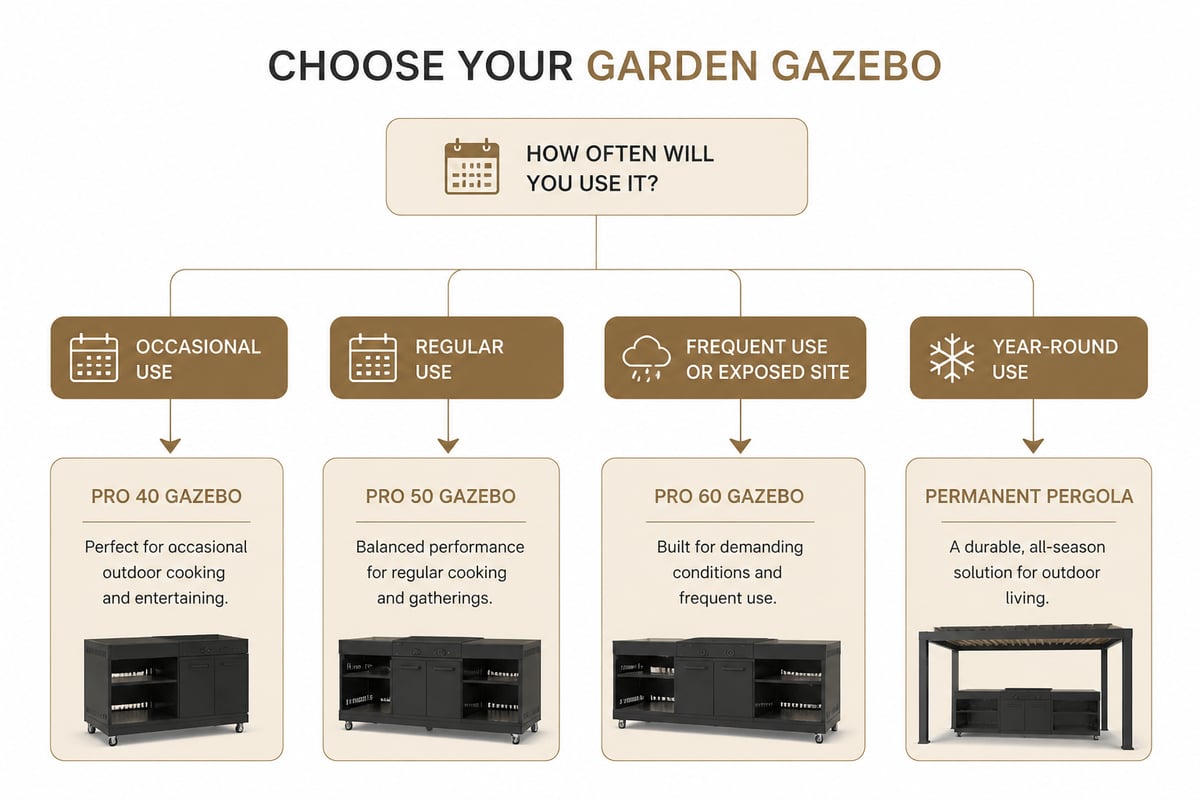
Pop up models suit gardens where cover is needed for a season or an event. Fixed structures suit owners who want a permanent feature. The choice depends on how often you will use the space, how much wind your garden sees, and whether you want the structure to stay up through winter.
The frame determines how long a gazebo lasts, and thicker aluminium legs with reinforced joints cope far better with British gusts than thin steel.
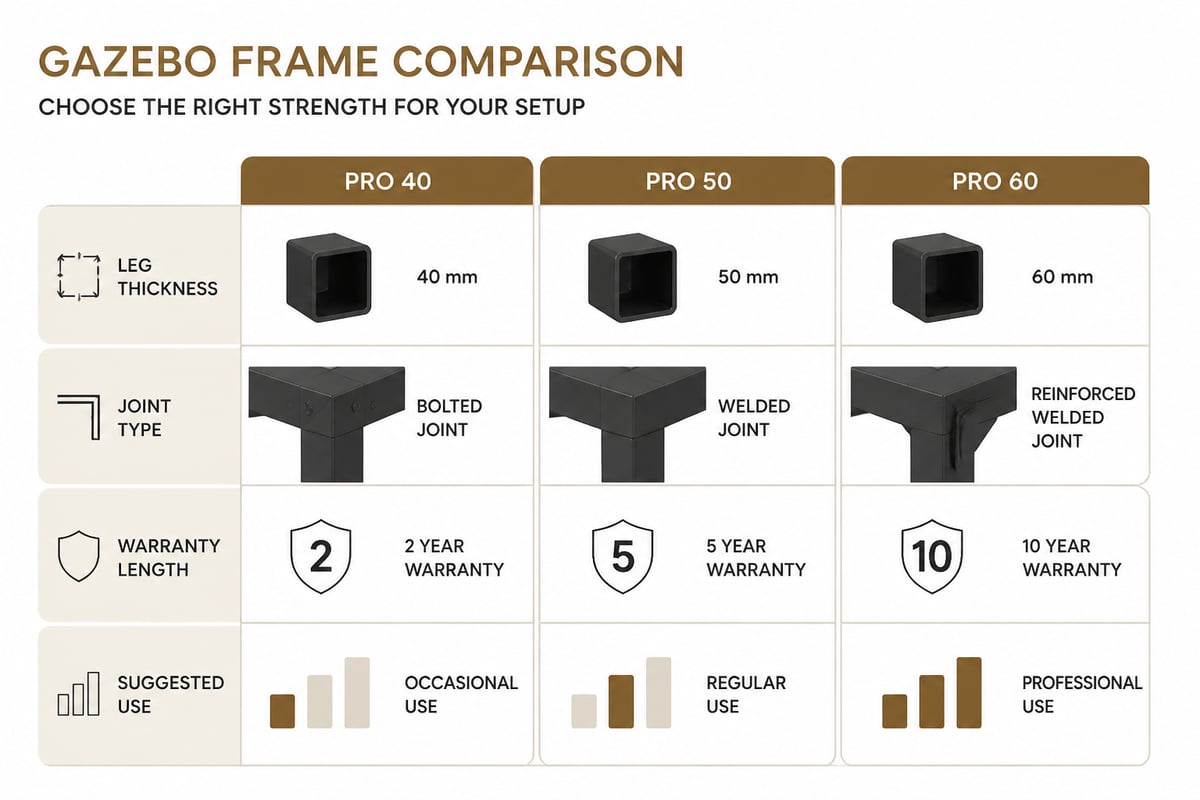
Gala Tent lists its Pro ranges at three frame grades. The Pro 40 uses a 40 mm hexagonal aluminium framework with hammer-tested joints and a 3-year frame warranty. The Pro 50 steps up to 50 mm legs with a 5-year warranty, and the Pro 60 moves to 60 mm legs with double-reinforced truss joints.
Consider these points in order:
This is the entry-level model in the Pro range, built on a 40 mm hex aluminium framework with a 3-year frame warranty. Its listed price is £356.99.
Verdict: a sensible starter gazebo for light, seasonal use.
This model extends the Pro 40 footprint for a medium patio, keeping the same 40 mm hex aluminium frame and 3-year frame warranty. It is listed at £465.99.
Verdict: good value for sheltered gardens and summer entertaining.
The 3 m × 6 m Pro 40 provides a long, sheltered space for larger gatherings or stalls. Gala Tent lists it at £623.99 with a 40 mm hex aluminium frame, hammer-tested joints and a waterproof 600D PVC-coated canopy.
Verdict: the Pro 40 at its most generous, best in calm conditions.
A sturdier compact gazebo, this model uses 50 mm hex aluminium legs and reinforced profile joints. Gala Tent lists it at £445.99.
Verdict: the best small gazebo here for repeated setting up and taking down.
This mid-size Pro 50 balances coverage and strength, with 50 mm hex legs and reinforced joints. It is listed at £615.99.
Verdict: a dependable all-rounder for homeowners who use their gazebo every weekend.
The long-format Pro 50 covers a generous seating or display area on the stronger 50 mm frame. It is listed at £791.99.
Verdict: the frame upgrade over the Pro 40 3 m × 6 m is worth it for exposed gardens.
This wide format suits larger lawns and gatherings that need broad coverage. It is listed at £965.99.
Verdict: a substantial structure that rewards careful anchoring.
The largest Pro 50 listed here offers a long covered area for big gatherings. Its listed price is £1,254.99.
Verdict: impressive scale, though it needs several people to erect safely.
The Pro 60 uses 60 mm hex aluminium legs and double-reinforced truss joints for the most rigid frame in this list. It is listed at £1,064.99.
Verdict: the choice for exposed sites and owners who expect years of repeated use.
This is the heaviest-duty option here, pairing the 60 mm frame with a very large canopy. Its listed price is £1,510.99.
Verdict: more than most gardens need, but unmatched here for scale and strength.
Only a permanent structure should stay up through a British winter, because pop up gazebos are designed for seasonal or occasional use. Snow load, sustained wind and prolonged rain stress fabric roofs and folding joints.
A pergola with a fixed or adjustable roof is the natural answer. Many UK homeowners who begin with a pop up gazebo eventually move to a pergola once they commit to an outdoor kitchen or dining area. Our guide to pergolas and gazebos explains the structural differences, and the notes on a metal roof gazebo cover a hardtop middle ground.
For readers who want a gazebo-style space that works in every season, the Tarasola Technic bioclimatic pergola is a premium, architectural, European-made structure available through Cotswold Cooking Company. It is a bespoke build for design-conscious buyers, so a fixed price is not shown online; Cotswold Cooking Company offers a consultative design process and professional installation of pergolas, verandas and canopies.
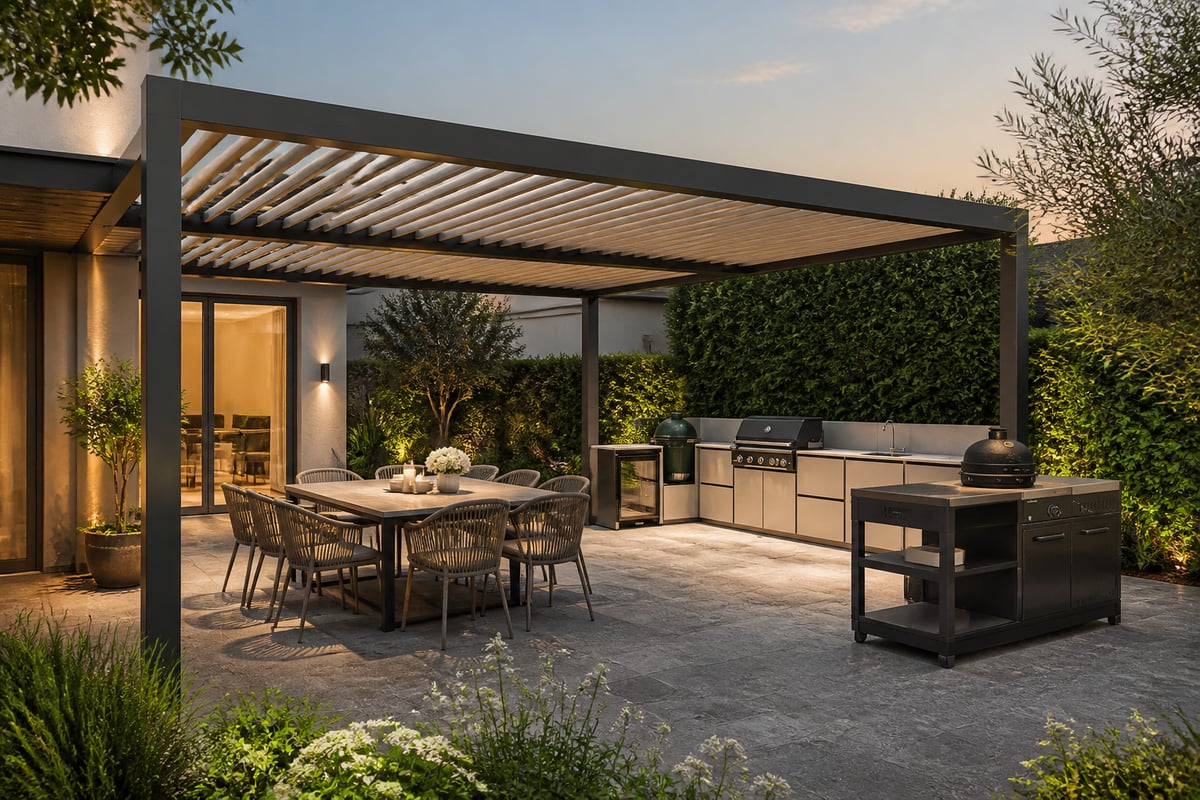
Verdict: the step up when a gazebo is no longer enough and the space deserves to be part of the home.
Model Size Frame Approx. price Best use
Pro 40 (White) 3 m × 3 m 40 mm hex aluminium £356.99 Compact seating, occasional use
Pro 40 (Black) 3 m × 4.5 m 40 mm hex aluminium £465.99 Medium patio gatherings
Pro 40 (Yellow) 3 m × 6 m 40 mm hex aluminium £623.99 Long tables, stalls
Pro 50 (Orange) 3 m × 3 m 50 mm hex aluminium £445.99 Frequent compact use
Pro 50 (Purple) 3 m × 4.5 m 50 mm hex aluminium £615.99 Regular entertaining
Pro 50 (Blue) 3 m × 6 m 50 mm hex aluminium £791.99 Long seating areas
Pro 50 (Green) 4 m × 6 m 50 mm hex aluminium £965.99 Larger gardens
Pro 50 (Red) 4 m × 8 m 50 mm hex aluminium £1,254.99 Large gatherings
Pro 60 (Taupe) 3 m × 6 m 60 mm hex aluminium £1,064.99 Frequent, exposed sites
Pro 60 (Leaftree) 4 m × 8 m 60 mm hex aluminium £1,510.99 Large professional events
Tarasola bioclimatic pergola Bespoke Architectural, permanent On consultation All-season outdoor living
Further sizes and colours are listed on Gala Tent's commercial gazebo page, and its Pro 50 product page shows the Pro 50 in more detail.
In most cases a freestanding gazebo falls under permitted development in England and does not need planning permission, but conditions apply. Typically the structure should sit in the rear garden and stay below set height limits. Listed buildings, conservation areas and properties with removed permitted development rights may have stricter rules.
Always check with your local planning authority before building anything permanent. A temporary pop up gazebo rarely raises concerns, while a fixed pergola attached to the house is more likely to need consent.
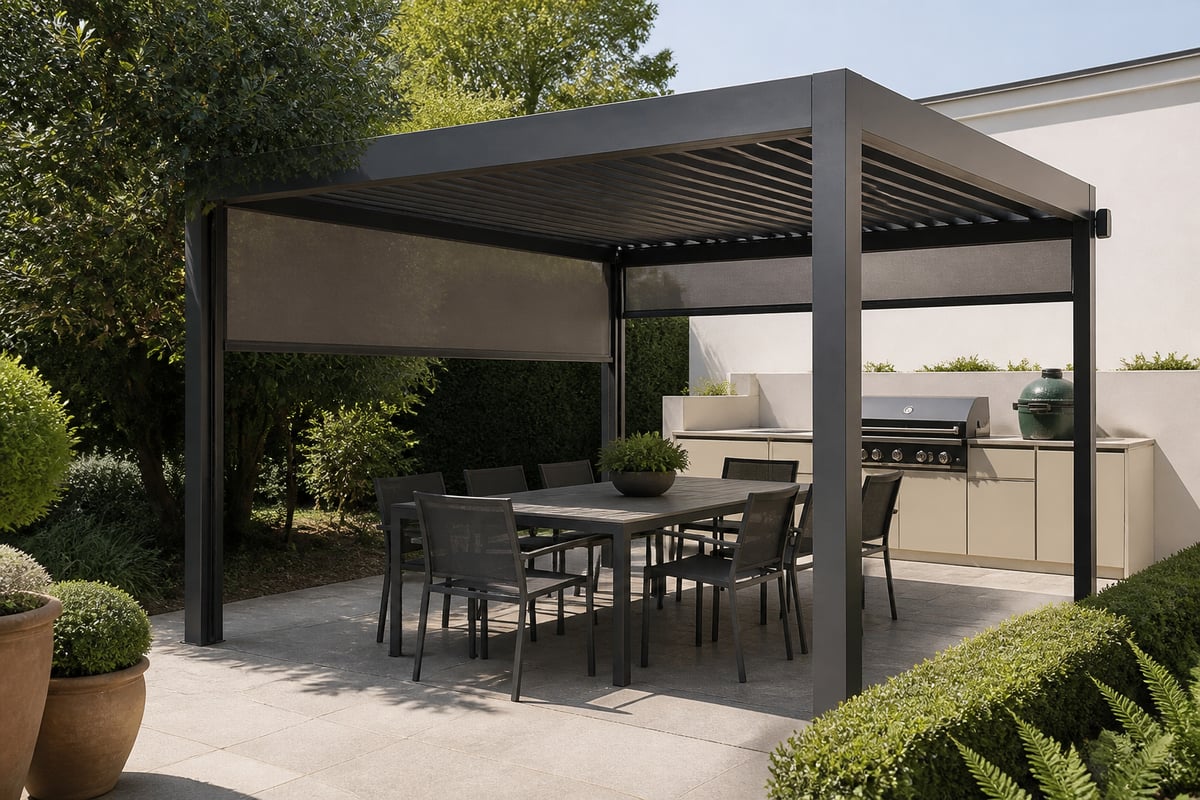
A pergola is usually better than a gazebo when you want durable, year-round cover, particularly over a cooking or dining zone. Louvred and bioclimatic roofs adjust to sun and rain, and a fixed frame handles wind far better than a folding one.
For a covered outdoor kitchen, a permanent structure also allows safe placement of grills, pizza ovens and lighting. Our notes on patio gazebos and the retractable gazebo show how these options compare. Cotswold Cooking Company offers professional installation of pergolas, verandas and canopies, and clients can view outdoor kitchens by appointment at Thorpe Manor.
Keep a gazebo canopy well clear of any open flame, as fabric roofs and live grills do not mix. Position the barbecue outside the structure's edge, or choose a fixed pergola designed with ventilation for cooking beneath it.
Our article on BBQ gazebo options explains safe layouts in more depth.
With regular care, a good aluminium-framed gazebo can last many seasons. Frame warranties run from three years on the Pro 40 to five years on the Pro 50 and Pro 60, according to Gala Tent.
It is not advisable. Fabric roofs and folding joints are not designed for snow load or prolonged storms, so dry and store the canopy and frame until spring.
A 3 m × 3 m gazebo suits a small table, but a 3 m × 4.5 m gives comfortable space for six seats with room to move around the chairs.
Start by measuring your patio and noting how often you will realistically use it, then match that to a frame grade or a permanent structure. If you are weighing a pop up against a lasting investment, explore the Tarasola bioclimatic pergola and speak to the team at Cotswold Cooking Company about designing and installing your chosen outdoor space.

Leave a comment