


A gazebo metal frame is the sensible choice when you want a permanent, wind-resistant shelter that will last for decades, and steel or aluminium with a quality protective finish is what you should look for. Steel offers the greatest strength and the most traditional appearance, while aluminium gives a lighter, rust-free alternative with a more contemporary profile. For a premium garden, the decision rests on five things: the frame material, its coating, the roof, how it is anchored, and how well it works with the cooking and dining space beneath it.
This guide takes you through each of those decisions in turn, with a particular focus on homeowners planning a barbecue area or outdoor kitchen.
A metal gazebo is a freestanding, roofed garden structure with a steel or aluminium frame, designed to provide shelter and a defined sitting or cooking area. The roof is typically solid or fabric, and the structure may be open-sided or fitted with screens.
A pergola, by contrast, usually has an open or slatted roof and is often attached to the house. In practice the two terms overlap, and modern bioclimatic pergolas with adjustable louvres now deliver the weather protection once associated only with gazebos. If you are weighing the two, our overview of pergolas and gazebos sets out where each suits a garden best.
The practical distinction for most homeowners is permanence. A gazebo metal structure with a fixed or louvred roof is a lasting addition to the garden, not a seasonal pop-up, and should be specified accordingly.
Steel is the strongest and most cost-effective option, aluminium is the lightest and naturally rust-resistant, and wrought iron is the most ornate but the most demanding to maintain. The right choice depends on span, style and how exposed your garden is.
| Material | Strength | Weight | Corrosion behaviour | Typical style |
|---|---|---|---|---|
| Steel (galvanised or powder coated) | Very high | Heavy | Needs protective coating | Traditional or industrial |
| Aluminium (powder coated) | High for its weight | Light | Does not rust | Contemporary, slim profiles |
| Wrought iron | High | Very heavy | Prone to rust without upkeep | Ornate, period |
Aluminium is often the better fit for large spans and louvred roofs, because slim sections can carry long distances without bulky posts. Steel suits more compact, characterful structures where a chunkier frame is part of the appeal. Our collection of aluminium pergolas shows how far slim, architectural profiles have developed.
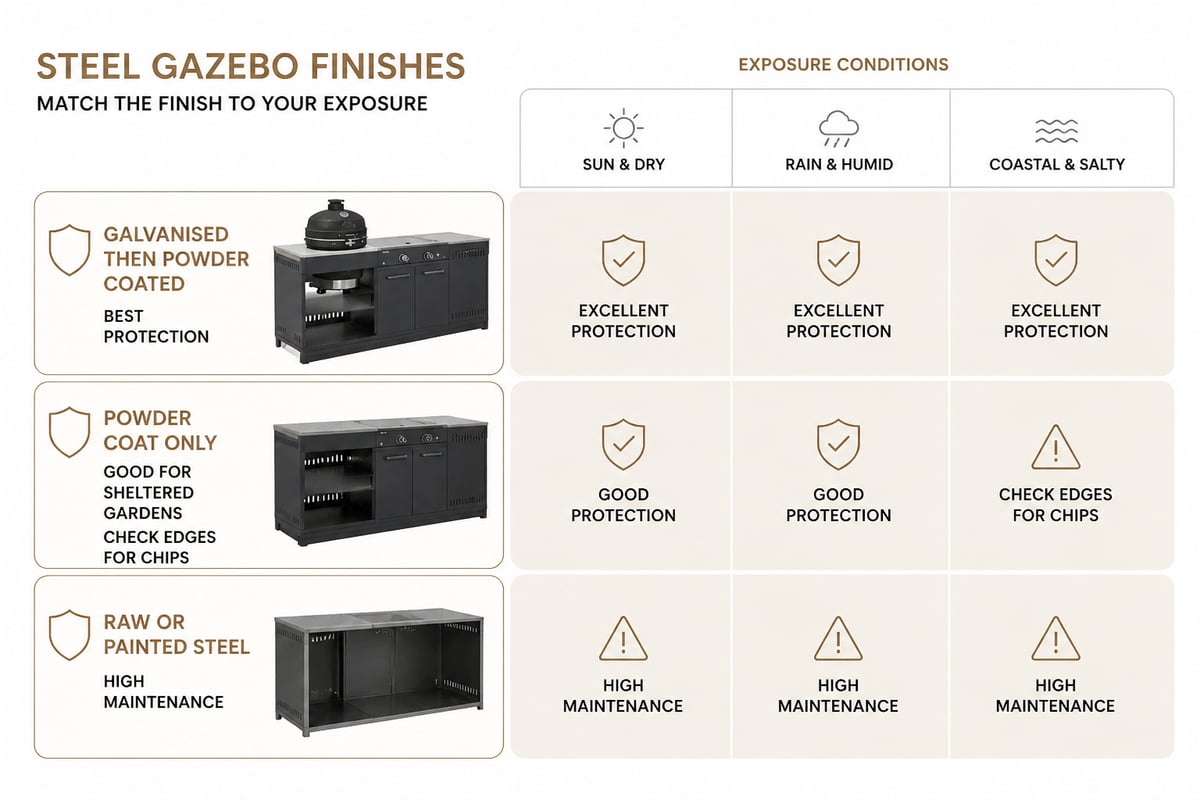
Protective coatings are what determine how long a steel frame lasts, and the main options are hot-dip galvanising, powder coating, or a combination of the two. The coating matters more than the steel beneath it.
The American Galvanizers Association describes hot-dip galvanising as providing both barrier and cathodic protection. The same source notes that powder coating offers colour consistency but can be vulnerable to impact damage and edge chipping. Both points come from the association's guidance on galvanizing versus powder coating and paint.
For a garden gazebo, that points towards a sound approach:
The association also identifies marine chlorides, deicing salts, industrial pollutants, moisture retention and crevices as factors that raise corrosion risk. If your garden is near the coast, or the structure has joints where water can pool, the quality of coating becomes even more important. The same body recommends choosing a corrosion-protection system based on exposure conditions, service life, maintenance access, appearance and budget, which is a useful framework for any buyer.
The roof defines how usable the space is in British weather, and the main choices are solid panels, polycarbonate, fabric canopy or adjustable louvres. For an outdoor kitchen, a solid or louvred roof is almost always the better choice.
If you cook beneath the structure, ventilation and heat clearance matter. Our guide to a metal roof gazebo covers how solid roofing behaves over a cooking area, and the gazebo for grill article explains clearance considerations in more detail.
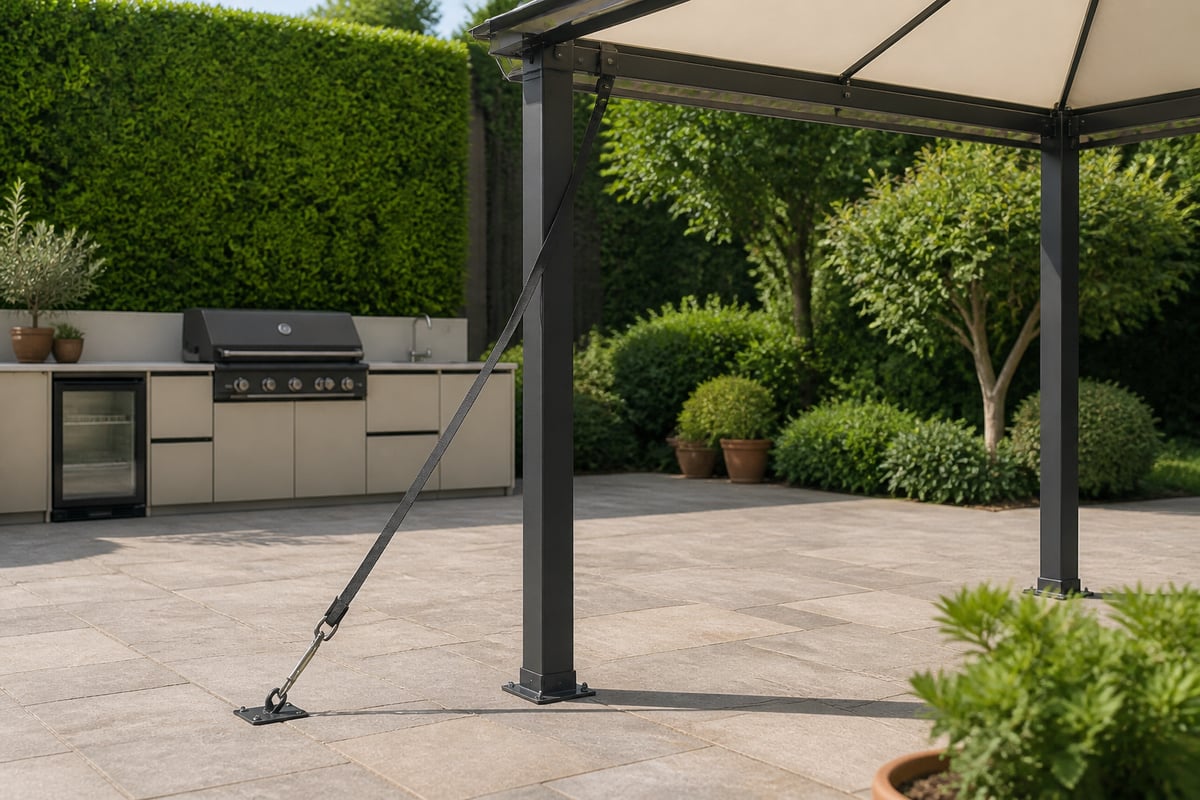
A metal gazebo must be anchored to the ground with proper fixings, because standard pegs are not adequate in exposed locations. A freestanding frame with a large roof area behaves like a sail in a gust.
The Institution of Mechanical Engineers advises in its gazebo safety notice that standard tent pegs are not sufficient to secure a gazebo where strong or sudden high winds are possible. It recommends heavy-duty ground anchors or storm pegs, guy ropes at the recommended anchor points, regular checks, and taking the gazebo down if strong winds are forecast. That guidance is written with lighter portable structures in mind, but the principle holds: secure fixings and regular inspection are non-negotiable.
For a permanent steel or aluminium structure, this means:
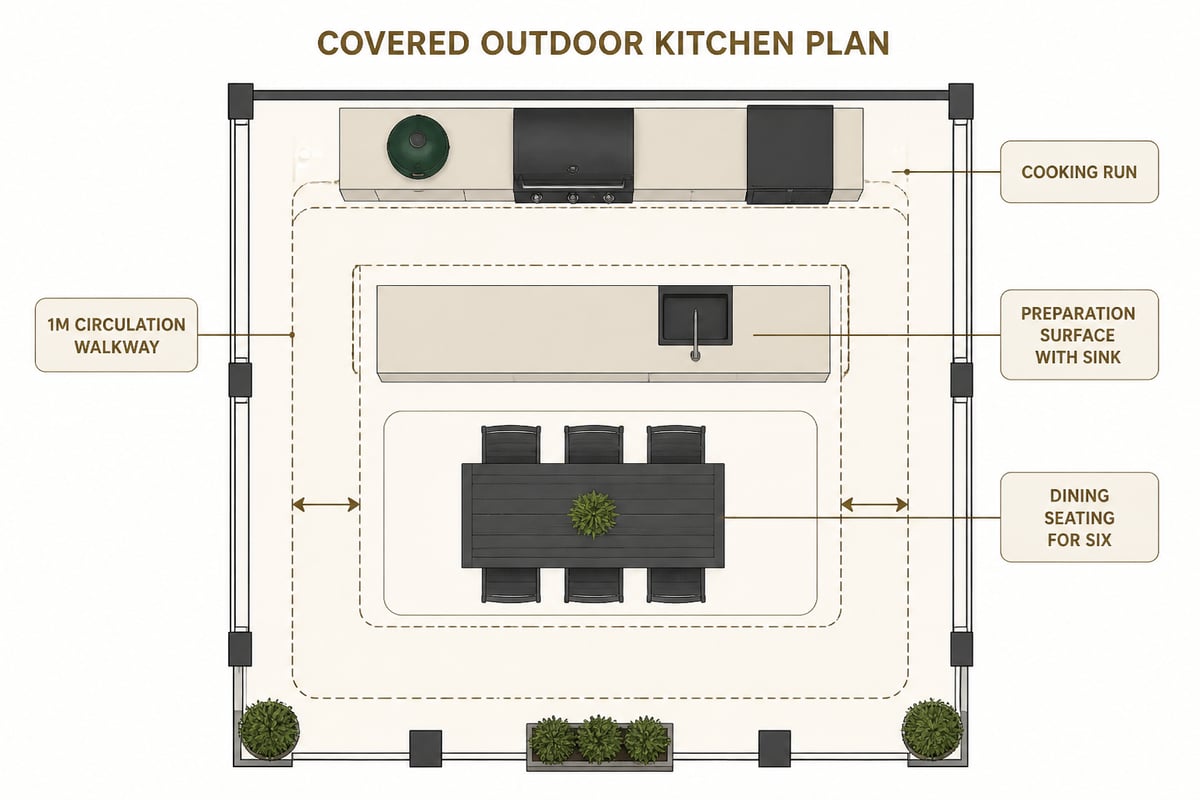
Size should be planned from the cooking and dining layout outwards, because a frame that is too small becomes cramped the moment a grill and a table are both inside it. Allow circulation space around each zone, not just room for the equipment itself.
As a starting point, think in zones: a cooking run, a preparation surface, seating, and a clear walkway between them. A larger rectangular format often works better than a square one for this reason, and our guide to a 6x3 gazebo explains how that proportion handles a combined cooking and dining arrangement.
Hypothetical example: a homeowner wants a built-in grill, a worktop with a sink, and seating for six. Rather than choosing a standard frame and hoping the kitchen fits, they would sketch the kitchen run first, add a metre of clearance around it, and size the structure to suit. This sequence avoids the common problem of equipment dictating awkward compromises later.
Yes, provided the structure is designed for it, with adequate height, ventilation, a solid or louvred roof and sensible positioning of any open flame. A metal frame is well suited to this because it is non-combustible and can support lighting, heaters and screens.
Practical points to plan from the outset include:
For buyers who want the structure and the kitchen designed together, the modular outdoor kitchens collection shows how complete cooking spaces can be configured to sit beneath a covered frame.
For many premium gardens, an architectural pergola delivers the benefits of a gazebo metal shelter with cleaner lines, a more integrated look and adjustable weather control. It is worth considering if the structure will sit against the house or form the centrepiece of a design-led terrace.
The Tarasola range is one example: Tarsaola offers premium, architectural, bespoke European-made pergolas for design-conscious buyers.
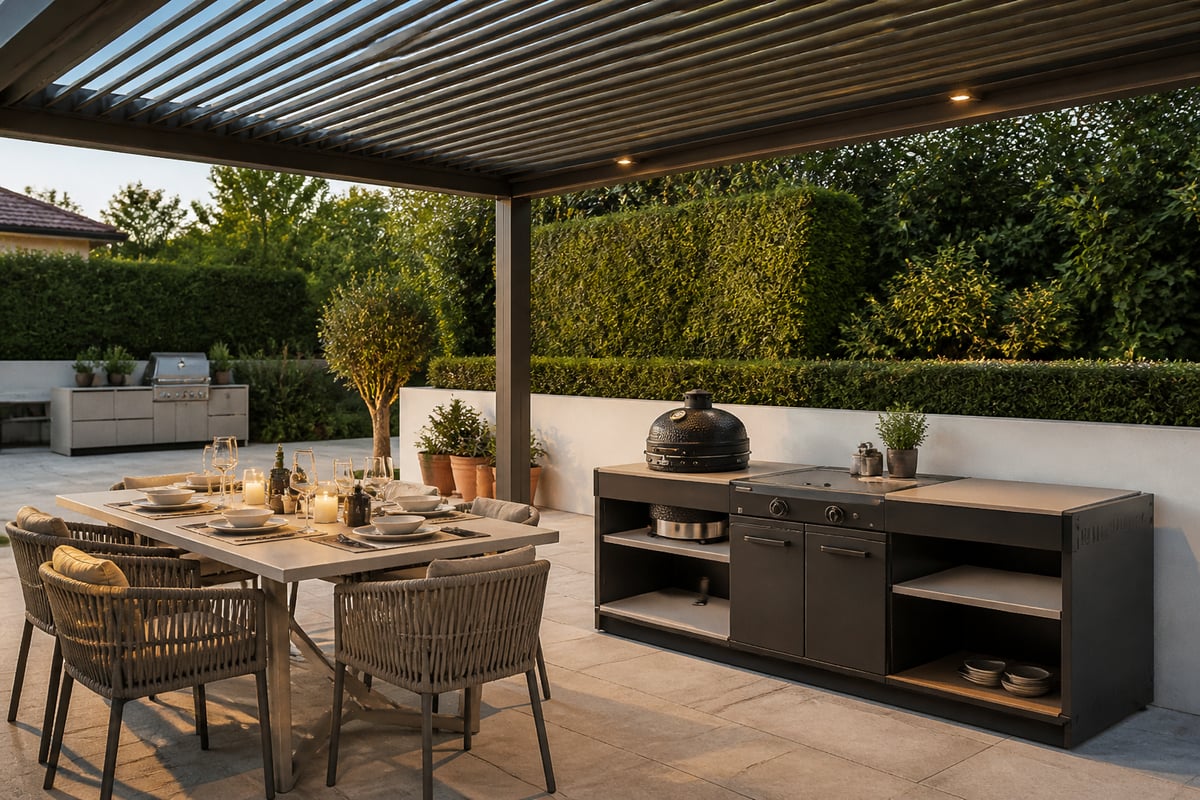
A louvred pergola in this class replaces the compromise between sun and rain with a roof you adjust on demand. If you are comparing styles, our articles on garden gazebos and the retractable gazebo set out the alternatives.
A well-specified metal gazebo needs little more than an annual inspection and an occasional wash. The effort rises sharply if the coating is poor or damaged.
A sensible seasonal routine:
Moisture retention and crevices are conditions that increase corrosion risk, so keeping them clear is a simple preventive measure.
Before committing, confirm the frame material and coating, roof type, fixing method, planning position and the full cost of delivery and installation. These checks prevent most of the disappointments that follow a rushed purchase.
Work through this list:
If you prefer to see a finished outdoor kitchen before deciding, there is a showroom in Oxfordshire where outdoor kitchens can be viewed in person. Delivery is free across the UK mainland, there is a price match guarantee, returns are easy, and buy now, pay later options are available.
A metal gazebo generally offers better longevity, lower maintenance and greater strength, while wood offers a softer, natural look. Metal frames do not rot or suffer insect damage, though they require good coatings.
Steel will rust if its protective coating fails, whereas aluminium does not rust. Galvanising followed by powder coating gives steel its best defence, and regular inspection catches damage early.
A permanent, properly anchored metal gazebo is far more stable than a portable one, but it still needs bolted fixings and regular checks. Louvred roofs that open can shed wind pressure.
Often not, because many garden structures fall under permitted development, but height, position and local designations can change that. Confirm with your local planning authority before building.
Yes, with a solid or louvred roof, adequate height and ventilation, and sensible placement of any open flame. Plan gas and electrical services before installation.
A gazebo usually has a solid roof and stands alone, while a pergola traditionally has an open or slatted roof and is often attached to a building. Modern louvred pergolas blur the distinction.
Lifespan depends largely on coating and exposure. Galvanised steel can last a long time before first maintenance in many conditions, though garden structures vary with setting and care.
Start by measuring the space and sketching the kitchen run you want beneath cover, because those dimensions will guide every other choice. From there, the team at Cotswold Cooking Company can help you specify a frame, such as the architectural Tarsaola pergola, alongside the cooking equipment to suit it. To spread the cost of a considered outdoor space, you can Buy Now Pay Later through the website.

Leave a comment