


A metal pergola is a freestanding or wall-mounted garden structure with a frame of aluminium or steel, built to give shade and shelter without the upkeep that timber demands. For most UK homeowners, powder-coated aluminium is the sensible choice because it resists rust, stays light enough to install cleanly and holds its finish for years. This guide explains how to choose the right frame, roof and position, what the groundwork involves, and how to plan one around an outdoor kitchen.
A metal pergola is an open-sided canopy structure supported by posts and a roof of slats, louvres, fabric or glazing, made from aluminium or steel instead of timber. It differs from a gazebo, which usually has a fixed solid roof and often a more enclosed footprint, and from a veranda, which is normally attached to the house along one side.
The distinction matters because it shapes planning, cost and use. A pergola can be freestanding in the middle of a lawn or terrace, or fixed to a house wall. Our guide to pergolas and gazebos sets out the differences in more detail if you are weighing the two.
Modern metal designs go well beyond the simple open frame. Bioclimatic models have rotating louvres that open to the sky or close to shed rain, which turns a patio into a space you can use in most weather.
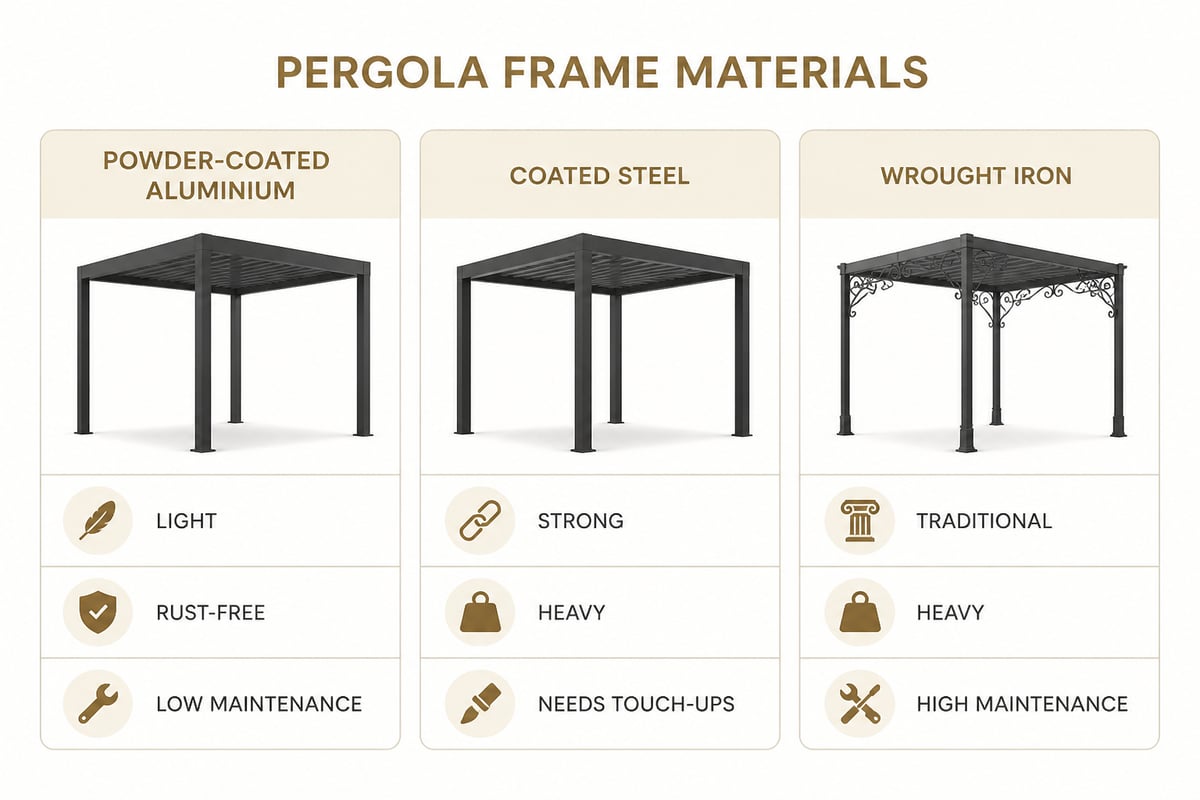
Aluminium suits most British gardens best, since it does not rust, weighs far less than steel and takes a durable powder-coat finish. Steel is stronger over very long spans but needs excellent coating to resist corrosion, and wrought iron brings a traditional look at the price of weight, maintenance and cost.
| Material | Weight | Corrosion resistance | Maintenance | Typical character |
|---|---|---|---|---|
| Aluminium (powder-coated) | Light | Excellent, does not rust | Occasional washing | Contemporary, slim profiles |
| Galvanised or coated steel | Heavy | Good while coating is intact | Touch-up if chipped | Robust, industrial lines |
| Wrought iron | Very heavy | Poor without regular treatment | Repainting and rust treatment | Traditional, ornamental |
Aluminium also has the advantage of precise extrusion, which allows concealed drainage channels, integrated lighting and clean joinery. If you want a deeper look at how metal compares with timber on care, one recent comparison from Omni Home Ideas notes that wood pergolas may need cleaning and resealing every two to three years in hot sun, whereas powder-coated aluminium generally needs only occasional washing.
The right roof depends on how you want to use the space: louvred roofs give adjustable shade and rain cover, retractable canopies offer flexibility, fixed panels give permanent shelter and glazed roofs keep the light while keeping the weather out.
For anyone cooking outdoors, a roof that can vent smoke and heat while still keeping rain off the grill is a considerable practical advantage. A louvred roof does this far better than a fixed one.
Position it according to the sun's path, the view from the house and how close it sits to the kitchen door, because orientation determines how much shade you get and when. A west-facing position, for instance, can bring low-angle afternoon sun, according to a StruXure placement guide, which recommends mapping the sun across the day before you commit.
Practical points worth settling early:
If you are tempted to fix the structure to your home, read our advice on a pergola attached to a house first. Wall-mounted designs save space and give instant shelter at a door, but they depend on sound masonry and careful weatherproofing at the junction.
Often not, but it depends on height, position, proximity to boundaries and whether your property is listed or sits in a conservation area or Area of Outstanding Natural Beauty. Many Cotswold homes fall into one of those categories, so check with your local planning authority before ordering, particularly for anything attached to the house or taller than permitted development allows.
Building regulations can also apply where a structure is attached to the house or includes electrical work. Treat the points above as a prompt to ask, not as a rule, since requirements vary by council and property. A reputable supplier or installer should be able to talk you through what to check.
A metal pergola needs a stable, level base, usually concrete footings or fixings into an existing slab, with depth and design matched to the structure's size, wind exposure and local ground conditions. A freestanding aluminium frame is lighter than steel, but a louvred roof still catches wind like a sail, so it must be properly anchored.
Frost is a consideration for footings. A residential code summary cited by Muthler Landscaping notes that frost protection requirements depend on local conditions and code. That figure comes from a US code summary, so use it as an indication of the principle and rely on local advice and your installer's specification for a UK site.
Before installation day, confirm the following:
Cost varies widely with size, roof system, finish and installation, so treat any single figure as a rough guide. One publication estimate from Omni Home Ideas suggests installed aluminium pergolas can cost $50 to $100 per square foot, with louvred systems costing more. That is a US estimate in dollars, so use it to understand how roof type drives the price rather than as a UK quotation.
What moves the price most:
For current pricing on specific models, the aluminium pergolas collection is the best place to compare options, and buy now, pay later options are available if you prefer to spread the cost.
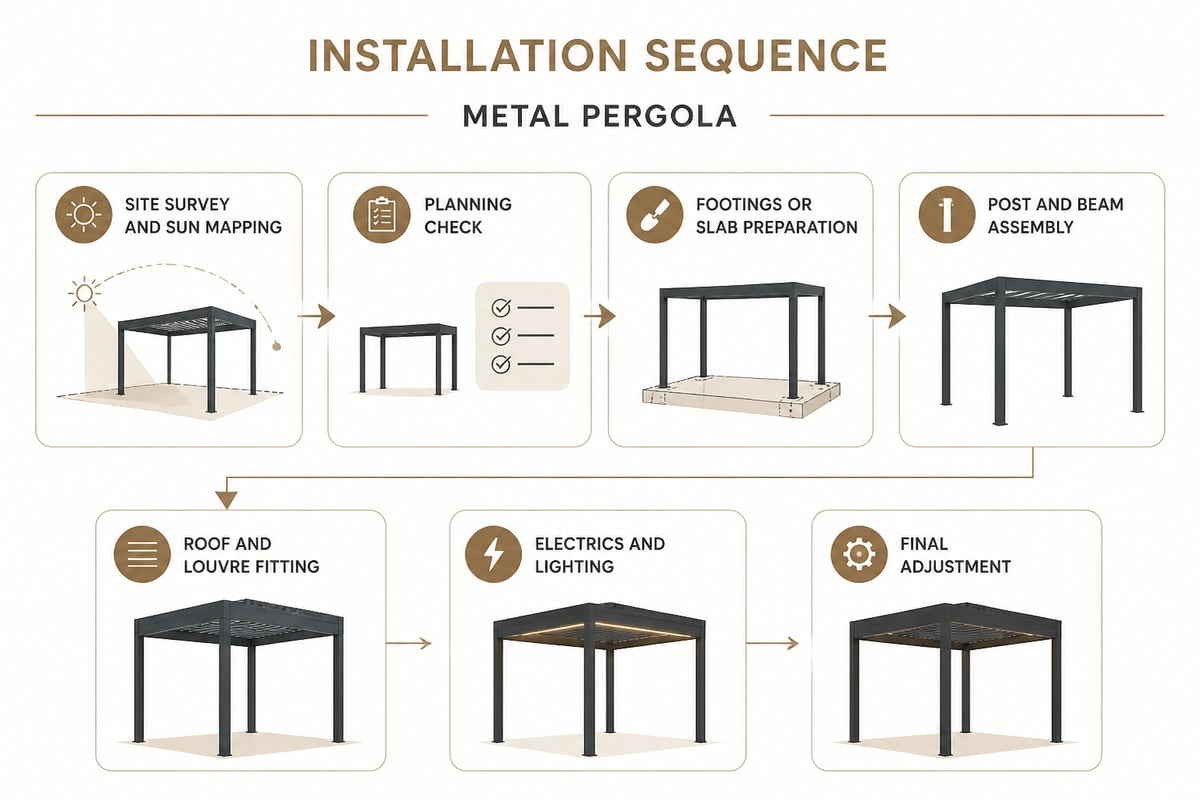
Installation follows a clear order: survey, groundwork, frame assembly, roof fitting, services and final adjustment. Aluminium makes the assembly stage faster than timber or steel because the components are lighter and engineered to fit precisely, though a motorised roof and any electrical connection should be handled by a qualified professional.
Professional installation of pergolas, verandas and canopies is available through Cotswold Cooking Company, which suits owners who would rather not manage the groundwork, electrics and fitting themselves.
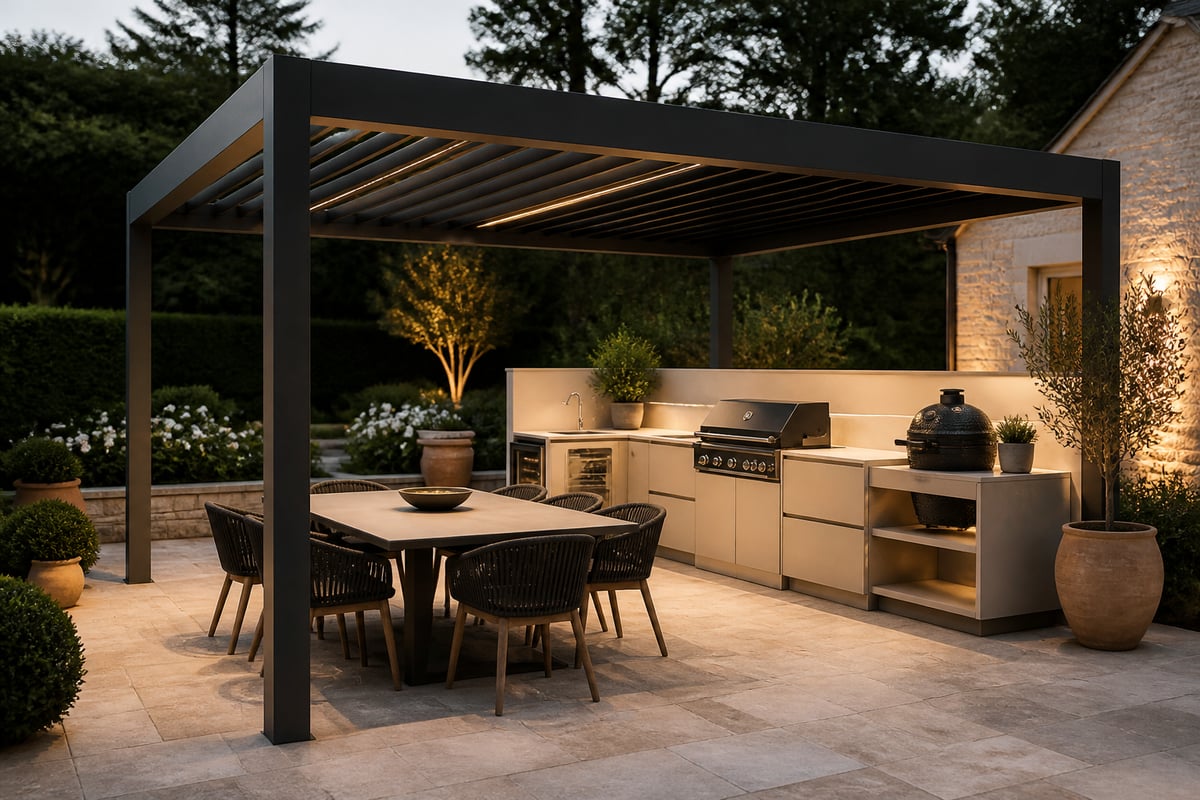
A bioclimatic aluminium pergola suits an outdoor kitchen best, because adjustable louvres control sun, vent heat and smoke, and keep rain off the cook and the equipment. Designing the two together is better than adding one afterwards, since post positions, lighting, ventilation and cable runs can be planned around the cooking zone from the start.
For design-led buyers, Tarasola pergolas are premium, architectural, bespoke and European made, and suit homeowners who want a structure that feels part of the architecture. They suit homeowners who want the structure to feel like part of the architecture rather than an afterthought.
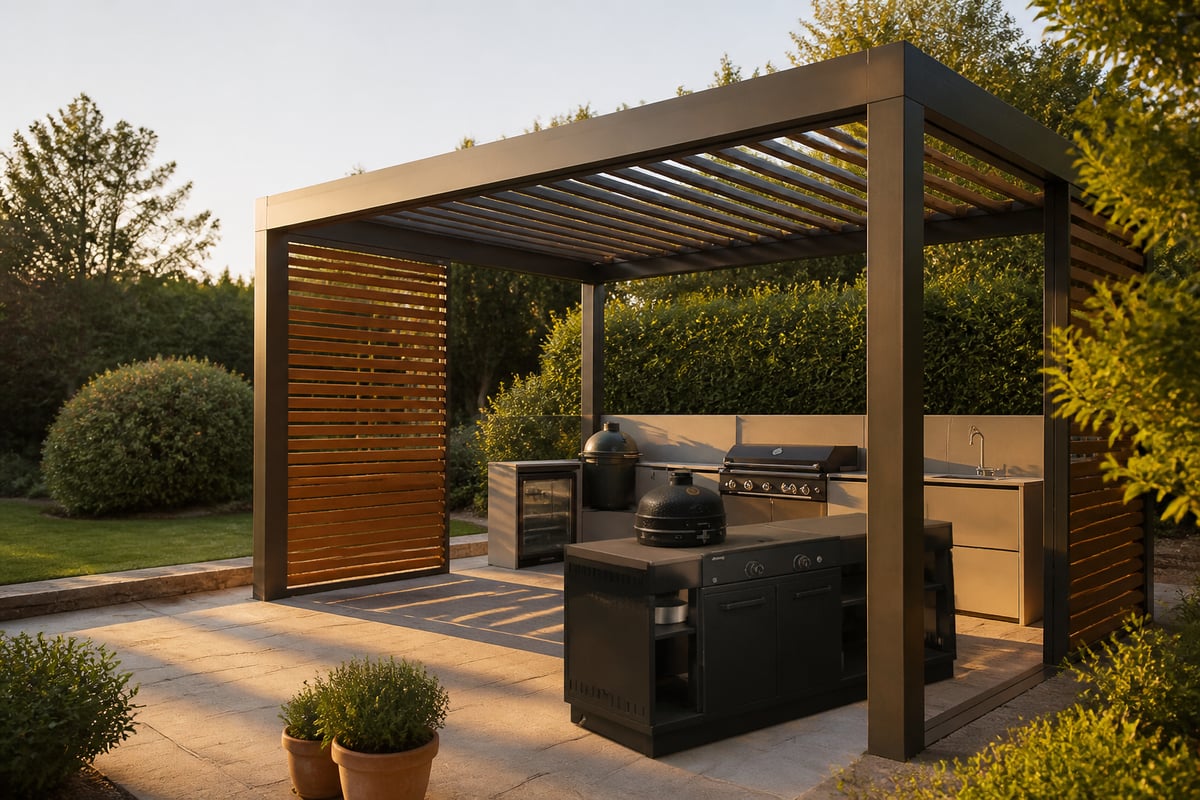
If you are planning a cooking space beneath cover, our piece on a pergola with grill covers clearances and ventilation, and our note on a metal outdoor kitchen cabinet is useful when choosing storage that matches the frame. For seating beneath the structure, Agilita Workspace offers commercial-grade furniture if you are specifying durable pieces for a hospitality-style space.
Maintenance is light: wash the frame with warm water and mild soap a couple of times a year, clear debris from louvre channels and gutters, and check fixings and seals annually. Powder-coated aluminium does not need repainting in the way that timber needs resealing, which is a large part of its appeal.
A short seasonal routine works well:
Avoid abrasive cleaners that can scratch the coating, and touch up any chips promptly, particularly on steel frames, where exposed metal can corrode.
Metal needs less upkeep and does not rot, warp or attract insects, so it suits owners who want a long-lasting, low-maintenance structure. Timber has a natural warmth some people prefer, but needs regular treatment.
Aluminium does not rust. Steel can, if the coating is damaged, so choose a quality galvanised or powder-coated finish and repair chips quickly.
A closed louvred roof sheds rain through concealed drainage, and fixed or glazed roofs give permanent cover. An open slatted or fabric design offers shade but only limited weather protection.
Yes, many are designed for wall mounting, but the wall must be sound and the junction properly weatherproofed. Check whether your property is listed or in a conservation area before fixing anything to it.
Quality powder-coated aluminium can last for many years with simple washing, but lifespan depends on build quality, coating and exposure. Ask the supplier about warranty terms on the product page.
Yes, provided you keep adequate clearance between the grill and the roof and ensure heat and smoke can escape. A louvred roof helps considerably, and gas and electrical work should be done by a qualified professional.
Measure your terrace, then allow space for furniture, circulation and the kitchen zone, remembering the overhang beyond the posts. Browse sizes in the pergolas and verandas collection or ask for a design consultation.
Your next step is to sketch your terrace, mark where the sun falls through the day and note any kitchen or seating zones, then bring that to a design conversation. Cotswold Cooking Company can guide you from specification through to installation, and you can see outdoor kitchens in person at the Oxfordshire showroom, with free delivery across the UK mainland. If you are drawn to the architectural look of Tarasola pergolas, ask the team how one could be planned around your garden, and explore the options with Cotswold Cooking Company, where Buy Now Pay Later options let you spread the cost of your new outdoor space.

Leave a comment