


A hard roof gazebo is a freestanding garden structure with a solid roof of metal, polycarbonate or timber-framed panels rather than fabric, giving permanent weather protection and a far longer lifespan than a pop-up canopy. For homeowners planning an outdoor kitchen or all-season dining space, the right choice depends on the roof material, the frame, the footprint and the planning rules that apply to your property. This guide takes you through each decision in order.
A hard roof gazebo is a gazebo whose roof is rigid and fixed, usually built from steel, aluminium, polycarbonate sheeting or insulated panels, and supported by a permanent frame. Unlike a fabric gazebo, it is designed to stay up all year.
The main characteristics are:
For a cooking space, these qualities matter. A hard roof gazebo gives you a dry, stable surface above the grill, preparation area and seating, and a dependable structure to which lighting, heaters and speakers can be fixed.
A hard roof gazebo is typically a standalone shelter with a fixed solid roof, whereas a pergola usually offers adjustable or open cover and a soft-top gazebo relies on removable fabric. The three suit different priorities.
| Feature | Hard roof gazebo | Pergola with louvred roof | Soft-top gazebo |
|---|---|---|---|
| Roof | Fixed solid panels | Adjustable aluminium blades | Fabric canopy |
| Weather protection | Constant | Adjustable, sealed when closed | Seasonal |
| Light control | Fixed (unless polycarbonate) | Fine control | Limited |
| Typical lifespan | Long | Long | Short to moderate |
| Suitable for outdoor kitchens | Yes | Yes | Rarely |
| Wind resilience | High when anchored | High when engineered | Low |
If you want to compare the two structures in more depth, our article on pergolas and gazebos sets out the practical differences. Homeowners who like the idea of a solid roof but want to control light and airflow often find a pergola with a louvre roof a better fit.
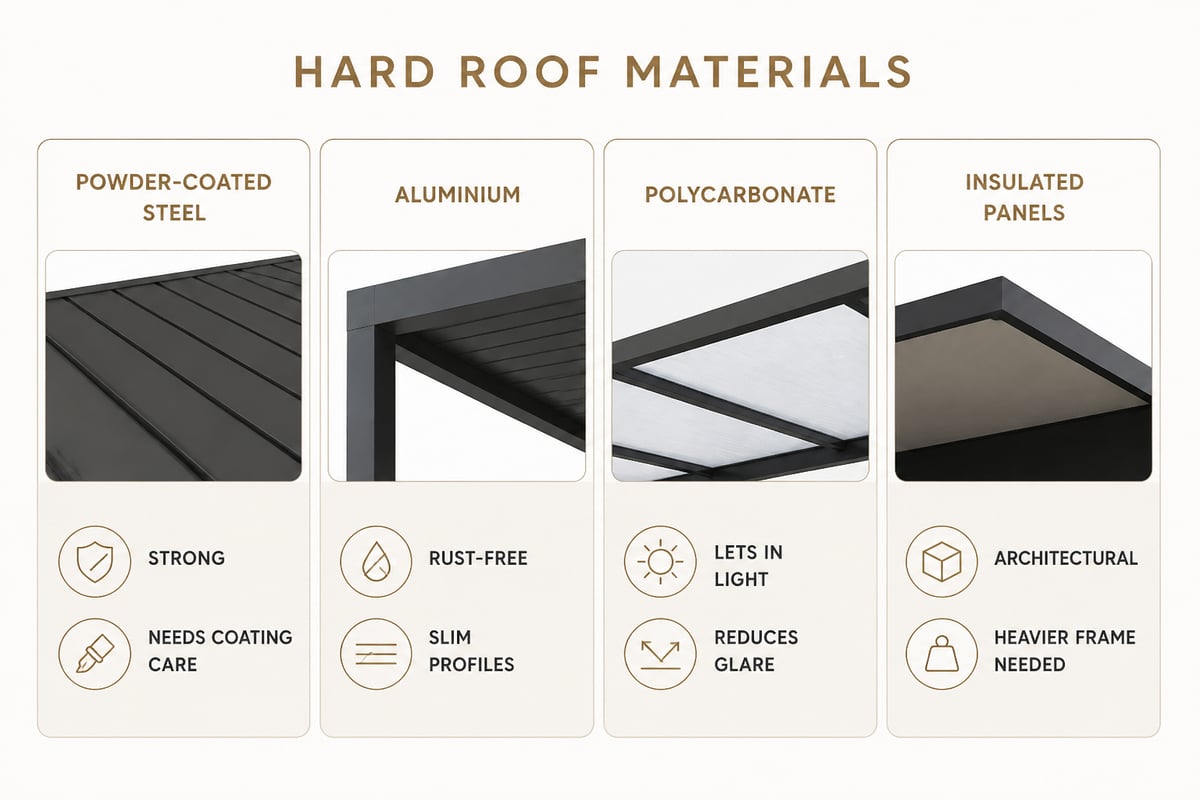
The best roof material is the one that matches how you intend to use the space: steel for durability, aluminium for low maintenance, polycarbonate for light, and timber-framed or insulated panels for a more architectural finish.
Powder-coated steel is strong and wind-resistant, which suits exposed gardens. It needs good coatings to resist corrosion, and any scratches should be treated promptly. Our guide to the metal roof gazebo covers the maintenance side in detail.
Aluminium does not rust, is lighter than steel and holds a powder-coated finish well. For a premium kitchen setting it is often the preferred frame material because it can be engineered into slim, elegant profiles.
Polycarbonate lets daylight through while blocking rain, which keeps a covered seating area from feeling enclosed. Twin-wall or multi-wall sheets also reduce heat build-up. See our explanation of the polycarbonate pergola roof for how the options compare.
These give a more finished, room-like feel and can include integrated lighting. They are heavier, so the frame and foundations need to be specified accordingly.
Size should be set by what happens underneath the roof, not by what the garden can physically hold. Add up the zones you want to cover, then allow circulation space around them.
Published gazebo footprints range widely, from small squares of around 2.25 m² up to large rectangles of about 32 m², with 3 × 3 m and 4 × 4 m among the familiar sizes.
As a rough planning guide for a covered cooking and dining area:
Measure the equipment first, then add generous clearance. A rectangle such as the 6 × 3 m gazebo format suits a linear kitchen run with a table at one end. For specific dimensions on any product, check the individual product page or contact the team rather than assuming a standard.
In England a garden gazebo may qualify as permitted development, but the rules depend on height, siting and the designation of your property, so check before you buy. A fixed hard roof structure is more likely to attract scrutiny than a temporary canopy.
The key points from official guidance:
If you live in the Cotswolds, an Area of Outstanding Natural Beauty, a conservation area or a listed property setting, confirm the position with your local planning authority first. A height just under 2.5 m is a common design constraint, so choose a structure whose overall height, including roof pitch, sits comfortably within it.
Yes, provided the roof, ventilation and clearances are planned around the cooking equipment. Heat, smoke and grease behave differently under a fixed roof, so the design must account for them from the start.
Consider these points:
A built-in unit such as the Whistler Grills Buford 5 gas BBQ is the kind of equipment you would plan the whole structure around.
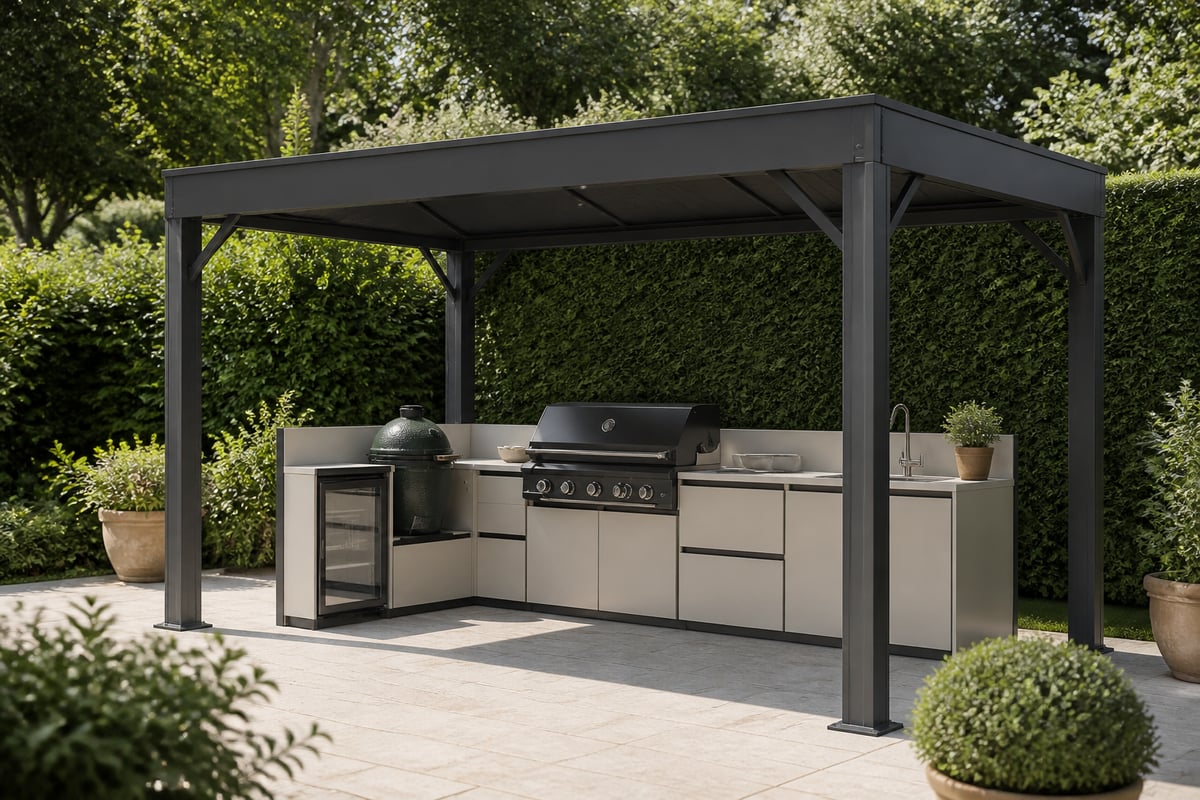
A hard roof gazebo needs a level, load-bearing base and a frame anchored to it, because a solid roof catches wind far more than fabric does. Do not rely on lightweight pegs or paving slabs alone.
Typical base options include:
Keep any raised base within local thresholds, as noted above. Water management matters too. A solid roof concentrates rainfall at the corners, so integrated gutters and downpipes, or a considered drainage route, prevent splashing and staining on the patio.
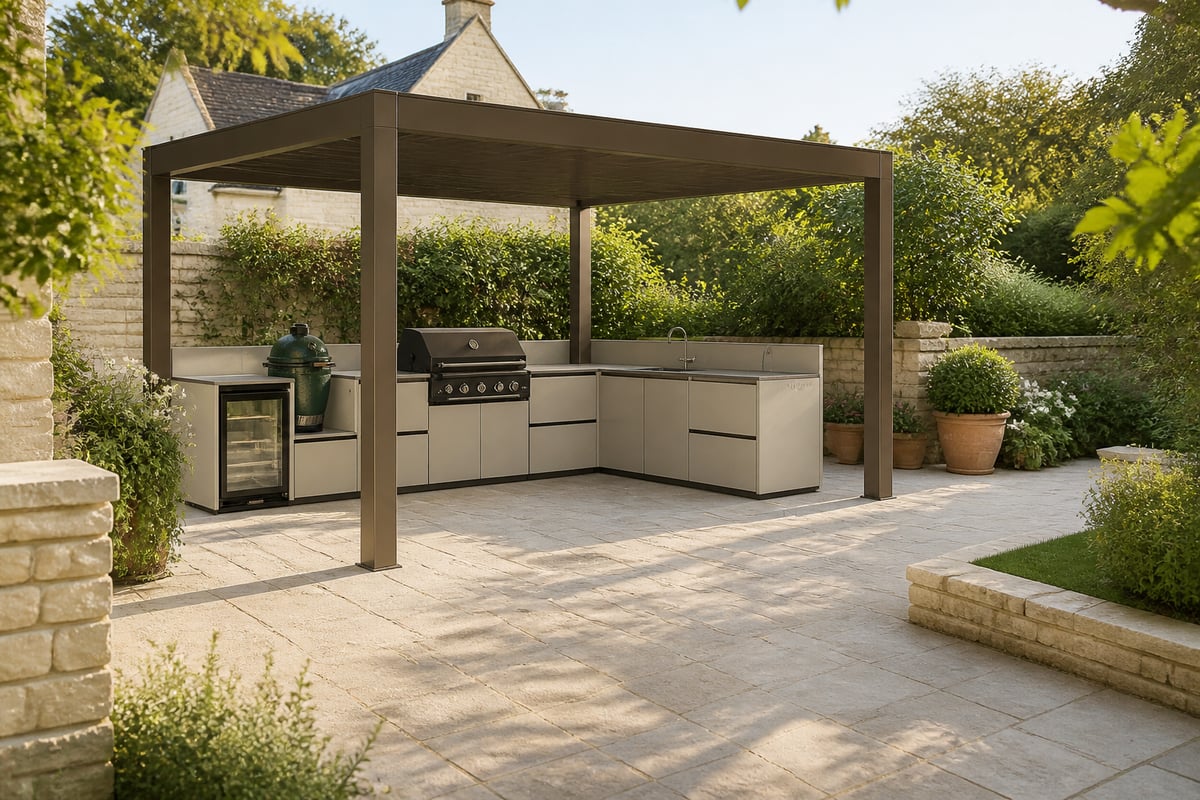
Neither is better in every case. A hard roof gazebo gives constant, simple cover, while a bioclimatic pergola gives adjustable light, ventilation and sealed shelter at the touch of a button.
Choose a hard roof gazebo if you want a defined, enclosed-feeling shelter, a lower upfront outlay and minimal moving parts.
Choose a bioclimatic pergola if you want to manage sun, shade and airflow through the day and season, or if you want to attach the structure to the house.
The Cotswold Cooking Company offers architectural options in this second category, including the Tarsaola Technic New bioclimatic pergola, a European-made design for buyers who want a bespoke, design-led finish over a kitchen or dining area.
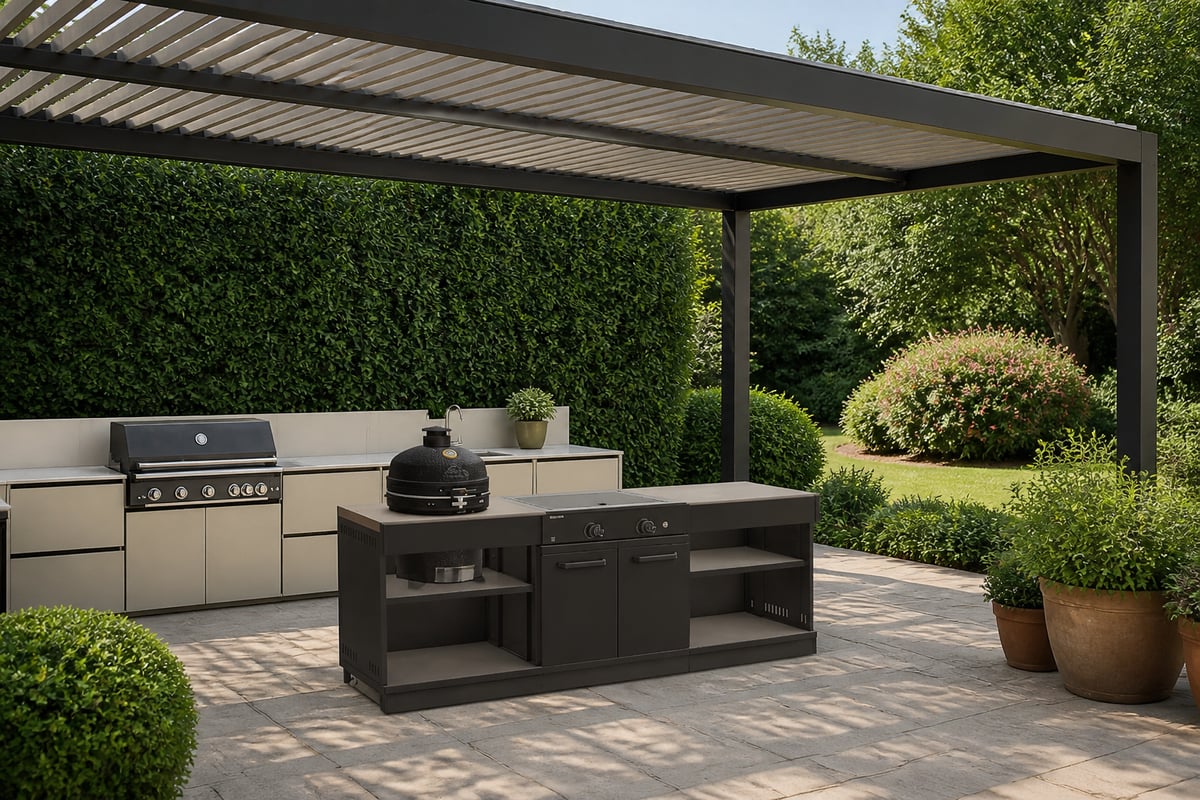
Other motorised options worth viewing include the Deponti Pinela motorised aluminium pergola and the Morvelle pergola with motorised louvred roof.
You make a hard roof gazebo usable in every season by adding side protection, heat and lighting so the roof is only one part of the comfort system. A solid roof stops rain, but cold air and wind still need managing.
For design inspiration on enclosing a solid-roof structure, see our piece on pergola with roof and sides.
A hard roof gazebo needs modest, regular care: clean the roof and gutters, check fixings and inspect coatings at least twice a year. A solid roof does not need replacing like fabric, but it is not maintenance-free.
Also check that nothing near the cooking area has built up grease deposits, and wipe any residue before it hardens.
Buy from a supplier that can advise on specification, delivery and installation together, because a solid-roof structure is only as good as its base and fixing. Searching for a gazebo for sale near you will turn up many generic options, but few come with design guidance.
The Cotswold Cooking Company provides professional installation of pergolas, verandas and canopies, free delivery across the UK mainland, and a price match guarantee. There is a showroom in Oxfordshire where you can see outdoor kitchens in person, and buy now, pay later options are available. For product dimensions and any installation specifics, speak to the team directly through the product pages or contact page.
A hard roof gazebo is a garden shelter with a rigid, permanent roof made from metal, polycarbonate or panels, supported by an anchored frame. It offers year-round rain protection and lasts far longer than fabric alternatives.
Often not, if it stays within permitted development limits such as being under 2.5 m high and not in front of the house, but designated areas and local rules can differ. Always check with your local planning authority before you buy.
Yes, if ventilation, heat clearances and fire safety are planned properly. Leave open sides or gaps for smoke, and follow the equipment manufacturer's clearance guidance.
Aluminium suits low-maintenance, slim designs; steel suits exposed, windy sites; polycarbonate suits those who want daylight. The best choice depends on use, budget and setting.
Size it around the zones you want to cover, then add circulation space. Common footprints run from small squares of around 2.25 m² to large rectangles of about 32 m², with 3 × 3 m and 4 × 4 m widely available.
A gazebo provides fixed cover at a simpler specification, while a louvred pergola allows adjustable light and airflow. Many premium outdoor kitchens suit a pergola for its flexibility.
Yes, with side screens, a heat source and good lighting. The solid roof keeps rain and snow off, and enclosures manage wind and cold.
Start by measuring your cooking and dining zones and checking height and siting rules with your local planning authority, then compare solid-roof and adjustable options side by side. If you would like a design-led view of what suits your garden, the team at The Cotswold Cooking Company can guide you from specification through to installation, and you can explore the architectural Tarsaola Technic New bioclimatic pergola as a starting point. To spread the cost of your project, ask about flexible ways to Buy Now Pay Later on your outdoor kitchen and covered living space.

Leave a comment